This is a special button on the washing machine that must be pressed to save electricity and help prolong the durability of your clothes.
If not adjusted properly, you may be wasting electricity unnecessarily, while also reducing the lifespan of both your clothes and the washing machine.
Washing machines have become an inseparable part of daily life for many households, easing the burden of housework and providing significant convenience in maintaining personal hygiene. However, improper usage can lead to higher electricity consumption than expected. This has prompted many consumers to focus on using washing machines efficiently, ensuring both clean clothes and reduced energy consumption.
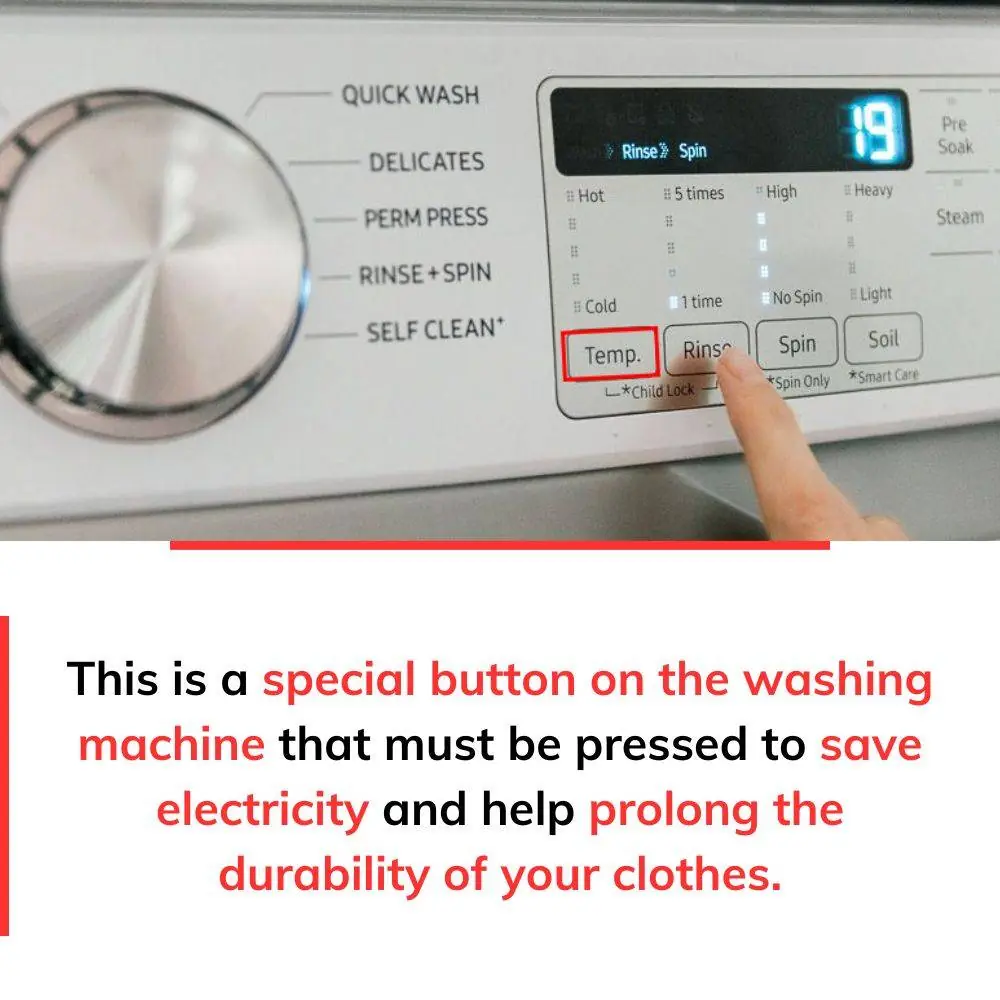
Energy-saving modes on washing machines have been increasingly improved, notably with settings for water temperature during the washing process. While hot water effectively removes odors and bacteria, it is also a major cause of high electricity consumption.
On many modern washing machines, you’ll find a “Temp” button on the control panel. “Temp,” short for “Temperature,” is used to adjust the water temperature during washing. By using this function, users can set the water temperature according to different fabric types and the level of dirt on the clothes.
Continuous use of hot water can also reduce the lifespan of both clothes and the washing machine. For example, certain fabrics may shrink or lose color when exposed to hot water. Therefore, hot water should only be used when necessary, and users should always check the temperature settings before starting a wash cycle.
In most cases, cold water is sufficient for cleaning laundry and is the more energy-efficient option. Washing with cold water not only protects fabric quality but also significantly reduces electricity costs. It’s important to only use hot water for heavily soiled clothes or when disinfection is required.
Other tips for efficient washing machine usage include loading the machine with the right amount of laundry according to its capacity. Overloading or underloading the machine can be problematic: underloading wastes water and electricity, while overloading reduces cleaning efficiency and affects the machine’s durability. Selecting the appropriate wash cycle based on fabric type and dirt level is equally important. Using a quick wash cycle for lightly soiled clothes saves time and energy, while a soak cycle may be more suitable for heavily soiled items.
Proper use of detergent is another critical factor. Detergents specifically designed for top-load or front-load machines should be used to optimize cleaning performance and protect the machine. Additionally, regular cleaning of the washing machine is the best way to remove residue and detergent buildup, prevent bacteria and mold growth, and ensure cleaner clothes while saving water and electricity.
Finally, after each use, leave the washing machine lid open to allow steam to escape, preventing mold growth. This not only keeps the washing machine in good condition but also ensures your clothes smell fresh after every wash.