Chapter 1: What Are Those Strange Raised Bumps on the Arm?
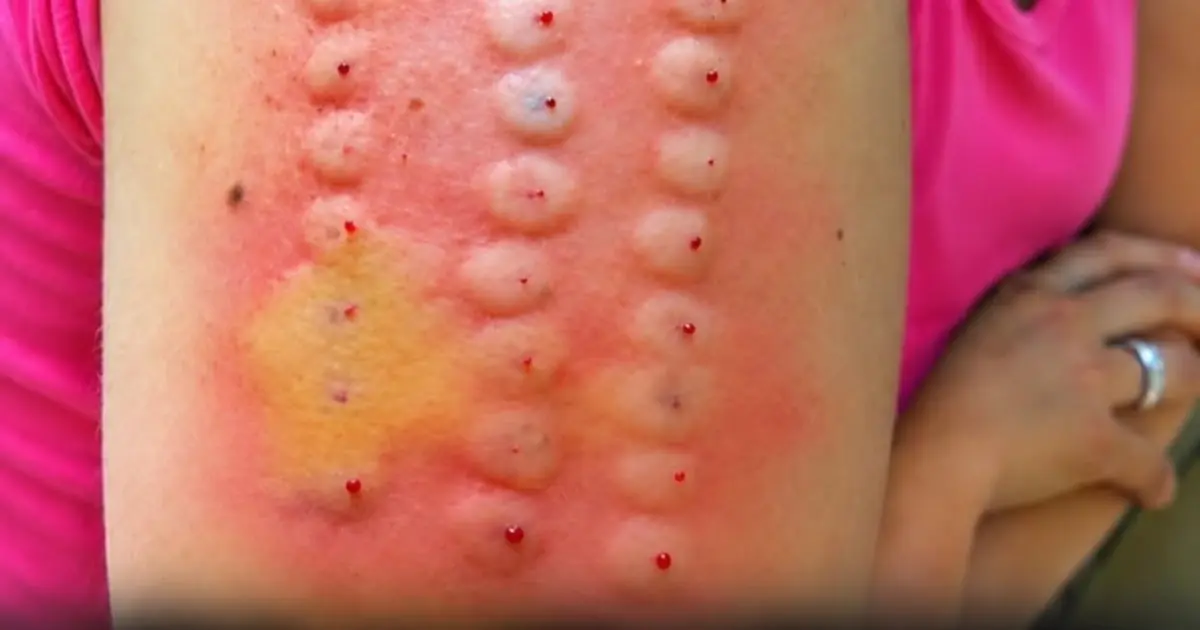
At first glance, the photograph may look alarming.
A woman's upper arm is covered with numerous raised bumps surrounded by red, irritated skin. Some reactions appear small, while others are considerably larger and more swollen.
The bumps are arranged in a pattern, with tiny red marks visible in the center of several raised areas.
For someone unfamiliar with medical testing, the image might look like an unusual skin disease, an infection, or an allergic reaction that has spread across the body.
However, there is an important detail that changes the entire interpretation.
The bumps appear consistent with a procedure known as a skin-prick allergy test.
This is a commonly used medical examination designed to identify substances that may trigger allergic reactions.
Rather than being a consequence of intimate contact, the visible reactions may have been deliberately produced during a controlled medical investigation.
1. Why would doctors deliberately create bumps on someone's skin?
Allergies occur when the immune system reacts to a substance that is normally harmless to most people.
These substances are called allergens.
Common examples include:
-
House dust mites.
-
Grass and tree pollen.
-
Animal dander.
-
Certain foods.
-
Mold spores.
-
Some medications.
-
Insect venoms.
When someone has an allergic reaction, the immune system may release chemicals such as histamine.
Histamine can cause blood vessels to widen and become more permeable, allowing fluid to move into surrounding tissues.
This produces familiar allergic symptoms such as itching, redness, swelling, and raised patches on the skin.
A skin-prick test uses this response to help identify possible allergens.
During the procedure, a healthcare professional applies tiny amounts of selected allergen extracts to different areas of the skin.
The skin is then gently pricked with a sterile device so that a small amount of the substance can enter the superficial layer.
If the person is sensitized to a particular allergen, a raised bump called a wheal may develop.
This is the same general type of reaction that can occur during certain natural allergic responses.
2. Why are there so many bumps?
The number of bumps is not necessarily a sign that someone has a serious allergy.
Doctors often test several substances during the same appointment.
For example, a person who frequently experiences sneezing, nasal congestion, and itchy eyes may be tested for:
-
House dust mites.
-
Grass pollen.
-
Tree pollen.
-
Cat allergens.
-
Dog allergens.
-
Mold.
Each testing location corresponds to a particular allergen.
The healthcare professional records the results so that each reaction can be matched to the substance being investigated.
This explains why the bumps are arranged in an organized pattern rather than appearing randomly.
Some areas may develop noticeable swelling, while others show little or no reaction.
The differences help the medical team understand which substances may be relevant to the patient's symptoms.
3. Why do some reactions look much larger than others?
When the immune system recognizes an allergen, certain immune cells release histamine and other inflammatory substances.
These chemicals cause localized swelling and redness.
The resulting bump may resemble a mosquito bite or a small hive.
Some reactions are barely visible, while others produce a more prominent raised area.
However, a larger bump does not automatically mean that the person will experience a more dangerous allergic reaction in everyday life.
The size of the skin reaction indicates sensitization under the conditions of the test. It does not independently predict the severity of a future allergic episode.
Doctors must interpret the findings alongside the patient's symptoms and medical history.
4. Why is the surrounding skin so red?
The red area around a raised bump is called the flare response.
It occurs because inflammatory chemicals affect small blood vessels near the testing site.
The combination of a raised wheal and surrounding redness is a characteristic feature of an immediate allergic skin reaction.
The appearance can be dramatic, particularly when multiple testing sites react simultaneously.
Nevertheless, these reactions are generally temporary.
According to MedlinePlus and Mayo Clinic, skin-prick allergy testing usually produces visible reactions within approximately 15–20 minutes.
The important lesson is that an unusual medical photograph should not be interpreted using a dramatic headline alone.
The visible bumps may be part of a planned diagnostic procedure rather than evidence of an infection or a condition caused by intimate contact.
Understanding how the test works makes the photograph considerably less mysterious.
Chapter 2: How Does a Skin-Prick Allergy Test Actually Work?
Allergy testing is an important part of modern medicine.
For people who experience repeated sneezing, itchy skin, unexplained rashes, or reactions after eating certain foods, identifying the trigger can help doctors recommend more appropriate treatment.
A skin-prick test is one of the most frequently used methods for investigating immediate allergic sensitization.
Although the procedure may look uncomfortable, it is generally quick and involves only superficial pricks.
1. The doctor first investigates the patient's symptoms
Before performing the test, a healthcare professional usually asks about the patient's medical history.
They may want to know:
-
When did the symptoms first appear?
-
Do they happen during particular seasons?
-
Are they worse when cleaning the house?
-
Does contact with animals cause itching or sneezing?
-
Have certain foods caused unusual reactions?
-
Has the person experienced swelling, hives, or breathing difficulties?
These questions help the doctor select the substances worth testing.
For example, someone who develops sneezing and itchy eyes whenever they visit a house with cats may be evaluated for cat allergens.
Someone who experiences symptoms during pollen season may require testing for environmental allergens.