After the Shift Ends: The Emotional Reality of Law Enforcement Work
The uniform may come off at the end of a shift, but the weight of the day does not always disappear with it.
The final minutes of a long shift can be strangely quiet. The radios fall silent, the emergency calls stop coming, and the streets that demanded constant attention begin to settle. Yet for many law enforcement officers, the most difficult part of the day may begin only after they leave the station.
Behind every badge is a person who has spent hours making decisions under pressure, responding to unpredictable situations, and carrying responsibilities that most people will never fully understand. There are moments of danger, moments of uncertainty, and moments when a single decision can change someone's life forever.
And then, eventually, there is the journey home.
A young police officer recently offered a glimpse into this often-hidden reality when she recorded a brief, personal video after completing an extended shift. She was not delivering an official statement, presenting a carefully prepared speech, or seeking recognition for her work. Instead, she spoke honestly about the exhaustion that can remain after the working day is supposedly over.
Her message was simple, but it touched on something much larger than one officer's experience.
What happens to the people who spend their working lives protecting others? What does it feel like to carry responsibility, tension, and difficult memories long after the immediate situation has passed? And why can a quiet moment of honesty from someone in uniform reveal more about public service than a thousand official statements?
The answers begin with understanding what a demanding shift can leave behind.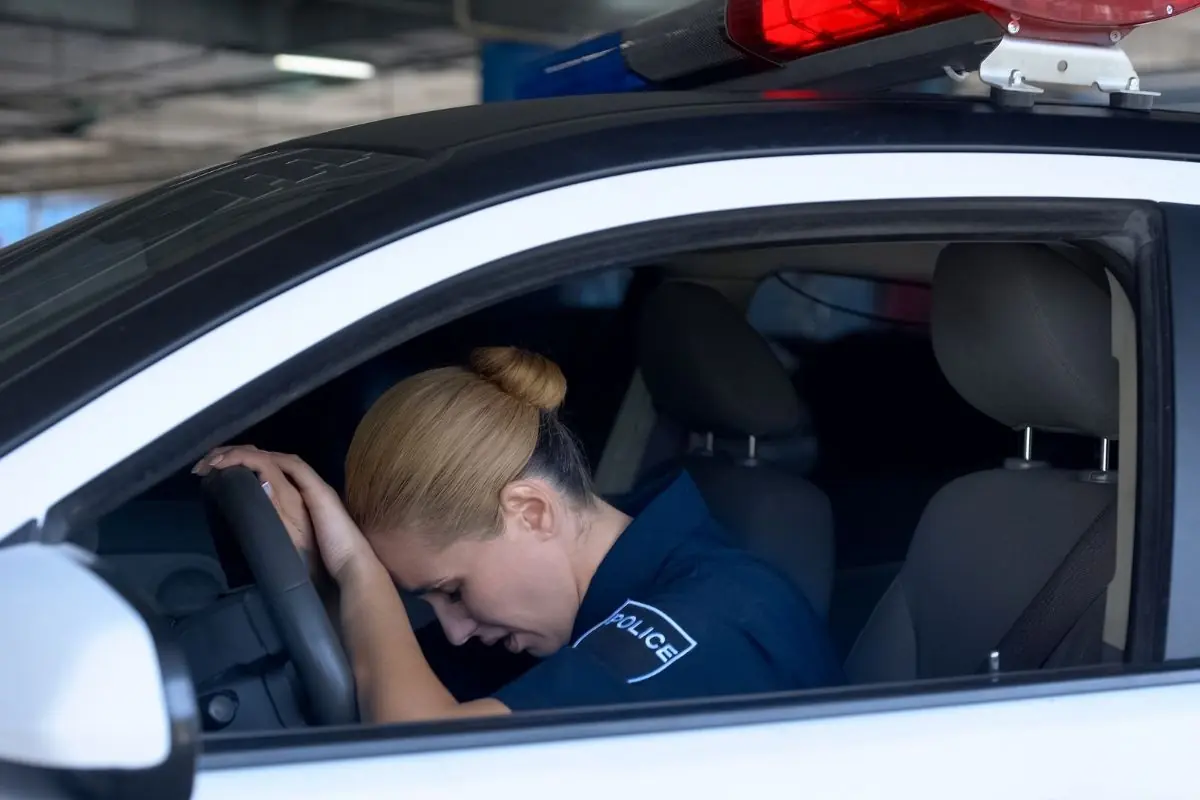
Chapter 1: The Moment the Uniform Cannot Hide
A quiet video that revealed a difficult truth
The officer's brief recording described in the supplied article was not presented as a formal announcement. It was a personal expression of what remained after an extended period of duty. The available account does not identify the officer, her department, or the exact date of the recording, so the moment is best understood through the experience it describes rather than through unverified details about her identity.
That distinction matters. The emotional reality of law enforcement does not depend on a particular video becoming famous. It exists in ordinary moments that rarely attract attention: an officer sitting in a parked vehicle before driving home, a patrol worker taking a deep breath in an empty corridor, or someone removing a uniform and realizing that the tension of the day has followed them into the evening.
For the public, a police shift may appear to be a sequence of calls, reports, and routine duties. For the person performing it, the day can feel like a continuous exercise in alertness.
A quiet street can change in seconds. A conversation that begins calmly may become confrontational. A routine traffic stop may require careful judgment. An officer may arrive at a scene without knowing whether the people involved are frightened, injured, angry, or dangerous.
Throughout these moments, the officer must pay attention not only to what is happening but also to what could happen next.
The responsibility is not simply to react. It is to react appropriately, often with incomplete information and very little time.
This creates a particular kind of pressure. The officer may need to remain composed while others are shouting, crying, or behaving unpredictably. Even when a situation is resolved without injury, the body and mind may have spent a considerable period preparing for the possibility that it could turn worse.
When the immediate danger ends, the nervous system does not always return to calm at the same speed as the surroundings.
That is one reason the end of a shift can feel less like a clean finish and more like a gradual transition.
The officer in the account chose to express that transition through a short video. What made the moment meaningful was not an elaborate explanation. It was the recognition that the person behind the uniform had reached the end of her emotional energy.
The difference between being tired and being emotionally exhausted
Physical tiredness is relatively easy to recognize.
A person may have sore feet after standing for hours, aching shoulders from wearing equipment, or a strong desire to sit down after a long period of activity. Rest, food, hydration, and sleep can often help the body recover.
Emotional exhaustion can be more difficult to describe.
It may appear as a feeling of emptiness after a demanding day. A person may have difficulty explaining why they feel drained when nothing physically strenuous seems to have happened. They may find ordinary conversation unusually difficult or feel unable to respond with the patience they normally possess.
In law enforcement, emotional exhaustion can develop from several sources at once.
There is the strain of responding to difficult situations. There is the responsibility of making decisions that may affect other people. There is the need to regulate personal emotions while interacting with members of the public. There is also the effort required to maintain professional behavior when someone is angry, disrespectful, or frightened.
An officer cannot always show the feelings that naturally arise during a confrontation.
A person may feel sadness but need to continue giving instructions. They may feel frustration but must avoid allowing it to control their response. They may experience fear but still need to communicate clearly and act responsibly.
This constant adjustment is part of professional work.
However, emotional control is not the same as having no emotions. It is the ability to manage feelings so that they do not interfere with the task at hand.
The difficulty comes when that management becomes continuous, with too little opportunity to relax afterward.
A systematic review and meta-analysis published in the Journal of Police and Criminal Psychology examined research involving 4,572 police officers across ten studies. It found a consistent relationship between occupational stressors and burnout or post-traumatic stress symptoms, although the strength of those relationships varied considerably between studies.
The findings do not mean that every officer will develop a mental health condition. They do show why emotional strain should be considered a genuine occupational concern rather than a personal weakness.
The hidden work of staying composed
The public often sees the visible side of policing: the uniform, the vehicle, the badge, and the authority associated with the role.
Less visible is the emotional work that allows an officer to perform effectively.
Imagine an officer arriving at a family dispute. One person may be shouting. Another may be crying. Children may be watching. Neighbors may be gathering outside. The officer must assess the situation, listen to conflicting accounts, maintain safety, and decide what steps are appropriate.
The officer may feel sympathy for one person and concern about another. Yet the response must remain fair and measured.
Now imagine repeating that kind of emotional regulation throughout a shift, with little time to process one encounter before moving to the next.
The demands can accumulate.
This does not mean that officers should be excused from accountability. Professional responsibility remains essential, especially when the use of authority affects people's rights and safety.
But accountability and emotional wellbeing are not opposing ideas.
A professional who receives adequate rest, support, and training is better positioned to make thoughtful decisions. Recognizing emotional strain can therefore be part of strengthening public service, not weakening it.