Boil Shrimp with These Two Ingredients for Sweet, Non-Fishy, and Vibrantly Red Shrimp
To prepare a plate of boiled shrimp that is visually appealing, sweet, and free of any fishy smell, follow these tips below.
How to Choose Fresh Shrimp
For boiled shrimp, the best choice is live, fresh shrimp that are swimming actively.
When buying shrimp, look for ones with clear, shiny shells. The body should feel firm when pressed. The head should be firmly attached to the body, and the legs and antennae should remain intact without any black spots.
If you're buying frozen shrimp, make sure to purchase from a reputable source. Avoid shrimp with yellow shells or shells that feel overly hard, as this could indicate the use of sodium bisulfite, a whitening agent used to remove dark spots. Also, avoid shrimp with an unusual smell.
Cleaning the Shrimp
After buying, rinse the shrimp thoroughly and trim the long antennae. Remove the black vein on the shrimp’s back.
There are several ways to remove the vein. You can use a toothpick to poke horizontally into the shrimp’s back and pull out the vein. Alternatively, use scissors to cut a diagonal notch near the shrimp’s head to push out the black material inside the head while also pulling out the vein.
Once the shrimp are cleaned, marinate them with 1/2 cup of white wine. This step helps remove any fishy odor and enhances the red color during cooking.
Tips for Boiling Shrimp
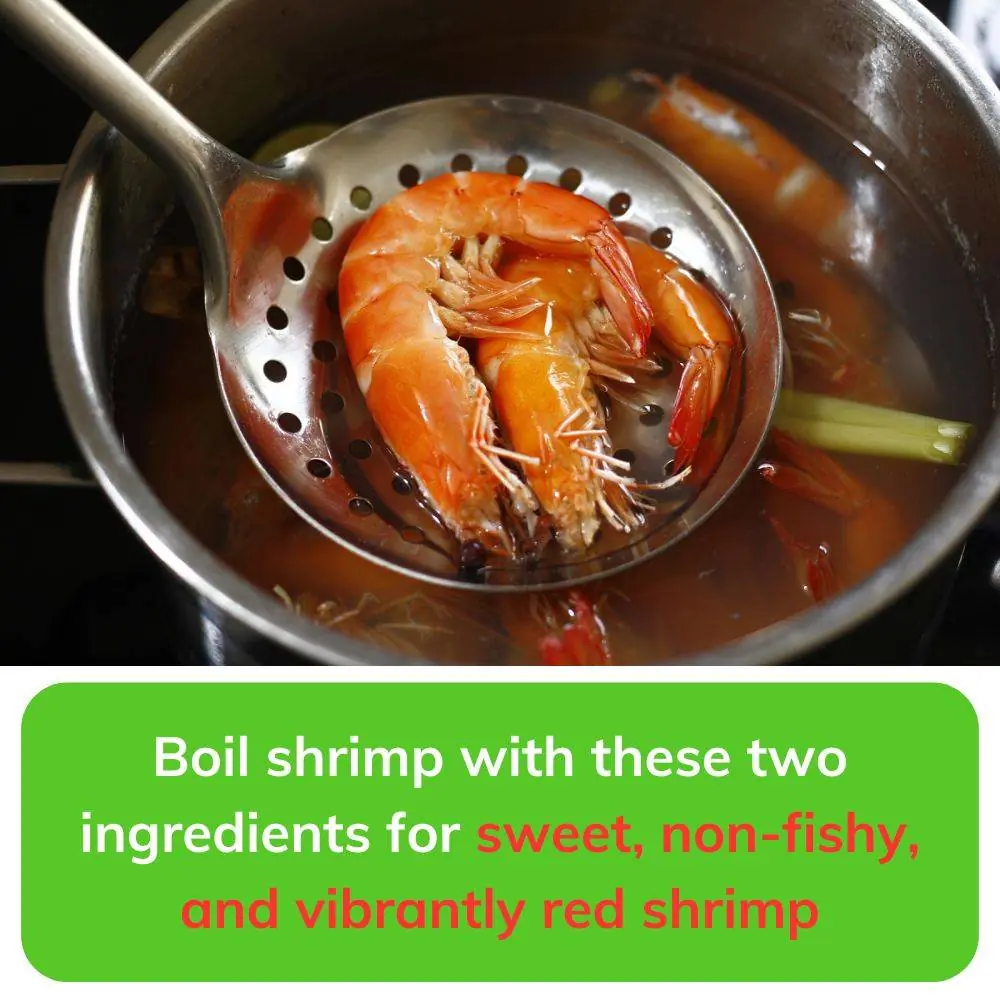
When boiling shrimp, pay attention to seasoning, water temperature, and cooking time to prevent the shrimp from becoming mushy or losing its natural sweetness.
-
Seasoning for Boiled Shrimp
Add a bit of crushed ginger and lemongrass for fragrance and to reduce the fishy smell. You can also season with a pinch of salt and bouillon powder for added flavor. -
Use Hot Water to Boil Shrimp
Instead of starting with cold water, use hot water for boiling shrimp. Cooking with cold water prolongs the boiling time, making the shrimp bland and mushy. Boiling with hot water helps retain the shrimp's sweetness and removes odors more effectively. -
Cooking Time
Adjust the cooking time based on the size of the shrimp. The shrimp is done when the body is slightly curved, forming a half-circle shape, and the shell turns completely red. Avoid overcooking the shrimp to the point where the body curls into a full circle, as this will make the meat dry, mushy, and lose its natural sweetness.
Once cooked, remove the shrimp and let them drain before plating. Avoid placing the shrimp directly onto the plate while still wet, as the residual hot water will make them soft and mushy.
- Soak Shrimp in Ice Water
If you plan to use the shrimp in dishes like fresh spring rolls, noodles, or salads, soak them in ice water immediately after boiling. This will firm up the shrimp's meat and make them easier to peel.