Toilet paper is one of those everyday products most people rarely think about. We use it several times a day, assume it is safe, and move on.
But because toilet paper comes into direct contact with sensitive skin, questions sometimes arise about the chemicals and materials that may be used during manufacturing.
Could toilet paper contain fragrances, dyes, preservatives, bleaching byproducts, or other chemical residues? And should consumers be concerned?
The short answer is that toilet paper is generally considered safe when manufactured and used as intended, but products can differ considerably in their materials and added ingredients. People with sensitive skin, allergies, recurrent irritation, or certain dermatological conditions may be more affected by fragranced or heavily treated products.
Understanding what can be present in toilet paper and knowing how to choose a product that suits your skin—is more useful than assuming all toilet paper is dangerous.
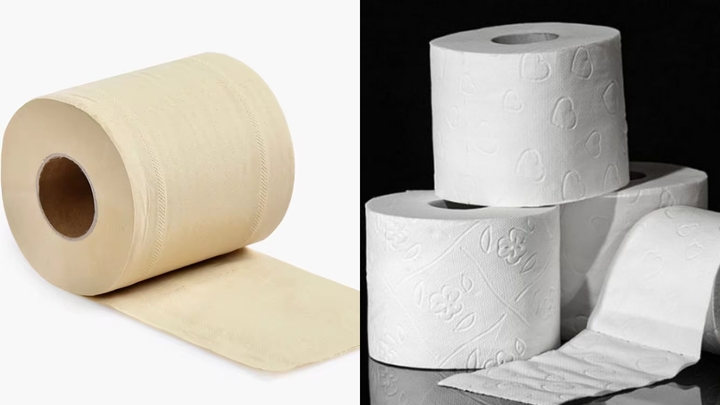
What Is Toilet Paper Actually Made Of?
Most conventional toilet paper is primarily made from cellulose fibers, usually obtained from wood pulp or recycled paper.
Manufacturers may process these fibers in different ways to create the desired characteristics, such as:
-
Softness
-
Strength
-
Absorbency
-
Brightness
-
Thickness
-
Texture
Depending on the product, additional substances may be used during manufacturing.
These can include chemicals involved in:
-
Pulp processing
-
Bleaching
-
Softening
-
Strengthening
-
Fragrance
-
Coloring
-
Moisture retention
The exact ingredients vary between brands and product types.
1. Bleaching Doesn't Necessarily Mean Chlorine Is Present
White toilet paper is often bleached to remove natural color from wood pulp and create a cleaner appearance.
Modern paper manufacturing can use bleaching processes based on substances such as oxygen, hydrogen peroxide, or chlorine dioxide.
This is different from simply adding household chlorine bleach to the finished product.
Consumers sometimes encounter claims that white toilet paper is "full of chlorine." That's an oversimplification.
Modern manufacturing processes are designed to control unwanted chemical residues and byproducts.
2. What About Dioxins?
Dioxins are a group of persistent environmental contaminants that can form during certain industrial processes, including some historical bleaching methods.
This has contributed to concerns about toilet paper and dioxin exposure.
However, modern paper manufacturing has significantly reduced the formation of dioxins through improved bleaching technologies and processing standards.
That doesn't mean environmental dioxins don't exist—they are persistent contaminants found in many environments—but it would be misleading to suggest that ordinary modern toilet paper is a major source of dangerous dioxin exposure for most consumers.
3. Fragrance Can Be More Relevant for Sensitive Skin
One ingredient category that may matter more to certain consumers is fragrance.
Scented toilet paper may contain fragrance mixtures designed to create a particular smell.
Fragrance ingredients can trigger irritation or allergic contact dermatitis in susceptible individuals.
Possible symptoms include:
-
Itching
-
Burning
-
Redness
-
Dryness
-
Rash
-
General discomfort
If you repeatedly experience irritation after using scented toilet paper, switching to an unscented product may be a simple first step.
4. Dyes and Colored Toilet Paper
Some toilet paper products contain dyes to create decorative colors or patterns.
Most people can use these products without problems.
However, dyes can occasionally contribute to skin irritation or allergic reactions in sensitive individuals.
For people who frequently experience unexplained irritation, choosing plain, undyed toilet paper may reduce the number of potential irritants they encounter.
5. Lotion-Infused Toilet Paper
Some products are marketed as especially soft because they contain moisturizing or lotion-like ingredients.
These products can feel comfortable for some users.
But additional ingredients can also create another potential source of irritation for people with sensitive skin.
If a product causes itching or burning, don't assume that a "moisturizing" formulation is necessarily better for you.
Sometimes a simpler product is easier to tolerate.
6. What Are PFAS?
PFAS stands for per- and polyfluoroalkyl substances, a large group of chemicals often referred to as "forever chemicals" because many are highly persistent in the environment.
PFAS have been investigated in many consumer products and environmental sources.
Studies have also examined whether certain paper products can contain fluorinated compounds.
However, claims that all toilet paper contains dangerous levels of PFAS are not supported.
The presence and concentration of specific chemicals can vary depending on the product, manufacturing process, and testing method.
Consumers should avoid assuming that a single study of a particular product represents every toilet paper brand.
7. Formaldehyde and Other Processing Chemicals
Formaldehyde is an industrial chemical used in numerous manufacturing processes.
Certain paper products can potentially involve formaldehyde or formaldehyde-releasing substances during production, depending on the manufacturing process.
However, the relevant question is not simply whether a chemical was ever used during manufacturing.
The important questions are:
How much remains in the finished product?
How much exposure occurs during normal use?
Does the amount exceed applicable safety standards?
These distinctions are essential when evaluating chemical exposure claims.
8. Why "Chemical-Free Toilet Paper" Is a Misleading Phrase
Marketing sometimes promotes products as:
"100% chemical-free."
Technically, this wording is misleading.
Everything is made of chemicals, including:
-
Water
-
Cellulose
-
Natural fibers
-
Plant compounds
What consumers usually mean by "chemical-free" is free from certain added substances or processing chemicals.
A more useful description would be:
-
Fragrance-free
-
Dye-free
-
Chlorine-free
-
Lotion-free
-
Made from recycled fibers
-
Made from virgin pulp
These terms tell you much more about the product.
9. Recycled Toilet Paper Has Its Own Considerations
Recycled toilet paper is made using recovered paper fibers.
It can reduce the demand for virgin wood pulp and may have environmental advantages.
However, recycled paper can involve additional processing to remove inks, adhesives, coatings, and other materials from the original paper.
Modern recycling systems are designed to produce materials suitable for their intended uses.
For consumers, the most important consideration is whether the finished product meets applicable safety and quality requirements.
10. Is Recycled Toilet Paper Less Safe?
Not necessarily.
A common misconception is that recycled toilet paper must contain dangerous levels of contaminants simply because the original paper may have contained ink.
Manufacturing and regulatory controls are intended to address contaminants in recycled paper products.
The safety of a particular product depends on how it is manufactured and what standards it meets—not simply whether the fiber originated from recycled material.
11. Virgin Pulp Toilet Paper Isn't Automatically "Chemical-Free"
Toilet paper made from virgin wood pulp may feel cleaner or softer to some consumers.
But virgin pulp products can still undergo:
-
Pulping
-
Bleaching
-
Strengthening
-
Softening
-
Other processing
So choosing virgin pulp doesn't automatically mean avoiding chemicals.
The finished product and its ingredients matter more than the marketing label alone.
12. Why Does Toilet Paper Need Processing at All?
Raw wood isn't naturally suitable for wiping.
Manufacturers need to separate cellulose fibers from other components and create paper with specific characteristics.
Processing allows manufacturers to produce toilet paper that is:
-
Soft enough for skin
-
Strong enough for use
-
Absorbent
-
Dispersible in water
-
Visually consistent
Without processing, the product would not perform as intended.
13. Softness Doesn't Necessarily Mean Better
Very soft toilet paper may feel more comfortable.
But softness can be achieved through different combinations of:
-
Fiber selection
-
Layering
-
Mechanical processing
-
Chemical treatments
-
Lotions or additives
If you have sensitive skin, don't automatically assume that the softest product will be the best choice.
A simpler, unscented product may actually feel better over time.
14. The Skin Around the Genital Area Is Sensitive
The perianal and genital areas contain sensitive skin and mucosal tissues.
Frequent exposure to fragrances, dyes, preservatives, or aggressive wiping can contribute to irritation in susceptible individuals.
Possible symptoms include:
-
Burning
-
Itching
-
Redness
-
Dryness
-
Small cracks
-
Discomfort after bowel movements
If irritation repeatedly occurs, changing your hygiene routine may help.
15. Excessive Wiping Can Cause Irritation
Sometimes the problem isn't the toilet paper itself.
It may be how frequently or aggressively someone wipes.
Repeated friction can damage the skin barrier.
This can create a cycle:
Irritation → more wiping → more friction → more irritation.
Gentle cleaning is generally preferable to vigorous scrubbing.
16. Wet Wipes Aren't Automatically Safer
Many people switch from toilet paper to wet wipes because they feel cleaner.
However, wipes can contain:
-
Fragrance
-
Preservatives
-
Cleansing agents
-
Other additives
These can irritate sensitive skin.
Some wipes marketed as "flushable" also don't break down as readily as ordinary toilet paper and can contribute to plumbing or sewer problems.
17. What About "Flushable" Wipes?
The term "flushable" can be confusing.
Many wipes may technically pass through a toilet but still fail to break down rapidly enough to avoid problems in sewer systems.
This is why many wastewater authorities recommend flushing only toilet paper.
If you use wipes, follow local disposal guidance.
18. Toilet Paper and Hemorrhoids
Hemorrhoids can make wiping uncomfortable.
If you have hemorrhoids, aggressive wiping can worsen irritation.
A gentler approach may include:
-
Soft, unscented toilet paper
-
Avoiding excessive wiping
-
Washing with water when practical
-
Patting rather than rubbing
-
Managing constipation
Persistent bleeding or severe anal pain should be medically evaluated rather than automatically blamed on hemorrhoids.
19. Toilet Paper Doesn't Cause Colon Cancer Simply Because It Contains Chemicals
This is an important distinction.
Sensational headlines sometimes suggest that everyday exposure to toilet paper chemicals directly causes cancer.
Such claims generally require much stronger evidence than is often presented online.
Cancer risk is influenced by many factors, including:
-
Genetics
-
Tobacco exposure
-
Alcohol
-
Diet
-
Obesity
-
Physical activity
-
Certain infections
-
Environmental exposures
-
Age
Consumers shouldn't panic because a toilet paper product contains a chemical used during manufacturing.
The relevant question is whether exposure at realistic levels presents a meaningful health risk.
20. Dose Matters
The phrase:
"This chemical is toxic"
doesn't tell you enough.
Toxicology depends heavily on dose, route, duration, and frequency of exposure.
A substance can be harmful at a high dose while posing little risk at the tiny levels encountered during ordinary consumer use.
This principle is critical when evaluating alarming claims about chemicals in household products.
21. Contact Exposure Is Different From Eating a Chemical
Toilet paper is primarily a contact-use product.
The exposure route is largely through the skin.
This is different from swallowing a chemical or inhaling it at high concentrations.
The amount that transfers from a finished paper product to the skin can also be very different from the amount originally used during manufacturing.
22. What If You Have Eczema or Sensitive Skin?
People with eczema or highly sensitive skin may be more vulnerable to irritation.
A simple approach is to choose products that are:
-
Fragrance-free
-
Dye-free
-
Lotion-free
-
As simple as practical
Also avoid scrubbing.
If irritation persists despite changing products, a dermatologist can help determine whether you have contact dermatitis, eczema, infection, hemorrhoids, or another condition.
23. Fragrance-Free Is Different From Unscented
These terms can be confusing.
Fragrance-free generally means that fragrance ingredients have not been intentionally added.
Unscented can sometimes mean that a product has no noticeable scent but may contain ingredients used to mask odors.
For people with fragrance sensitivity, checking the manufacturer's ingredient information can be more useful than relying on marketing language alone.
24. What About Toilet Paper With Aloe Vera?
Some toilet papers contain aloe or other soothing ingredients.
These may feel comfortable for some people.
But any added ingredient has the potential to cause irritation or allergy in susceptible individuals.
If you have repeatedly experienced sensitivity to personal-care products, simpler formulations may be preferable.
25. What About Bamboo Toilet Paper?
Bamboo toilet paper has become popular partly because bamboo is a rapidly growing plant.
However, "bamboo toilet paper" isn't necessarily chemically untreated.
The bamboo still needs to be processed into usable paper fibers.
Consumers interested in bamboo products should evaluate:
-
Manufacturing practices
-
Certifications
-
Added fragrances
-
Dyes
-
Packaging
-
Sustainability claims
The raw material alone doesn't tell the whole story.
26. What About Unbleached Toilet Paper?
Unbleached products are often marketed as a more natural option.
They may retain a more natural beige or brown color.
Some consumers prefer them because they want to minimize certain processing steps.
For most people, however, the health difference between properly manufactured bleached and unbleached toilet paper is unlikely to be dramatic.
If you have a specific sensitivity, a simpler product may be worth trying.
27. Toilet Paper Quality Can Affect Comfort
Cheap toilet paper isn't automatically unsafe.
But lower-quality products may be:
-
Rougher
-
Less absorbent
-
More likely to tear
-
More irritating with repeated wiping
If you experience irritation, texture can matter just as much as chemical additives.
A slightly softer product may reduce mechanical friction.
28. Avoid Strongly Scented Products If You Are Sensitive
If your skin is prone to irritation, there is usually little reason to choose heavily perfumed toilet paper.
Fragrance provides a sensory benefit rather than an essential hygiene benefit.
Choosing a plain product can simplify your exposure profile.
29. Look for Transparent Product Information
When choosing toilet paper, useful information may include:
-
Fiber source
-
Whether it contains fragrance
-
Whether it contains dyes
-
Whether it contains lotion
-
Environmental certifications
-
Manufacturer information
Don't rely solely on dramatic claims like "toxin-free."
Specific claims are more useful.
30. Certifications Can Provide Additional Information
Depending on your priorities, you may look for recognized certifications related to:
-
Sustainable forestry
-
Recycled content
-
Chemical management
-
Environmental standards
Certification doesn't mean a product is completely free of chemicals.
It indicates that the product or manufacturing process has met defined criteria.
31. What About Formaldehyde-Free Claims?
Some manufacturers advertise products as free from specific substances.
These claims can be useful, but they should be interpreted carefully.
A product being free from one chemical doesn't necessarily mean it is safer overall.
For sensitive skin, a broader approach—such as choosing fragrance-free and minimally treated products—may be more practical.
32. Don't Assume Expensive Means Safer
Premium toilet paper can offer:
-
Greater softness
-
More layers
-
Better texture
-
Different fiber sources
But price alone doesn't determine chemical safety.
A basic fragrance-free product may be perfectly suitable for someone with sensitive skin.
33. What If Toilet Paper Causes Burning?
If you notice burning after switching to a new toilet paper, stop using it temporarily and consider switching to a simpler product.
Possible causes include:
-
Fragrance
-
Dyes
-
Lotion
-
Mechanical friction
-
Pre-existing skin irritation
-
Hemorrhoids
-
Anal fissures
-
Dermatitis
If symptoms persist, seek medical advice.
34. What If There Is Persistent Itching?
Persistent itching around the anus can have many causes.
Possible explanations include:
-
Irritant dermatitis
-
Contact allergy
-
Hemorrhoids
-
Fungal infection
-
Pinworms
-
Excessive moisture
-
Certain gastrointestinal conditions
Don't assume toilet paper is the cause simply because symptoms occur after wiping.
A healthcare professional can help identify the underlying problem.
35. Bleeding Shouldn't Automatically Be Blamed on Toilet Paper
Small amounts of bright-red blood can occur with hemorrhoids or anal fissures.
But rectal bleeding can have many causes.
If bleeding is:
-
Recurrent
-
Heavy
-
Dark or black
-
Associated with abdominal pain
-
Associated with unexplained weight loss
-
Associated with changes in bowel habits
seek medical evaluation.
Don't assume it is simply irritation from toilet paper.
36. How to Use Toilet Paper More Gently
A few simple habits can reduce irritation.
Don't scrub
Use gentle wiping rather than repeated friction.
Use enough paper
Avoid excessive pressure.
Wipe appropriately
Follow your usual hygienic technique and avoid unnecessary repeated wiping.
Consider water
A bidet or gentle washing with water can reduce friction for some people.
Pat dry
If you wash with water, gently pat rather than aggressively rubbing.
37. Bidets Can Reduce Friction
Bidets use water rather than relying entirely on dry paper.
For some people, this can be more comfortable, particularly when dealing with:
-
Hemorrhoids
-
Sensitive skin
-
Frequent bowel movements
-
Postpartum irritation
However, excessive water pressure or very hot water can also irritate the skin.
Gentle cleaning is the goal.
38. Hygiene Doesn't Mean Sterility
The anal area is naturally home to many microorganisms.
You don't need to make the area sterile.
Excessive cleaning can actually damage the skin barrier.
The goal is simply to remove fecal material without causing unnecessary irritation.
39. Don't Use Household Disinfectants on the Skin
If you're worried about germs, never try to disinfect the genital or anal area with:
-
Bleach
-
Alcohol
-
Household disinfectant
-
Strong cleaning products
These chemicals can cause burns and serious irritation.
Personal hygiene products should be designed specifically for skin contact.
40. What Consumers Should Actually Focus On
Rather than worrying about every chemical mentioned in a viral post, consider the practical factors that are most relevant to everyday use.
Choose a product that is:
Comfortable
Not irritating
Appropriate for your skin
Reliable in quality
Suitable for your plumbing and local disposal practices
If you're sensitive, a plain, fragrance-free, dye-free toilet paper is a reasonable option.
Who May Want to Be More Selective?
Some people may benefit from paying closer attention to toilet paper ingredients.
These include people with:
-
Sensitive skin
-
Eczema
-
Contact dermatitis
-
Recurrent anal irritation
-
Hemorrhoids
-
Frequent diarrhea
-
Known fragrance allergies
-
Previous reactions to personal-care products
For these individuals, minimizing unnecessary additives can be a sensible strategy.
What About Children?
Children's skin can be sensitive, especially when they have frequent diarrhea or irritation.
For young children, simple products without strong fragrances or unnecessary additives may be preferable.
Teach children gentle hygiene rather than aggressive wiping.
If a child develops persistent itching, rash, pain, or bleeding, consult a pediatric healthcare professional.
The Bottom Line
Toilet paper is a highly regulated everyday consumer product in many countries, and ordinary use of properly manufactured toilet paper is not generally considered a major health hazard.
Nevertheless, toilet paper can contain or come into contact with various substances during manufacturing, including bleaching agents, processing chemicals, dyes, fragrances, lotions, and other additives.
For most people, these aren't a reason for alarm.
The people most likely to notice problems are those with sensitive skin, allergies, eczema, hemorrhoids, or recurrent irritation.
If you're experiencing discomfort, switching to a simpler product—particularly fragrance-free, dye-free, and lotion-free toilet paper—may be worth trying.
Just as importantly, avoid excessive wiping and harsh cleansing products.
Final Thoughts
It's understandable to wonder what is actually in a product that comes into contact with your skin every day.
But the internet can make ordinary chemical exposure sound much more frightening than the scientific evidence supports.
A chemical being used somewhere during manufacturing does not automatically mean that the finished product contains a dangerous dose. What matters is the final concentration, route of exposure, duration, and actual evidence of harm.
For everyday consumers, the practical approach is simple:
Choose reputable products.
Avoid unnecessary fragrance if you're sensitive.
Don't use harsh chemicals on your skin.
Keep wiping gentle.
Consider water-based cleaning if it is more comfortable for you.
And if you develop persistent itching, burning, pain, rash, or rectal bleeding, don't assume toilet paper is responsible.
A healthcare professional can help determine the actual cause.
Toilet paper doesn't need to be fear-inducing. For most people, the goal isn't finding a completely "chemical-free" product—that doesn't meaningfully exist—but choosing a safe, comfortable product that works well for your skin and using it appropriately.