Baking soda is one of those inexpensive household products that seems almost too ordinary to be interesting.
You may already have a box sitting somewhere in your kitchen cabinet.
Perhaps you use it when baking cookies or cakes. Maybe you've sprinkled some into the refrigerator to reduce odors. You might even use it occasionally for cleaning.
But baking soda—chemically known as sodium bicarbonate—has a surprisingly wide range of practical uses.
It has been used in cooking, cleaning, oral care, and certain medical applications for decades.
At the same time, the internet has turned baking soda into something of a household “miracle” ingredient, with claims that drinking it, applying it to the skin, or using it in unusual ways can supposedly solve everything from digestive problems to serious diseases.
That is where caution becomes important.
Baking soda is useful, but it is not a cure-all.
It is a mildly alkaline substance that reacts with acids. That simple chemical property explains many of its legitimate uses. But consuming large amounts or using it incorrectly can cause problems, especially because baking soda contains a significant amount of sodium.
So what happens when you use baking soda in sensible ways?
Here are 10 potential benefits and practical uses worth knowing.
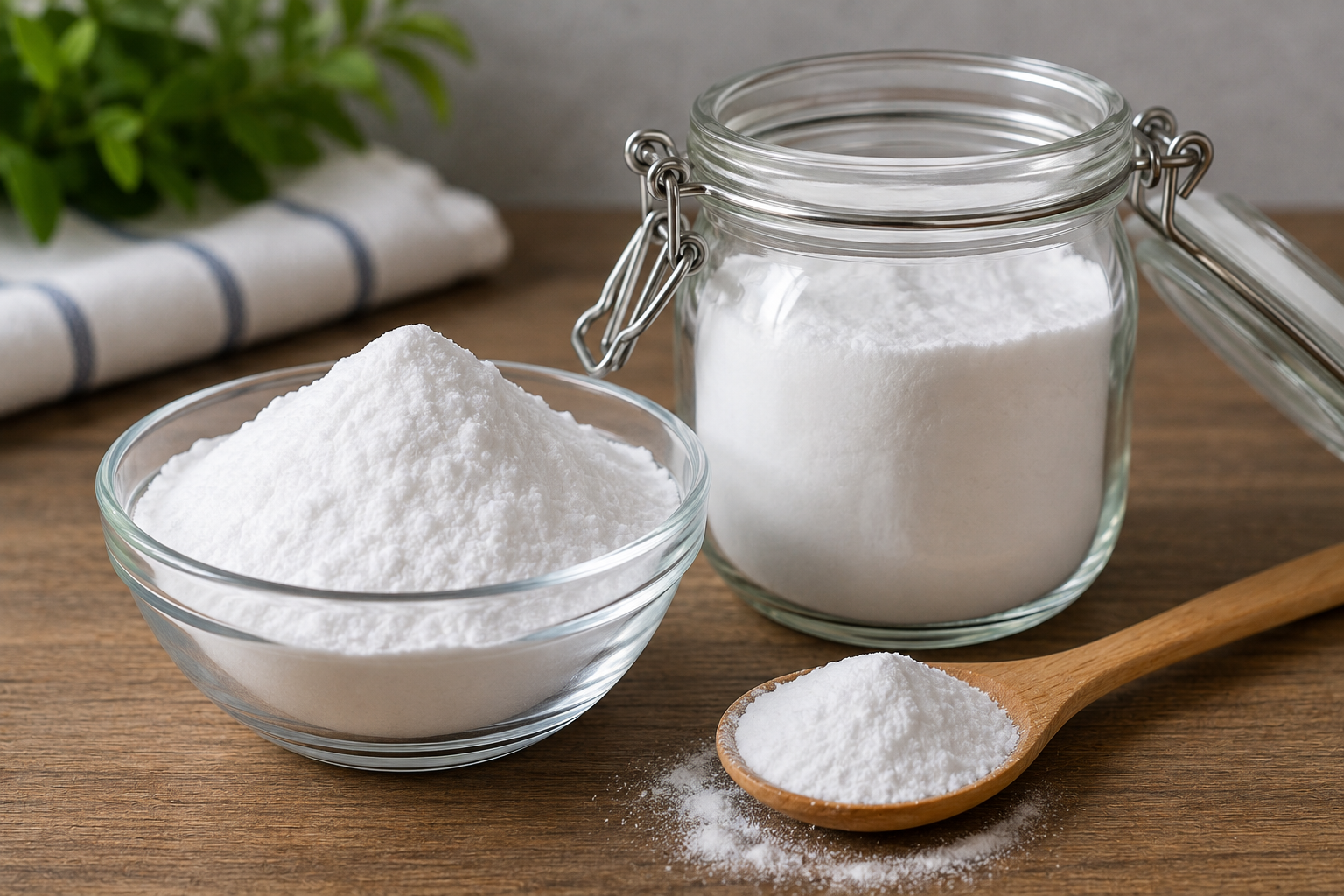
1. Baking Soda Can Help Neutralize Certain Acids
One of the most basic properties of baking soda is also one of the most useful.
Sodium bicarbonate is alkaline.
When it encounters an acid, it can react with it and partially neutralize it.
This is exactly what happens during baking.
Baking soda reacts with acidic ingredients such as buttermilk, yogurt, lemon juice, vinegar, or certain forms of cocoa.
The reaction can produce carbon dioxide gas, which helps baked goods rise.
But the same acid-neutralizing property also explains why sodium bicarbonate has been used as an antacid.
When consumed as an approved antacid product and used according to directions, sodium bicarbonate can temporarily neutralize stomach acid and relieve occasional heartburn or indigestion.
However, this does not mean that drinking random amounts of baking soda is a safe treatment for chronic digestive problems.
Persistent heartburn should be evaluated rather than repeatedly treated with homemade baking soda mixtures.
2. It Can Be Used as an Occasional Antacid
This is one of the more established medical uses of sodium bicarbonate.
Because it can neutralize stomach acid, sodium bicarbonate has been included in some antacid products.
For someone experiencing occasional acid indigestion, an appropriately formulated antacid can provide temporary relief.
But there is a major difference between using a regulated product according to its label and mixing large amounts of kitchen baking soda into water.
Baking soda contains sodium.
A significant amount of sodium can be dangerous, particularly for people with certain medical conditions.
People with high blood pressure, heart failure, kidney disease, or sodium-restricted diets should be particularly cautious.
It can also interact with certain medications and affect how some medicines are absorbed.
So if you're considering baking soda for recurring heartburn, don't assume that because it's found in the kitchen it is automatically safe to take medicinally.
3. Baking Soda Can Help Remove Unpleasant Odors
This is probably one of the safest and most practical uses of baking soda.
Odors often come from acidic or basic volatile compounds.
Because baking soda can interact chemically with some odor-producing compounds, it can help reduce certain unpleasant smells.
That's why people commonly place an open container of baking soda inside a refrigerator.
It can also be useful for certain household odors.
For example, some people use it in:
-
Refrigerators
-
Trash cans
-
Shoes
-
Carpets
-
Pet areas
-
Cupboards
The key word is reduce.
Baking soda doesn't magically destroy every odor.
But it can be a simple, inexpensive option for managing certain household smells.
4. It Can Help With Household Cleaning
Baking soda is mildly abrasive.
That makes it useful for cleaning certain surfaces without relying on a very harsh abrasive product.
Mixed with a small amount of water, it can form a paste that may help loosen grime.
People commonly use baking soda for:
-
Sinks
-
Stovetops
-
Kitchen surfaces
-
Bathroom surfaces
-
Cookware
-
Some stains
However, “natural” doesn't mean universally safe.
Because baking soda is mildly abrasive, it may scratch delicate surfaces.
You should be careful with polished stone, certain metals, delicate finishes, and surfaces where the manufacturer specifically advises against abrasive cleaners.
When in doubt, test a small inconspicuous area first.
5. Baking Soda Can Help Freshen Carpets and Fabrics
Another popular household use is deodorizing fabrics.
A light application of baking soda can sometimes help absorb or reduce unpleasant odors in carpets, rugs, and upholstery.
A common approach is to sprinkle a small amount over a suitable fabric surface, allow it to sit for a period of time, and then vacuum it thoroughly.
However, this isn't appropriate for every carpet or fabric.
Some manufacturers recommend specific cleaning methods, and excessive powder can be difficult to remove.