Clogged drains and unpleasant odors are common problems in many homes. Whether it happens in the kitchen sink, bathroom drain, or shower, a blockage can slow water flow and create foul smells that spread throughout the room. Many people immediately think they need expensive chemicals or professional plumbing services to fix the issue. However, in many cases, a simple household method can help clear minor clogs and remove bad odors quickly.
Using everyday items that most people already have at home, you can often restore proper drainage and freshen your pipes without spending money on harsh chemical cleaners. Not only are these methods affordable, but they are also safer for your plumbing system and the environment.
Below are simple and effective techniques that can help you clear clogs and eliminate unpleasant smells from your drains.
Why Drains Become Clogged and Smelly
Before learning how to fix the problem, it is helpful to understand why clogs and odors develop in the first place.
In kitchen sinks, blockages are usually caused by a buildup of grease, food particles, and soap residue. Over time, these materials accumulate inside the pipes and restrict the flow of water.
In bathroom drains, clogs often form due to hair, soap scum, toothpaste residue, and small debris. When these materials collect in the drain, they create a sticky mass that traps water and bacteria.
Bad smells usually appear when organic matter begins to decompose inside the pipes. The trapped materials create an environment where bacteria grow, producing unpleasant odors that travel back through the drain.
Fortunately, many minor clogs and odors can be removed using simple household solutions.

The Baking Soda and Vinegar Method
One of the most popular and effective natural cleaning methods involves baking soda and vinegar. These two ingredients create a bubbling reaction that helps break down debris and loosen buildup inside the pipes.
How to use this method:
-
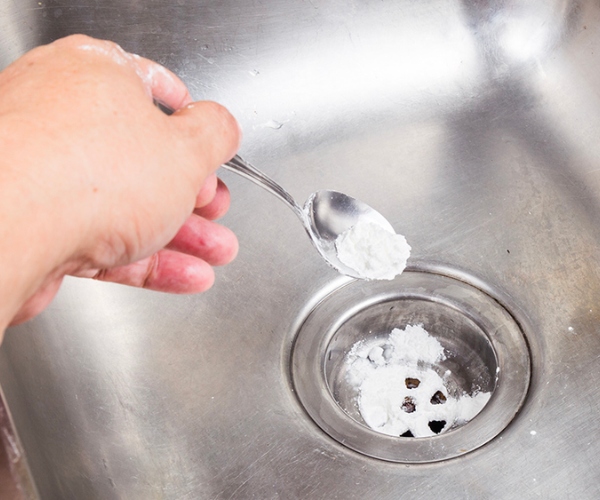
Pour about half a cup of baking soda directly into the drain.
-
Follow it with one cup of white vinegar.
-
Allow the mixture to fizz and react inside the drain for about 10–15 minutes.
-
Flush the drain with hot water to wash away loosened debris.
The bubbling reaction helps push through grease and grime while neutralizing odors. This method is particularly useful for kitchen sinks and bathroom drains that are beginning to slow down.
Hot Water and Dish Soap for Grease Buildup
Kitchen drains often become clogged due to grease that hardens inside the pipes. A simple solution for this problem involves hot water and dish soap.
Dish soap is designed to break down fats and oils, making it very effective for cleaning grease buildup.
Steps to follow:
-
Add a few tablespoons of dish soap into the drain.
-
Slowly pour a kettle of hot water down the drain.
-
Allow the hot water to dissolve grease and carry it through the pipes.
This method works best for early-stage clogs caused by cooking oils or fatty residues.
Salt and Hot Water for Odor Removal
Another simple technique for removing odors involves table salt and hot water. Salt acts as a natural abrasive that can help scrub the inner walls of pipes.
To use this method, pour half a cup of salt into the drain followed by hot water. The mixture helps break down residue while flushing away odor-causing particles.
This approach is especially useful as a routine maintenance step to keep drains fresh.
Cleaning the Drain Stopper
Sometimes the source of a bad smell is not deep inside the pipes but right near the surface. Hair, soap, and debris can accumulate around the drain stopper or strainer, creating unpleasant odors.
To solve this problem:
-
Remove the drain stopper or strainer.
-
Clean off any visible debris using a brush or cloth.
-
Rinse the stopper with warm soapy water before placing it back.
This simple step alone can often eliminate smells and improve water flow.

Using Lemon for a Fresh Scent
Lemon is another natural ingredient that can help freshen drains. The citric acid in lemon helps break down residue while leaving a pleasant scent.
To use this method, squeeze fresh lemon juice into the drain and follow it with warm water. Some people also grind small pieces of lemon peel in garbage disposals to remove odors and create a fresh smell in the kitchen.
This technique works well as a finishing step after cleaning the drain.
Preventing Future Clogs and Odors
While cleaning a clogged drain can solve the immediate problem, prevention is the best long-term solution.
Here are a few habits that can help keep your drains clear:
-
Avoid pouring cooking grease down the sink.
-
Use a drain strainer to catch food scraps and hair.
-
Run hot water through the drain after washing dishes.
-
Clean the drain regularly using baking soda and vinegar.
-
Dispose of large food particles in the trash instead of the sink.
By maintaining these simple habits, you can significantly reduce the chances of clogs forming in the future.
When to Call a Professional
While household methods work well for minor clogs, more severe blockages may require professional assistance. If water continues to drain slowly despite repeated cleaning, the clog may be located deeper in the plumbing system.
Other signs that professional help may be needed include:
-
Water backing up in multiple drains
-
Persistent foul odors that do not disappear
-
Gurgling sounds from pipes
A plumber has specialized tools that can safely remove deeper obstructions.
Final Thoughts
Clogged drains and unpleasant odors can be frustrating, but they are often easier to fix than many people think. Simple household ingredients such as baking soda, vinegar, salt, hot water, and lemon can effectively break down debris and freshen your pipes.
These natural methods are affordable, environmentally friendly, and safe for most plumbing systems. By taking a few minutes to clean your drains regularly and following good kitchen and bathroom habits, you can keep your pipes flowing smoothly and your home smelling fresh.
Sometimes, the most effective solutions are the simplest ones already waiting in your kitchen.