Understanding the Relationship Between Bre,ast Size and Hormonal Health
Breast size is often viewed as a matter of genetics or body shape, but in reality, it is closely influenced by hormonal activity within the body. Changes in hormones throughout life can directly affect breast development, size, and overall breast health.
So what does breast size really say about your hormones—and when should you pay attention to changes?
How hormones influence breast size
Breasts are largely composed of fat and glandular tissue, both of which respond to hormonal signals.
The key hormones involved include:
- Estrogen – promotes breast development and growth
- Progesterone – affects breast tissue changes, especially during the menstrual cycle
- Prolactin – supports milk production and breast tissue function
Fluctuations in these hormones can lead to noticeable changes in breast size and sensitivity over time.
Breast size changes throughout life
1. Puberty
During puberty, rising estrogen levels stimulate breast growth. This is when breast size is initially established.
2. Menstrual cycle
Many women notice their breasts feel fuller or slightly larger before their period.
This is due to hormonal fluctuations—especially estrogen and progesterone—which can cause temporary swelling and tenderness.
3. Pregnancy and breastfeeding
Breasts often increase significantly in size during pregnancy as the body prepares for milk production.
Hormones like prolactin and estrogen play a major role in this process, leading to both growth and increased sensitivity.
4. Menopause
As estrogen levels decline, breast tissue may lose firmness and volume.
Some women experience a decrease in size, while others notice changes in shape due to fat redistribution.
Can breast size indicate hormonal imbalance?
In some cases, unusual changes in breast size may reflect underlying hormonal issues.
Possible signs include:
- Sudden enlargement or shrinkage
- Persistent tenderness or discomfort
- Asymmetrical changes
- Changes unrelated to weight gain or loss
Hormonal imbalances—such as those involving estrogen or other endocrine factors—can affect breast tissue and overall health. Research shows that breast size can be linked to hormonal levels and body composition, although the relationship is complex and varies by individual.
Other factors that affect breast size
While hormones play a major role, they are not the only factor.
Breast size can also be influenced by:
- Genetics
- Body weight and fat distribution
- Age
- Use of hormonal medications (such as birth control)
- Lifestyle and overall health
This is why breast size varies widely among individuals and can change over time.
When should you be concerned?
Most breast changes are completely normal and related to natural hormonal shifts.
However, you should seek medical advice if you notice:
- Sudden or unexplained changes
- Pain that doesn’t go away
- Lumps or unusual discharge
- Skin changes or persistent swelling
Monitoring changes and understanding your body is key to maintaining breast health.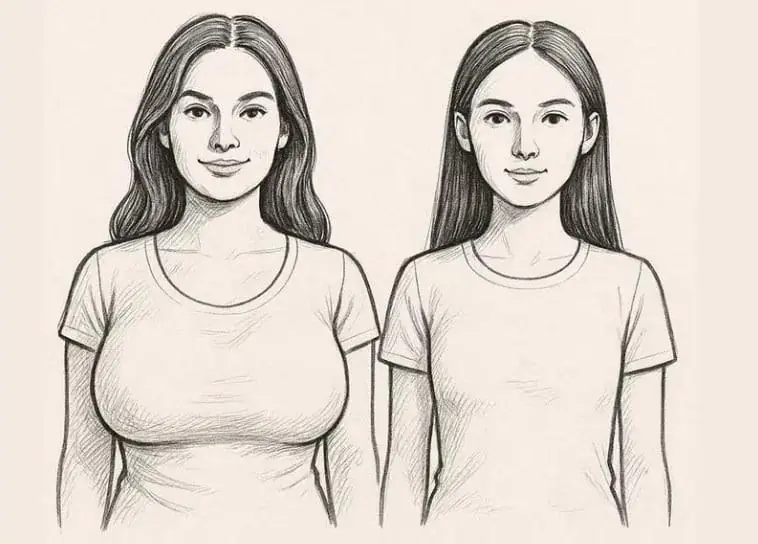
The bottom line
Breast size is not just about appearance—it reflects a complex interaction of hormones, body composition, and life stages.
While changes are often normal, staying aware of unusual signs can help you detect potential health issues early and take action when needed.