Waking up and discovering a wet spot on your pillow can be embarrassing, especially if it happens regularly.
You may wonder, “Why am I drooling so much when I sleep?”
The good news is that occasional drooling during sleep is usually not a sign that something is seriously wrong. Saliva production continues while you sleep, and depending on your sleeping position, breathing habits, nasal congestion, and how well you swallow during the night, some saliva can escape from your mouth.
But if you suddenly start drooling much more than usual—or if it happens alongside loud snoring, choking, difficulty swallowing, daytime sleepiness, or other unusual symptoms—it may be worth paying closer attention.
So what can that wet pillow actually tell you?
The answer may have more to do with how you breathe and sleep than you realize.
1. Drooling While You Sleep Can Be Completely Normal
Your body continues producing saliva while you're asleep.
Saliva has important functions. It helps keep the mouth moist, protects oral tissues, assists with digestion, and helps clear food particles and bacteria from the mouth.
During the day, you automatically swallow saliva hundreds of times without thinking about it.
But sleep changes that process.
When you're unconscious, swallowing becomes less frequent and the muscles around your mouth relax. If your lips remain slightly open, saliva can gradually escape.
That's why you might wake up with a small amount of drool on your pillow even though you don't remember anything unusual happening during the night.
Occasional drooling by itself usually isn't something to panic about.
The more important question is whether it is persistent, excessive, or accompanied by other symptoms.
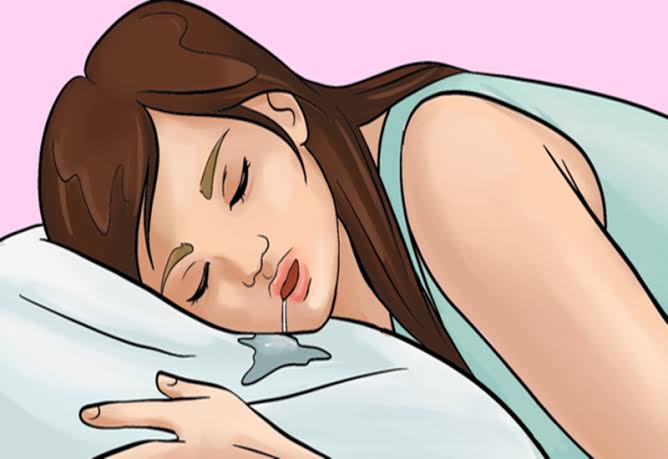
2. Your Sleeping Position May Be the Biggest Clue
One of the simplest explanations for nighttime drooling is your sleeping position.
If you sleep on your side or stomach, gravity can make it easier for saliva to move toward the edge of your mouth.
If your lips are slightly open, the saliva may eventually reach your pillow.
When you're sleeping on your back, saliva is more likely to remain inside your mouth and be swallowed.
This doesn't mean back sleeping is automatically better for everyone.
In fact, some people with snoring or obstructive sleep apnea may breathe better when sleeping on their side.
So you shouldn't necessarily change your sleeping position simply because you drool.
Instead, consider the entire picture:
Are you sleeping comfortably? Are you breathing normally? Are you snoring? Do you wake up refreshed?
Those clues are more useful than drooling alone.
3. A Stuffy Nose Can Make Drooling More Likely
Another common reason is nasal congestion.
When your nose is blocked, breathing through it becomes difficult.
You may naturally begin breathing through your mouth instead.
As your mouth stays open during sleep, saliva has an easier path out.
Nasal congestion can occur because of:
-
Allergies
-
A cold
-
Sinus problems
-
Nasal irritation
-
Structural nasal issues
-
Environmental triggers
If you notice that drooling is worse during allergy season or whenever your nose becomes congested, there may be a connection.
The drooling isn't necessarily the main problem.
The underlying difficulty breathing through your nose may be.
4. Mouth Breathing Can Leave Your Pillow Wet
Mouth breathing is closely connected with nighttime drooling.
When your mouth remains open for long periods, saliva can escape more easily.
You might also wake up with:
-
Dry mouth
-
Bad breath
-
A scratchy throat
-
Chapped lips
-
A feeling of thirst
Interestingly, someone can experience both dry mouth and drooling during the same night.
That may seem contradictory, but it isn't.
Air moving continuously through an open mouth can dry oral tissues while saliva simultaneously escapes onto the pillow.
If you regularly wake up with a very dry mouth and a wet pillow, consider whether mouth breathing could be part of the explanation.
5. Snoring May Be Another Important Clue
If you drool frequently and also snore loudly, it's worth paying attention.
Snoring can occur when airflow through the upper airway becomes partially restricted during sleep.
When the mouth opens to facilitate breathing, saliva can escape more easily.
Occasional snoring is common.
But loud, persistent snoring accompanied by gasping, choking, pauses in breathing, morning headaches, or excessive daytime sleepiness deserves more attention.
These can be symptoms associated with obstructive sleep apnea.
Drooling itself does not diagnose sleep apnea.
But when it appears alongside significant breathing symptoms, it becomes part of a larger pattern that shouldn't be ignored.
6. What If You Wake Up Gasping?
This is more concerning than simply waking up with drool.
If you or someone sleeping near you notices that you:
-
Stop breathing temporarily
-
Gasp or choke during sleep
-
Snore extremely loudly
-
Wake repeatedly during the night
-
Feel exhausted despite getting enough hours of sleep
-
Have significant daytime sleepiness
talk with a healthcare professional about whether a sleep disorder should be evaluated.
Sleep apnea can affect sleep quality and, when untreated, is associated with several long-term health risks.
A wet pillow is not enough to diagnose it.
But wet pillow + loud snoring + witnessed breathing pauses is a very different situation from occasional drooling after falling asleep on your side.
7. Allergies Can Play a Role
Allergies can contribute to nighttime drooling in several ways.
Nasal congestion may force you to breathe through your mouth.
Postnasal drainage can increase the sensation of mucus in the throat.
And sleeping with your mouth open can make saliva more likely to escape.
If your symptoms appear mainly during certain seasons or after exposure to specific triggers, allergies may be worth considering.
Managing nasal congestion appropriately may improve nighttime breathing and, as a result, reduce drooling.
However, persistent nasal obstruction should not simply be ignored.
8. Acid Reflux May Sometimes Affect Sleep and Saliva
Another possible factor is gastroesophageal reflux.
Some people with reflux experience increased saliva production, sometimes referred to as water brash.
The body may produce more saliva as part of its response to acid entering the esophagus.
If nighttime drooling occurs alongside:
-
Heartburn
-
Sour taste in the mouth
-
Regurgitation
-
Burning in the chest
-
Chronic throat irritation
-
Hoarseness
reflux may be worth discussing with a healthcare professional.
Again, drooling alone doesn't establish the diagnosis.
It's the combination of symptoms that matters.
9. Medications Can Sometimes Influence Saliva
Certain medications can affect saliva production, swallowing, muscle tone, or sleep patterns.
If you suddenly begin drooling after starting a new medication, don't immediately assume the medication is responsible—but do consider the timing.
A pharmacist or healthcare professional can review your medications and determine whether increased salivation or related effects are known possibilities.
This is particularly important if you're taking several medications.
Don't stop a prescribed medication on your own simply because you suspect it is causing drooling.
Discuss the issue with the prescriber instead.
10. Alcohol and Sedatives May Affect Mouth and Throat Muscles
Alcohol can influence sleep architecture and muscle tone.
It may also worsen snoring in some people.
Similarly, certain sedating medications can alter muscle activity and sleep-related breathing.
If drooling and snoring seem significantly worse after drinking alcohol or taking a sedating medication, that pattern may be worth noticing.
This doesn't mean that every episode of drooling after a glass of wine is medically significant.
But repeated patterns can provide useful clues about your sleep.
11. What About Swallowing Problems?
Swallowing normally happens automatically throughout the day.
If someone has difficulty swallowing saliva, however, saliva may accumulate in the mouth and eventually spill out.
This can happen for many different reasons, ranging from temporary throat problems to neurological or muscular conditions.
The important point is that new or significant difficulty swallowing deserves medical evaluation.
Watch for symptoms such as:
-
Coughing when eating or drinking
-
Choking frequently
-
Food feeling stuck
-
Difficulty swallowing liquids
-
Drooling while awake
-
A wet or gurgly voice after swallowing
-
Unexplained weight loss
These symptoms are more important than nighttime drooling by itself.
12. Sudden Drooling With Neurological Symptoms Is Different
A sudden change in drooling can occasionally be associated with a neurological problem, particularly if it occurs together with other sudden symptoms.
For example, sudden facial weakness, difficulty speaking, confusion, weakness or numbness on one side of the body, severe dizziness, or difficulty walking can be emergency warning signs.
If those symptoms appear suddenly, seek emergency medical attention immediately.
Don't assume that the symptoms are simply related to sleeping or drooling.
The key issue isn't the saliva itself.
It's the sudden change in neurological function occurring alongside it.
13. Your Mouth Health Matters Too
Persistent mouth breathing and drooling can affect oral comfort.
If you frequently sleep with your mouth open, your mouth may become dry.
Dry mouth can contribute to:
-
Bad breath
-
Discomfort
-
Difficulty swallowing
-
Increased risk of tooth decay
-
Gum irritation
Saliva is actually an important part of oral health because it helps protect teeth and tissues.
So the goal isn't necessarily to eliminate saliva.
The goal is to understand why it is ending up outside your mouth during sleep.
Good oral hygiene remains important regardless of whether you drool.
14. Why Do Some People Drool More Than Others?
There isn't one universal reason.
Individual differences matter.
Some people naturally produce more saliva.
Some sleep more deeply.
Some sleep primarily on their sides.
Some have chronic nasal congestion.
Others have anatomical differences that make mouth breathing more likely.
Age can also influence sleep patterns, medications, muscle function, and saliva production.
That's why comparing yourself with someone else isn't particularly useful.
Your normal baseline matters more.
If you've always occasionally drooled while sleeping and otherwise feel healthy, it may simply be part of how your body sleeps.
If the pattern suddenly changes, that's more interesting.
15. When Should You Actually Be Concerned?
Nighttime drooling deserves more attention when it is new, persistent, excessive, or associated with other symptoms.
Consider talking with a healthcare professional if you regularly experience drooling along with:
-
Loud or persistent snoring
-
Gasping or choking during sleep
-
Witnessed pauses in breathing
-
Severe daytime sleepiness
-
Difficulty swallowing
-
Frequent coughing at night
-
Significant reflux symptoms
-
New neurological symptoms
-
Drooling while awake
-
A sudden unexplained increase in saliva
These combinations can provide clues about what is happening.
What Can You Do About Nighttime Drooling?
If the problem is mild, a few simple steps may help.
Address nasal congestion
If allergies or congestion are causing you to breathe through your mouth, treating the underlying problem may help.
Pay attention to sleeping position
If you always sleep on your stomach or side and notice that drooling is worse, position may be contributing.
However, don't force yourself into a sleeping position that makes your breathing worse.
Limit factors that worsen snoring
Alcohol close to bedtime can worsen snoring in some people.
Maintain good oral hygiene
Brush twice daily, clean between your teeth, and maintain regular dental care.
Look at the bigger sleep picture
Ask yourself:
Do I wake up rested?
Do I snore loudly?
Does anyone notice pauses in my breathing?
Do I wake up choking or gasping?
Those questions can be more revealing than the wet pillow itself.
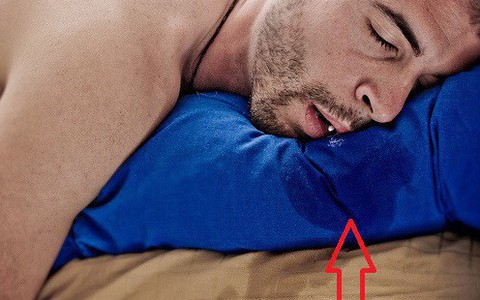
The Wet Pillow May Be Telling You Something—But Not Necessarily Something Bad
Finding drool on your pillow in the morning can certainly be unpleasant.
But in many cases, it simply means that your mouth was open while you slept and saliva escaped.
Your sleeping position, nasal congestion, mouth breathing, and normal changes in swallowing during sleep can all contribute.
The important thing is to look for patterns rather than panic over one isolated symptom.
If you've occasionally woken up with a little drool and otherwise feel completely well, there may be little reason for concern.
But if the drooling is new or persistent—or comes with loud snoring, breathing pauses, choking, swallowing problems, or unusual neurological symptoms—it's worth discussing with a healthcare professional.
Your pillow may not be giving you a diagnosis.
But it can sometimes provide a small clue about what's happening while you're asleep.
And sometimes, the most useful health clues aren't the dramatic ones.
They're the small changes you notice when you wake up and wonder, "Why is this happening?"