I thought about Nate, who had spent the last several months repairing the very house where Ron had learned those skills.
"Why didn't Ron ever tell us?" I asked.
"Because he doesn't talk about those years much."
Opal looked toward the porch again.
"Eleanor passed away, and the property eventually went through the Miller family. After that, people stopped coming. The house became empty. I thought someone would restore it, but years went by."
She handed me the photograph.
"Then I saw the legal notice. I recognized the property name and the buyers."
I looked down at the picture again.
"Why did you want to come here without Ronald?"
"Because I wanted to see what you had done before anyone else told me what to think."
Her words surprised me.
The Story Behind the House
Opal told me that Eleanor had kept a small collection of photographs, letters, and family memories in the house. She did not know whether any of those things had survived the years of neglect.
But she remembered a built-in cupboard in the front room.
"It was beside the fireplace," she said. "Your husband may have covered it when he started repairing the wall."
I remembered the front room. Nate had found a section of wood that looked different from the surrounding wall, but we had assumed it was part of an old repair.
Opal asked if she could see it.
I helped her out of the car, and we walked slowly toward the entrance.
The front door opened with a familiar creak.
Inside, the house smelled of fresh paint, old wood, and the cleaning products I had used that morning.
Opal stopped in the front room.
She looked around as if she were comparing the room with a picture in her mind.
"You've done well," she said.
Then she walked toward the fireplace.
"There."
She pointed to the wooden panel.
"That should open."
I examined it. There was a narrow line around the edge, almost invisible beneath the paint.
I found a small handle hidden along the side and gently pulled.
The panel moved.
Behind it was a shallow cupboard.
Inside sat a dusty metal tin, an old envelope, and a small stack of photographs tied together with faded ribbon.
I looked at Opal.
She had gone completely still.
"Those are Eleanor's," she whispered.
The Letter That Changed the Meaning of the House
The envelope was addressed in Eleanor's handwriting.
Opal recognized it immediately.
She asked me to open it carefully.
Inside was a letter dated many years earlier. It was written to Opal and described the house as a place where family members should always feel welcome.
Eleanor wrote about Ron's visits, the afternoons he spent in the workshop, and the way he would sit at the kitchen table after helping with repairs.
She described him as a boy who wanted to do everything himself.
One passage caught Opal's attention:
"Ron has a stubborn streak, but I hope he never mistakes being capable for having to do everything alone. A family should be a place where people can ask for help without feeling small."
I read the sentence twice.
It seemed almost too relevant.
Opal sat down.
"She always understood him," she said.
I looked at the photographs.
There was Ron as a little boy, standing beside a workbench. There was Eleanor holding a pie near the kitchen window. There was a group of relatives gathered on the porch.
And there was another photograph of the house before the years of neglect.
The building looked bright and welcoming. Flowers lined the front steps. The porch was straight, the windows were clean, and a wooden swing hung beneath the roof.
I could hardly reconcile that image with the abandoned property we had purchased.
"She wanted this house to remain a place where people could come together," Opal said.
I asked whether she wanted us to stop renovating it or return anything to the family.
"No," she answered. "You bought it fairly. You paid for it. You are the owners. I didn't bring you here to ask for the house."
She looked at me carefully.
"I brought you here because I wanted you to know what it meant."
The Bluebird Card Suddenly Felt Different
I thought again about Easter Sunday.
The three checks.
The three celebrations.
Our little bluebird card.
For two years, I had wondered whether Nate's parents thought we were less deserving of help. I had tried to convince myself that their decision was simply a matter of individual circumstances.
Now I was looking at a letter that said something I wished Ron had understood: being capable does not mean someone never needs support.
Opal placed the letter back in its envelope.
"Did you know they gave the others money?" I asked.
She looked at me.
"I heard about it."
"Did you know we got nothing?"
"I did."
I hesitated.
"Do you think they believe we don't need help?"
Opal sighed.
"Sometimes people decide who is strong and then forget that strong people can still be tired."
I did not know what to say.
She took my hand.
"You and Nate have done something good here. Don't let anyone make you feel that you have to apologize for succeeding without their help."
I felt my eyes filling.
For the first time since Easter, I felt that someone in the family understood why that card had hurt.
When Nate Finally Learned the Truth
Nate arrived at the house later that afternoon.
I had called him after Opal asked me to. I told him his grandmother had found something important, but I did not explain everything over the phone.
He walked into the front room and stopped when he saw the old photographs spread across the table.
"Where did these come from?"
Opal held up the picture of Ron as a little boy.
"Do you recognize this place?"
Nate studied it.
"That's the Miller house."
"Yes," she replied. "And that's your father."
He looked from the photograph to the fireplace.
"Was Dad here when he was young?"
Opal nodded.
She told him about Eleanor, the workshop, the family gatherings, and the letter. Nate listened quietly. When she read the sentence about not confusing independence with having to do everything alone, his expression changed.
"That's exactly what happened at Easter," he said.
Opal did not interrupt.
Nate sat down.
"I didn't want to make a big deal out of the money. It was their decision. But I remember Dad saying we should consider the card a compliment."
He looked at the old photograph again.
"I guess I wanted to believe that was all it was."
Opal reached across the table.
"Your father may have believed he was praising you. But a compliment doesn't always replace the help someone needs."
Nate nodded slowly.
Then he said something that surprised me.
"I don't want to ask them for anything. I just wish they had asked whether we needed help before deciding we didn't."
That was the heart of it.
We had not been angry because the siblings received money. We were hurt because nobody had asked about our circumstances. Our independence had been treated as a permanent condition rather than a choice we were working hard to maintain.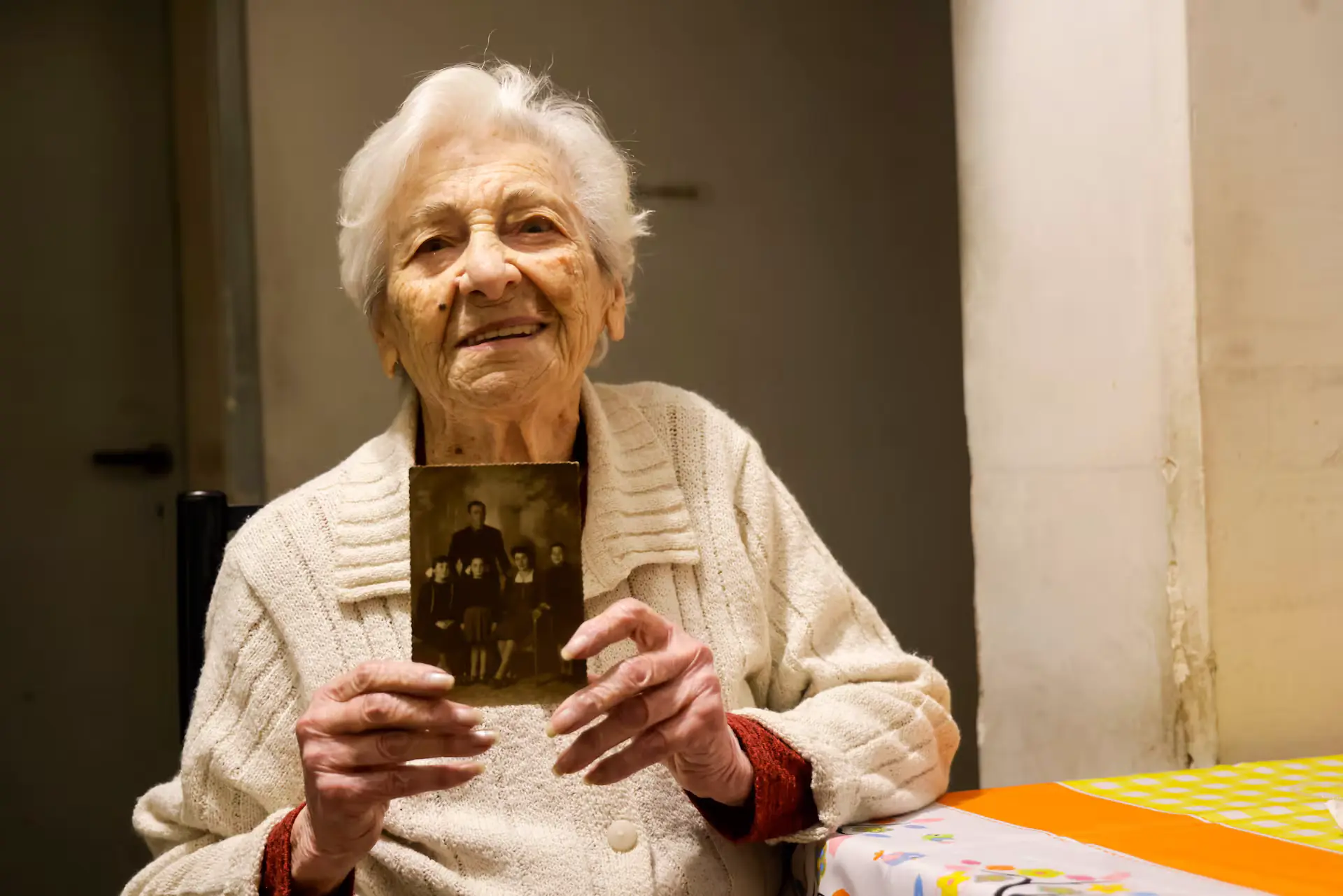
Opal Had One More Request
Before she left, Opal asked whether we would consider keeping the front room as a place where the family could gather.
"We're not asking you to turn it into a museum," she said. "It's your home. But Eleanor loved having people here. I would like to see that spirit continue."
Nate looked at me.
We both agreed.
We would keep the photographs and letter in a safe place. We would preserve the old cupboard and repair the fireplace properly. And when the house was ready, we would invite the family over.
Not to prove anything.
Not to make anyone feel guilty.
Simply because the house had once been a place where people came together, and we wanted it to have that purpose again.