If you suddenly noticed small, brown, spindle-shaped objects attached to the walls of your home, you might understandably wonder whether you're looking at some kind of unusual insect.
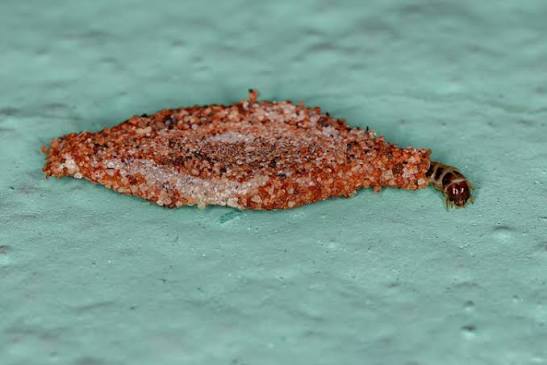
The objects in the photograph look almost like tiny pieces of dried leaves, seeds, or bits of debris stuck to the wall. But they may actually be portable cases made by the larvae of case-bearing moths, commonly referred to as plaster bagworms or household casebearers in some regions.
Despite their unsettling appearance, these little cases are generally not a sign that your house is being overrun by dangerous insects. They are usually associated with small moth larvae that collect fibers, dust, hair, and other materials to construct a protective covering around themselves.
However, finding several of them indoors can be a useful clue that your home has conditions these insects find comfortable.

What Are Those Brown Things on the Wall?
The objects shown in the image have a distinctive elongated shape.
They are narrow at the ends, wider in the middle, and appear to be covered with tiny particles or fibers.
That appearance is characteristic of a case-bearing larva.
Instead of developing openly like a typical caterpillar, these larvae construct a portable shelter around themselves. The case provides protection while the larva moves across walls, ceilings, floors, and other surfaces searching for food.
The case can be surprisingly well camouflaged.
Because it is made from materials found around the home, it can blend into:
-
Painted walls
-
Concrete
-
Wood
-
Fabric
-
Dusty corners
-
Ceilings
-
Window frames
That's one reason people often don't notice them immediately.
They can look like pieces of dirt that somehow became attached to the wall.
Are They Actually Insects?
Yes—but what you're seeing isn't necessarily the insect's exposed body.
The creature is a moth larva, and the visible structure is its protective case.
This distinction is important.
When people see the photograph, they may assume the object itself is an insect or some type of egg.
It isn't simply an egg.
It is a portable shelter constructed and used by the larva.
The larva can remain partly inside the case while feeding and moving around.
Eventually, it undergoes metamorphosis and becomes an adult moth.
Why Does the Larva Build a Case?
The case is essentially a tiny suit of armor and camouflage system.
The larva is soft and vulnerable.
Rather than exposing its entire body while moving around, it carries a protective covering with it.
The case can help provide:
Protection from predators
Camouflage
A degree of protection from environmental conditions
A place to retreat when disturbed
The clever part is that the larva doesn't need to manufacture a completely separate material.
Instead, it uses what's available in its environment.
That can include fibers, dust, hairs, fragments of insects, and other small particles.
Why Do They End Up on Walls?
This is one of the most common questions.
If these larvae are associated with materials such as fibers and organic debris, why are they crawling up walls?
The answer is that walls can provide a useful surface for movement and eventually for pupation.
Depending on the species and conditions, case-bearing larvae may be found on:
-
Walls
-
Ceilings
-
Closets
-
Under furniture
-
Around windows
-
Behind doors
-
In corners
-
Near baseboards
They aren't necessarily eating the wall.
The wall is simply part of their environment.
A larva may travel across it while searching for suitable food or a protected place to continue its development.
What Do They Eat?
This depends on the species, but case-bearing moth larvae generally feed on small organic materials.
Some can consume spider webs, dead insects, hair, lint, and other accumulated organic debris.
Certain clothes moth larvae are associated with natural animal-based fibers such as wool, fur, feathers, and other materials containing keratin.
That distinction matters because not every case-bearing moth found on a wall is automatically a clothes moth.
So seeing these cases doesn't necessarily mean your clothing is being destroyed.
Still, if you find them repeatedly around closets, stored textiles, carpets, or natural-fiber materials, it's worth checking those areas.
Does Finding Them Mean Your House Is Dirty?
Not necessarily.
This is an important misconception.
Finding a few case-bearing larvae doesn't automatically mean a home is unhygienic.
These creatures can appear in very clean homes because they are attracted to specific environmental conditions and available organic material, not simply "dirt."
However, excessive dust, lint, hair, dead insects, old spider webs, and accumulated debris can provide additional food or building material.
That's why regular cleaning can help reduce the conditions they prefer.
Humidity May Be Part of the Story
Many case-bearing insects are more commonly noticed in humid or poorly ventilated areas.
Bathrooms, basements, closets, laundry rooms, and shaded corners may provide favorable conditions.
Humidity itself doesn't necessarily cause an infestation, but damp environments can support the kinds of insects and organic debris these larvae utilize.
If you repeatedly find cases indoors, look for areas with:
-
Poor ventilation
-
Condensation
-
Damp walls
-
Leaks
-
Humid closets
-
Moist storage areas
A dehumidifier or improved ventilation may help make the environment less attractive.
Why Are They Sometimes Called "Plaster Bagworms"?
The name can be confusing.
They aren't true worms.
They're moth larvae.
The "bag" refers to the protective case they carry.
The term plaster bagworm is commonly used for certain case-bearing moth larvae found on walls and other surfaces, especially in warm, humid environments.
The name comes from their tendency to be noticed on plastered or painted walls.
But common names vary considerably between regions, and several related species can produce similar-looking cases.
So an exact species identification usually requires a closer examination.
Are They Dangerous to People?
Generally, these larvae are not considered dangerous to humans.
They don't normally bite people.
They aren't venomous.
And finding one on a wall isn't usually a medical emergency.
The main concern is usually property damage or nuisance, depending on the species and the size of the population.
If you have a severe infestation of a clothes moth or another fabric-feeding species, textiles may be at risk.
But a single case on the wall shouldn't cause panic.
Could They Damage Your Clothes?
This depends on exactly what species you're dealing with.
Some moth larvae feed on natural animal fibers.
Materials that may be vulnerable can include:
-
Wool
-
Fur
-
Silk
-
Feathers
-
Animal-hair textiles
-
Natural-fiber rugs
Synthetic fabrics are generally less attractive as a food source, although mixed materials can complicate the situation.
If you're seeing cases near a closet, inspect stored clothing and textiles for signs such as:
-
Small holes
-
Thinning fabric
-
Shed larval skins
-
Webbing
-
Additional cases
-
Damage concentrated in dark, undisturbed areas
Don't assume that every wall case means your clothes are being eaten, but checking is a sensible precaution.
Why Do They Prefer Dark, Quiet Areas?
Many moth larvae avoid bright, heavily disturbed areas.
Closets, storage spaces, furniture edges, and quiet corners provide protection.
That's why you might find them in places that aren't disturbed very often.
A room that is cleaned regularly but contains a dark closet full of old textiles can still provide an attractive environment.
This is also why moving stored belongings periodically and cleaning underneath furniture can make a difference.
The Strange Case Is Actually a Clever Survival Strategy
From a biological perspective, the case is one of the most interesting parts.
Imagine being a tiny, soft-bodied larva surrounded by predators and environmental hazards.
Instead of remaining exposed, you construct a protective covering from whatever materials you can find.
As you grow, you continue modifying the case.
The result is a miniature portable shelter that can be surprisingly effective at hiding you from view.
The larva essentially turns household debris into camouflage.
Why Do the Cases Look Different From One Another?
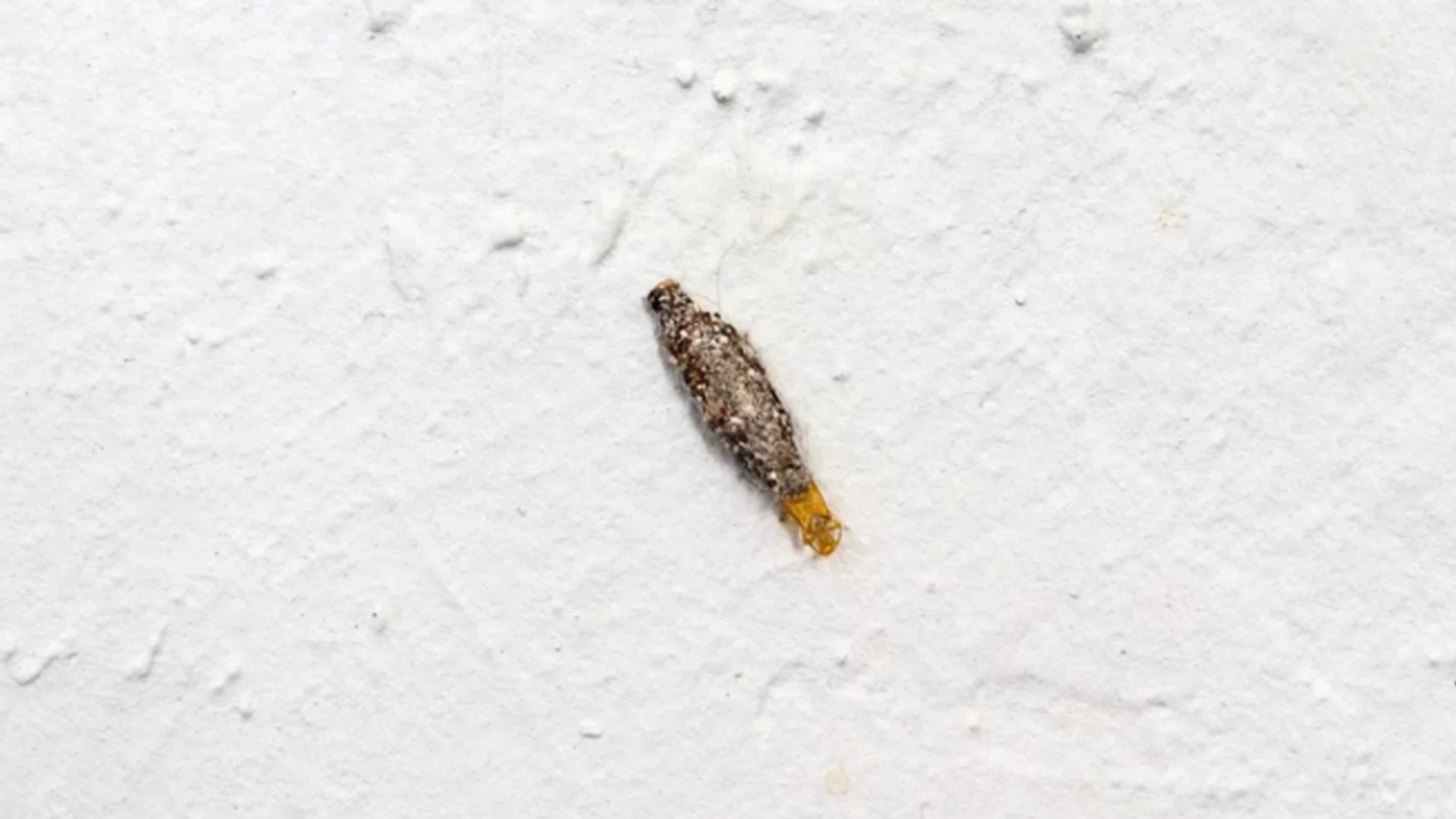
You may notice that not every case looks exactly like the one in the photograph.
Some are:
-
Long and narrow
-
Shorter and wider
-
Gray
-
Brown
-
Tan
-
Covered with fibers
-
More heavily coated with dust
The appearance can depend on the species and the materials available in the environment.
A larva living around dusty plaster may construct a case that looks completely different from one living around carpet fibers or spider webs.
This makes identification from appearance alone difficult.
How Can You Get Rid of Them?
If you only find a few, you usually don't need to reach immediately for strong insecticides.
Start with basic environmental control.
1. Remove visible cases
Use a vacuum cleaner or gently remove them from walls and ceilings.
Dispose of the contents appropriately.
2. Vacuum thoroughly
Pay particular attention to:
-
Baseboards
-
Closets
-
Under furniture
-
Behind cabinets
-
Window frames
-
Ceiling corners
-
Storage areas
3. Remove spider webs
Spider webs can provide organic material for some case-bearing larvae.
Regularly removing old webs can make the environment less attractive.
4. Reduce lint and hair
Vacuum carpets and clean dusty areas where fibers accumulate.
5. Control humidity
Improve ventilation and address leaks or condensation.
6. Inspect natural-fiber textiles
If you're finding many larvae near clothing or rugs, inspect those materials carefully.
Don't Immediately Spray Everything With Pesticide
Seeing a few cases can make people want to spray every wall and corner of the house.
That's usually unnecessary.
Pesticides should be used carefully and according to the product label.
If you have only occasional cases, cleaning and removing the environmental conditions that support them may be enough.
If the population continues to increase despite cleaning, professional pest identification can help determine exactly what you're dealing with.
What If You Find Dozens of Them?
That's different.
A large number of cases suggests that there may be a suitable food source or environmental condition supporting their development.
At that point, don't just remove the visible insects.
Look for the source.
Check:
Closets
Stored clothing
Rugs
Furniture
Spider webs
Dusty corners
Pet hair
Dead insects
Damp areas
The visible cases are only the part you can see.
The real source may be somewhere nearby.
Do They Turn Into Moths?
Yes.
Like other moths, these insects undergo metamorphosis.
The general life cycle includes:
Egg → Larva → Pupa → Adult moth
The larval stage is the stage most likely to produce the recognizable portable case.
Eventually, the larva stops feeding and undergoes pupation.
The adult moth that emerges may be much less noticeable than the larval case.
This is another reason people sometimes discover the cases without ever noticing the adult moths.
Why Regular Cleaning Helps
Regular cleaning isn't just about making a home look better.
It also removes the tiny materials that many household pests depend on.
Vacuuming removes:
-
Hair
-
Lint
-
Dust
-
Dead insects
-
Fibers
-
Food particles
Cleaning closets and storage areas also disrupts places where insects can remain undisturbed.
This doesn't guarantee that you'll never see a case-bearing larva.
But it can reduce the resources available to them.
Could They Be Coming From Outside?
Absolutely.
Adult moths or other insects can enter through doors, windows, vents, or small openings.
Once inside, they may find suitable conditions for reproduction.
This is especially possible in warm climates.
That's why sealing obvious gaps, using intact window screens, and keeping doors closed can help reduce insect entry.
But again, seeing one or two doesn't necessarily mean you have a serious infestation.
The Image Is a Reminder Not to Panic
The photograph makes the creatures look mysterious because the case is so unusual.
But once you understand what you're looking at, the mystery becomes much less alarming.
You're not looking at some strange parasite attached to your wall.
You're most likely seeing a tiny moth larva inside a protective case.
It's a fascinating example of insect behavior rather than something that should automatically cause fear.
One Important Identification Warning
Because the image is relatively close-up but not detailed enough to show every anatomical feature, it isn't possible to guarantee the exact species from the photograph alone.
Several case-bearing moth larvae can produce similar structures.
So if you're dealing with a significant infestation, especially one associated with fabric damage, consider having a pest professional or entomologist identify the insect.
Correct identification matters because the best control strategy depends on the species.
When Should You Be Concerned?
A few isolated cases are generally a minor household nuisance.
You should pay more attention if you notice:
-
Large numbers appearing repeatedly
-
Damage to wool or other natural fibers
-
Larvae throughout closets
-
Numerous adult moths
-
Persistent cases despite thorough cleaning
-
Moisture or water damage
-
A rapidly increasing population
In these situations, finding and eliminating the underlying source is more important than simply removing individual cases.
Final Thoughts
Those strange, brown, spindle-shaped objects on the wall may look alarming at first.
But they're likely not mysterious insects waiting to attack you.
They appear to be portable cases made by case-bearing moth larvae, sometimes commonly called plaster bagworms or household casebearers.
The larvae construct these cases from materials around them, including fibers, dust, hairs, and other small organic particles. The case provides protection and camouflage as the larva develops.
For most homeowners, seeing one or two isn't a reason to panic.
Instead, remove them, vacuum the surrounding area, clean accumulated dust and webs, inspect nearby textiles, and consider reducing excessive humidity.
And if you keep finding them in large numbers, look for the source rather than simply treating the symptoms.
The strangest thing about the photograph may actually be the most fascinating part: what looks like a piece of dirt stuck to the wall is really a tiny mobile shelter built by an insect.
Nature has a habit of hiding remarkable biology in the most ordinary corners of our homes.