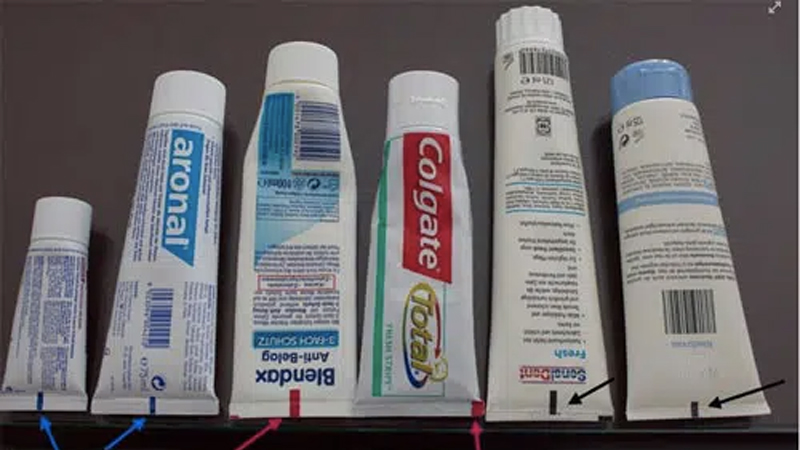
If you’ve ever looked closely at a toothpaste tube, you may have noticed a small colored line or square at the bottom - often black, green, red, or blue. For years, the internet has circulated claims that these colors reveal what’s inside the toothpaste:
- Green = natural
- Blue = natural + medicine
- Red = natural + chemicals
- Black = all chemicals
Sounds convincing… but it’s not true.
Let’s break down what that colored mark actually means.

1. The Real Purpose: Manufacturing, Not Ingredients
The colored line is known as an “eye mark” or “registration mark.”
What it’s used for:
- Helps machines detect where to cut and seal the tube
- Ensures consistent packaging alignment
- Guides automated production lines
👉 In simple terms:
It’s for the factory machines, not for consumers.
2. Why Different Colors Are Used
The color of the mark is chosen based on:
- Contrast with the tube design
- Visibility for sensors during production
Example:
If the tube is mostly white, a dark mark (like black) is easier for machines to detect.
👉 So the color is purely technical, not informational.
3. Why the Myth Spread So Easily
The idea that colors indicate ingredients became popular because:
1. It feels logical
People like simple explanations for complex products.
2. It taps into health concerns
“Natural vs chemical” is a common topic.
3. It’s easy to share
Short, visual “facts” spread quickly online—even if they’re wrong.

4. How to Actually Know What’s in Your Toothpaste
If you want to understand what your toothpaste contains, look at:
1. The ingredient list
This is the only reliable source.
2. Product labeling
- Fluoride content
- Active ingredients
- Certifications (if any)
3. Brand transparency
Reputable brands clearly state their formulation.
5. What Those Colors Do NOT Mean
Let’s be clear:
👉 The colored line does NOT indicate:
- Natural vs chemical ingredients
- Safety level
- Quality
- Medical effectiveness
It has zero connection to what’s inside the tube.
6. Why This Matters
Believing myths like this can lead to:
- Misunderstanding products
- Making decisions based on incorrect information
- Ignoring real indicators (like ingredients)
Final Take
The colored line on your toothpaste tube isn’t a secret code - it’s just a manufacturing tool.
- It helps machines, not consumers
- It has no link to ingredients or safety
- The real information is always on the label
So next time you see that little colored mark, you’ll know - It’s not a mystery - it’s just smart packaging design.