However, using a low gear does not mean the clutch can never be used.
The driver still needs to operate it appropriately during starting, shifting, and other maneuvers.
The main advantage is that the extremely low gearing makes slow-speed operation mechanically easier.
When Would You Actually Use a G Gear?
If your vehicle is equipped with a genuine crawler or terrain gear marked G, it is generally intended for situations where extremely low speed and strong wheel torque are needed.
Examples can include:
Steep off-road climbs
Rocky terrain
Loose or slippery surfaces
Heavy towing or hauling
Very slow maneuvering
Certain agricultural or industrial tasks
Recovering or moving heavy equipment
The exact recommended use depends on the vehicle.
That is why the owner's manual remains the final authority.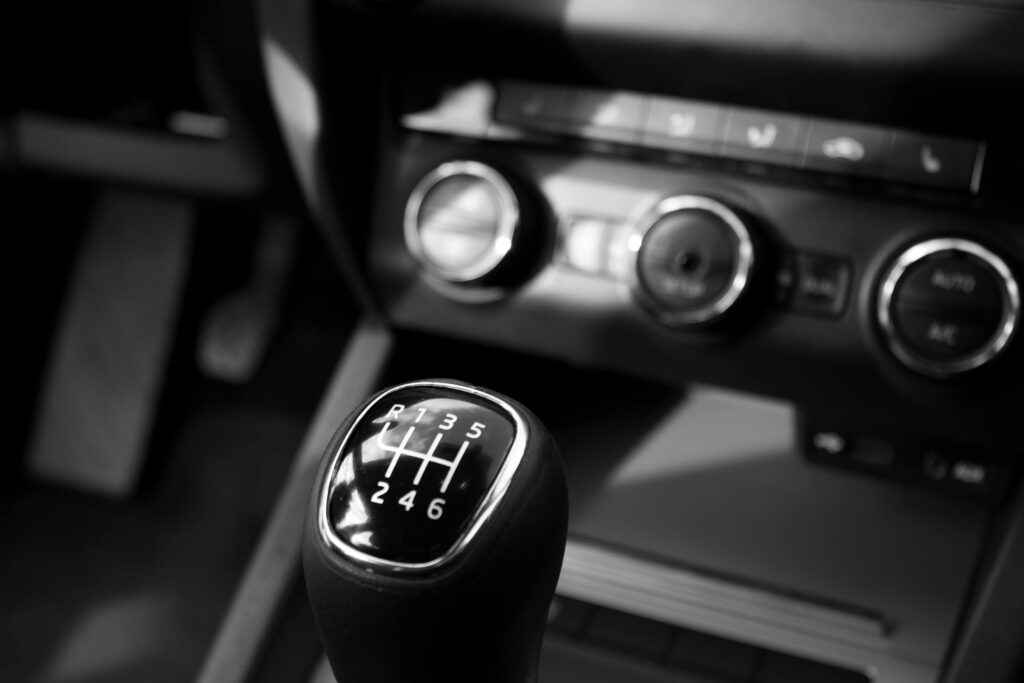
Why You Usually Wouldn't Drive Around in G
A crawler gear is not normally designed for ordinary road speeds.
Using an extremely low gear on a normal road can cause the engine to spin at unnecessarily high RPM while the vehicle moves very slowly.
It can also be mechanically inefficient and unpleasant to drive.
Imagine trying to cruise at highway speed while staying in first gear.
The engine would be working far harder than necessary.
A crawler gear can create an even more extreme version of that problem.
Its purpose is not everyday road travel.
Its purpose is to give the vehicle maximum control at minimal speed when ordinary gearing is not appropriate.
Crawler Gear vs. Low Range
There is another source of confusion here.
Some four-wheel-drive vehicles have a low-range transfer case, while others may have an unusually low gear directly inside the main transmission.
These systems are related in purpose but are not identical.
Low range changes the overall gearing through the transfer case, effectively making all forward gears much lower.
A dedicated crawler gear, by contrast, is a specific transmission ratio intended for extremely slow operation.
Some vehicles may have both.
That means a specialized off-road vehicle can have several layers of low-speed gearing.
For example, the driver might have:
Normal transmission gears
A low-range transfer case
And an especially low first or crawler gear
The resulting multiplication of torque can be enormous.
This is exactly the kind of engineering needed for specialized off-road work.
Why Older Vehicles Often Had More Unusual Gearboxes
Modern passenger vehicles are designed around convenience, efficiency, emissions requirements, packaging, and everyday driving.
Older commercial and utility vehicles had different priorities.
A work vehicle might be expected to:
Pull heavy trailers
Carry equipment
Climb steep grades
Move slowly over rough surfaces
Operate on construction sites
Travel on unpaved roads
Work in agricultural settings
For these applications, a transmission with very low gears could be much more useful than a simple road-oriented gearbox.