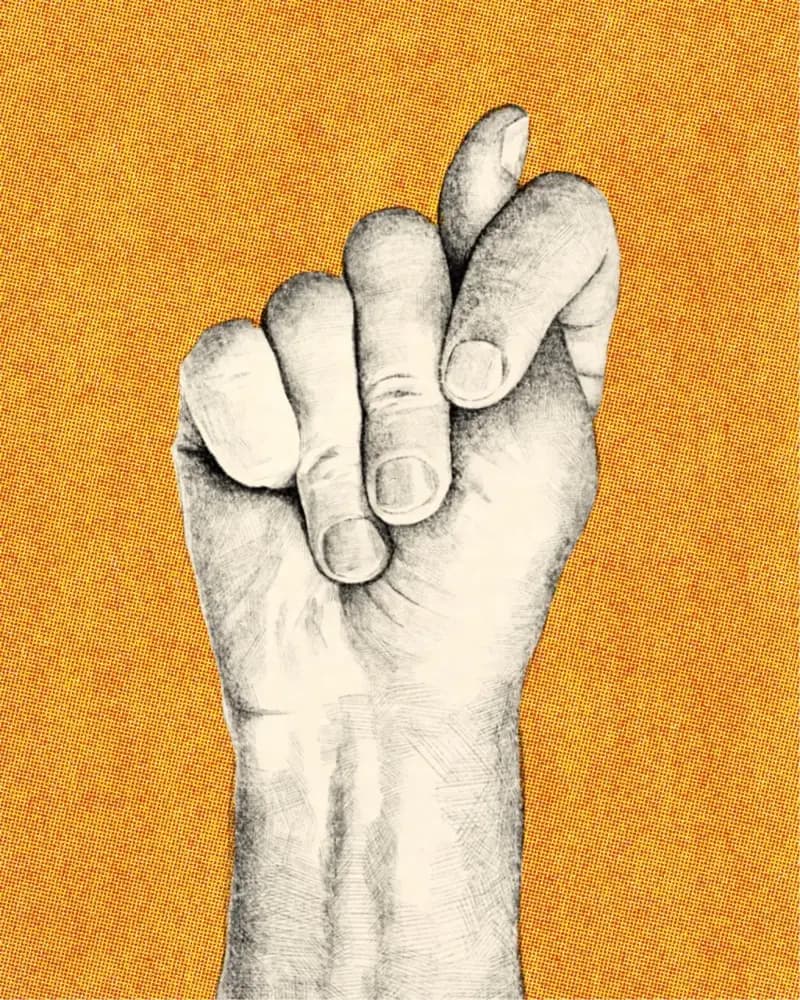
At first glance, the hand gesture shown in the image may look like an ordinary movement or even a random pose. However, many people recognize it as a version of the "Signal for Help"—a discreet hand gesture that was created to allow someone experiencing abuse or feeling unsafe to silently communicate that they need assistance.
The gesture gained worldwide attention during the COVID-19 pandemic, when many people facing domestic violence were isolated with their abusers and had limited opportunities to ask for help safely. Since then, it has been shared widely on social media, in schools, workplaces, healthcare settings, and community organizations as a way to increase awareness.
It's important to understand that this gesture does not always mean someone is in danger. People may imitate it online, use it in educational demonstrations, or make a similar hand position accidentally. However, if someone intentionally uses it in a context suggesting they need help, it should be taken seriously.

What Is the Signal for Help?
The Signal for Help is a simple, one-handed gesture designed to allow someone to silently indicate that they need assistance.
The gesture is typically performed by:
-
Holding one hand up with the palm facing outward.
-
Folding the thumb into the palm.
-
Closing the remaining fingers over the thumb.
The movement can be done quickly and discreetly during:
-
A video call
-
A conversation
-
A public setting
-
A social gathering
It was designed to be subtle enough that a person could use it without speaking.
Why Was This Gesture Created?
The Signal for Help was introduced in 2020 by the Canadian Women's Foundation.
Its purpose was to provide a silent way for people experiencing domestic violence to indicate they needed help when speaking openly might place them at greater risk.
Although it was originally developed in response to increased concerns during pandemic lockdowns, the gesture has since become recognized internationally.
Who Might Use This Gesture?
Although it is often associated with domestic violence, anyone who feels unsafe may choose to use it.
Examples may include someone experiencing:
-
Domestic abuse
-
Coercive control
-
Emotional abuse
-
Threats or intimidation
-
A situation where speaking freely feels unsafe
The gesture itself does not identify the specific problem. It simply suggests that the person may need help.
Why a Silent Signal Can Be Important
In some situations, asking for help openly may not be possible.
Someone may fear:
-
Being overheard
-
Escalating the situation
-
Retaliation
-
Losing access to communication
A silent gesture allows them to communicate distress without using words.
The Gesture Is Not a Universal Emergency Signal
One important point is that not every similar-looking hand position is the Signal for Help.
People may:
-
Copy the gesture from social media
-
Use it jokingly
-
Demonstrate it for educational purposes
-
Accidentally make a similar movement
For this reason, context matters.
If the person appears calm and is explaining the gesture, it likely does not indicate an emergency.
If the gesture appears intentional in a concerning situation, it deserves attention.
How Did the Gesture Become So Well Known?
The Signal for Help spread rapidly through:
-
Social media platforms
-
News reports
-
Educational campaigns
-
Community organizations
-
Healthcare professionals
Several widely reported incidents described situations in which people reportedly used the gesture to alert others that they needed help.
These stories helped increase public awareness of the signal.

If You See Someone Make This Gesture, What Should You Do?
If you believe someone is intentionally using the Signal for Help, avoid immediately confronting them in a way that could increase their risk.
Instead, consider:
-
Remaining calm.
-
Speaking with them privately if it is safe to do so.
-
Asking simple, non-judgmental questions.
-
Giving them an opportunity to communicate without pressure.
Examples include:
-
"Are you okay?"
-
"Would you like me to help you?"
-
"Is there someone you would like me to contact?"
Avoid assuming you fully understand the situation.
Don't Put the Person at Greater Risk
If another individual appears controlling or aggressive, publicly asking, "Are you being abused?" may unintentionally increase danger.
Whenever possible:
-
Respect the person's privacy.
-
Avoid escalating the situation.
-
Seek help from appropriate authorities if there is an immediate threat to safety.
What If You Are Unsure?
Sometimes you may not know whether the gesture was intentional.
If possible:
-
Observe the situation carefully.
-
Speak privately with the individual later.
-
Offer support without making assumptions.
Simply showing concern may provide an opportunity for the person to ask for help if they choose.
The Importance of Listening
If someone tells you they feel unsafe:
-
Listen without interrupting.
-
Believe what they are comfortable sharing.
-
Avoid blaming them.
-
Respect their decisions whenever possible.
-
Encourage them to seek appropriate support if needed.
Every situation is different.
Domestic Violence Can Take Many Forms
Many people think abuse only involves physical violence.
However, abuse may also include:
-
Emotional abuse
-
Psychological abuse
-
Financial control
-
Threats
-
Isolation
-
Stalking
-
Digital monitoring
-
Sexual abuse
Recognizing these patterns can help people understand why leaving an unsafe situation is often complicated.
Why Awareness Matters
Learning about the Signal for Help isn't about becoming suspicious of everyone—it is about being informed.
Awareness can:
-
Encourage compassion.
-
Help people recognize when someone may be asking for assistance.
-
Promote conversations about personal safety.
-
Reduce stigma surrounding domestic violence.
Even if you never encounter the gesture in real life, knowing what it may represent can make you more prepared to respond thoughtfully.
Common Misunderstandings
Myth 1: Everyone Who Makes This Gesture Is Being Abused
Not necessarily.
The gesture may be used in demonstrations, educational materials, or online videos.
Always consider the context.
Myth 2: The Gesture Is Only for Women
No.
Anyone—regardless of gender or age—may experience abuse or use the Signal for Help.
Myth 3: The Gesture Means Call the Police Immediately
Not always.
The appropriate response depends on the circumstances and whether there is an immediate threat.
If someone appears to be in immediate danger, contacting emergency services may be appropriate.
Myth 4: One Gesture Tells You Everything
The signal simply indicates that someone may need help.
It does not explain what has happened or what kind of assistance they want.
Teaching the Gesture Responsibly
Many schools, workplaces, and community organizations include information about the Signal for Help in broader discussions about:
-
Personal safety
-
Healthy relationships
-
Domestic violence awareness
-
Community support
Education helps people recognize the gesture while emphasizing that it should always be interpreted thoughtfully and in context.
The Bottom Line
The hand gesture shown in the image is widely recognized as the Signal for Help, a silent gesture created to allow someone to discreetly communicate that they may be experiencing abuse or feel unsafe. While it has become an important awareness symbol around the world, the gesture alone does not confirm that someone is in danger. Context is essential.
If you believe someone is intentionally using the signal, respond calmly, respectfully, and in a way that prioritizes their safety. Avoid making assumptions or taking actions that could increase risk. Instead, offer support, create an opportunity for private conversation if appropriate, and seek emergency assistance if there is an immediate threat.
Final Thoughts
Sometimes, a small gesture can carry a powerful message. The Signal for Help reminds us that not everyone who needs assistance is able to ask for it out loud. By understanding what the gesture may represent, we can become more aware, more compassionate, and better prepared to respond when someone may be reaching out in silence.
Knowing the meaning of this gesture doesn't mean assuming the worst whenever you see it—it means recognizing that, in the right context, it could be an important request for help. Awareness, empathy, and thoughtful action can make a meaningful difference when someone feels they have nowhere else to turn.