Lemon and charcoal are two simple household ingredients that have been used in countless home remedies, cleaning tricks, and everyday routines. Lemon is known for its bright acidity and fresh scent, while charcoal is famous for its ability to adsorb certain substances and absorb odors.
Put the two together, and it is easy to imagine that they create some kind of powerful “miracle” mixture.
But the truth is more interesting.
Lemon and charcoal do have useful properties, but combining them does not automatically create a special treatment or magical chemical reaction. Their usefulness depends heavily on how they are used, what type of charcoal is involved, and what you are actually trying to accomplish.
Let's take a closer look at what this combination can and cannot do.
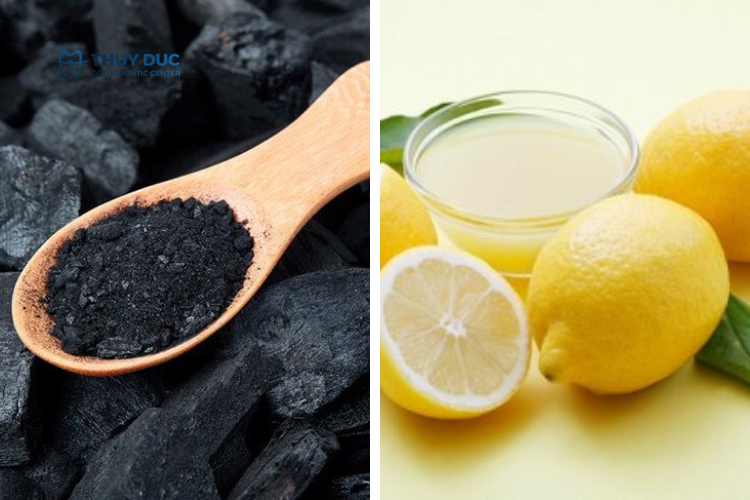
Why Lemon and Charcoal Are Often Mentioned Together
Lemon contains citric acid, along with water, vitamin C, and aromatic compounds that give it its characteristic smell.
Charcoal, meanwhile, is a carbon-rich material. Some forms of charcoal, particularly activated charcoal, have a highly porous structure that allows them to adsorb certain molecules onto their surface.
These properties are very different.
Lemon is primarily associated with acidity, flavor, and fragrance, while activated charcoal is associated with adsorption.
That difference is important because simply mixing the two does not suddenly make either ingredient dramatically more powerful.
Instead, people sometimes use them together because they believe the lemon can provide cleaning or deodorizing properties while charcoal helps capture odors or impurities.
Lemon Can Be Useful for Certain Cleaning Jobs
The acidity of lemon juice can help loosen some types of mineral deposits and residues.
For example, acidic substances can help break down certain deposits left by hard water.
Lemon's strong citrus aroma can also make surfaces smell fresher after cleaning.
However, lemon juice is not an all-purpose cleaner.
It should not be assumed to disinfect every surface or eliminate every type of bacteria, virus, mold, or pest.
And because it is acidic, it can damage some materials.
You should be particularly cautious with:
-
Natural stone such as marble
-
Limestone
-
Some metals
-
Certain finished surfaces
-
Sensitive countertops
-
Some wood finishes
A substance being “natural” does not automatically mean it is safe for every surface.
Charcoal Is Not All the Same
This is one of the most important distinctions.
When people say “charcoal,” they may be talking about several different materials.
There is:
Activated charcoal — specially processed to increase its surface area and adsorption capacity.
Regular charcoal — commonly produced for cooking or heating.
Bamboo charcoal — another carbon-based material often marketed for odor control and moisture-related applications.
These products are not interchangeable.
For example, charcoal intended for grilling should not be treated as a skincare ingredient, food ingredient, or medical product.
Likewise, activated charcoal sold for a particular purpose should be used according to its labeling and intended application.
Can Lemon and Charcoal Remove Bad Odors?
This is one area where the two ingredients can make sense independently.
Charcoal—especially activated charcoal—is used in some odor-control products because its porous structure can adsorb certain odor-causing compounds.
Lemon, on the other hand, provides a strong citrus fragrance that can make an environment smell fresher.
But there is a major difference between masking an odor and removing its source.
If a refrigerator smells because food has spoiled, placing lemon and charcoal inside may not solve the underlying problem.
The spoiled food needs to be removed.
Similarly, if a room smells musty because of moisture and mold, a fragrance or odor absorber cannot substitute for fixing the moisture problem.
So if you're using charcoal or lemon to improve odors, think of them as potential supporting tools, not replacements for cleaning and ventilation.

What About Lemon and Charcoal for Cleaning?
Some people create homemade cleaning mixtures involving lemon juice and charcoal or charcoal powder.
There is no universal evidence that combining the two creates a dramatically superior household cleaner.
In fact, charcoal powder can be messy and may stain porous or light-colored surfaces.
If you're cleaning a particular material, a properly formulated cleaner designed for that surface is often a more predictable choice.
For simple household cleaning, lemon or diluted citric acid may sometimes be useful for appropriate surfaces, while charcoal products may be more relevant for odor-control applications.
They don't need to be mixed to take advantage of their individual properties.
What About Skin Care?
This is where caution becomes especially important.
Activated charcoal has become popular in facial masks and other cosmetic products. These products are often marketed as being able to “draw out impurities” or deeply cleanse the skin.
However, marketing claims can go well beyond what the evidence supports.
Charcoal may adsorb substances on the surface, but that does not mean it detoxifies the body through the skin or removes toxins from deep inside your tissues.
Adding lemon juice to a charcoal face mask is also not necessarily a good idea.
Lemon juice is highly acidic and can irritate skin. More importantly, citrus compounds on the skin can sometimes contribute to phytophotodermatitis, a skin reaction that can occur after exposure to sunlight following contact with certain plant compounds.
This can cause redness, blistering, or dark pigmentation.
So a homemade lemon-and-charcoal facial treatment may sound natural, but natural does not mean risk-free.
Should You Drink Lemon Water With Charcoal?
This is another popular internet idea—and one that deserves particular caution.
Lemon water can simply be a way to drink more water and add flavor.
Activated charcoal, however, is a different matter.
Activated charcoal can bind certain substances in the digestive tract, which is why it has specific medical uses in some poisoning situations under professional guidance.
But that does not mean drinking charcoal regularly “detoxes” the body.
Your liver and kidneys already perform major roles in processing and eliminating substances from the body.
Taking activated charcoal unnecessarily can also interfere with the absorption of some medications and other substances.
Therefore, do not routinely drink activated charcoal mixed with lemon juice as a detox remedy unless a healthcare professional has specifically advised you to do so.
And never use homemade charcoal mixtures as a substitute for medical treatment after a suspected poisoning.
Lemon and Charcoal Don't Create a Magical Detox
“Detox” is one of the most common claims attached to this combination.
The idea is appealing:
Lemon supposedly cleanses the body, while charcoal supposedly absorbs toxins.
But the human body is not a dirty container that needs to be flushed out with a special drink.
Your liver, kidneys, gastrointestinal tract, lungs, and other physiological systems are continuously involved in maintaining internal balance and eliminating waste.
There is no good evidence that routinely consuming lemon and activated charcoal provides a general detoxification benefit for healthy people.
In fact, unnecessary charcoal consumption can be counterproductive if it interferes with medications.
What About Weight Loss?
You may also encounter claims that lemon and charcoal can “melt fat,” accelerate metabolism, or cause rapid weight loss.
There is no good basis for treating this combination as a weight-loss solution.
Drinking lemon water instead of a high-calorie sugary beverage may reduce calorie intake, but that is because of the replacement, not because lemon and charcoal burn fat.
Activated charcoal is not a fat-burning supplement.
Sustainable weight management is much more strongly influenced by overall dietary intake, physical activity, sleep, and other lifestyle and medical factors.
Can Charcoal and Lemon Whiten Teeth?
Both ingredients sometimes appear in homemade teeth-whitening recipes.
This is another situation where caution is warranted.
Lemon juice is acidic and can contribute to dental enamel erosion when teeth are repeatedly exposed to acids.
Charcoal-based tooth products may also be abrasive depending on their formulation and how they are used.
Once enamel is lost, it does not grow back.
For that reason, repeatedly rubbing teeth with acidic lemon juice or abrasive homemade charcoal mixtures is not a good substitute for evidence-based dental care.
If you're concerned about tooth discoloration, talk with a dentist about safer whitening options.
There Is an Important Difference Between “Adsorption” and “Absorption”
One reason charcoal sounds almost magical is that people often say it “absorbs toxins.”
Technically, activated charcoal primarily works through adsorption, meaning molecules attach to the surface of the charcoal.
Because activated charcoal has a very large surface area, it can bind certain substances under appropriate conditions.
But it does not bind everything.
It doesn't indiscriminately remove all toxins, and it does not magically cleanse the bloodstream.
Its effectiveness depends on the specific substance, dose, timing, and clinical circumstances.
That's why medical use of activated charcoal is very different from casually adding charcoal powder to a drink.
So, Is There Any Good Reason to Use Them Together?
Potentially—but usually for a simple practical purpose rather than a miracle health effect.
For example, someone might use:
Lemon for fragrance or appropriate acidic cleaning
and
Charcoal for odor adsorption
in separate or purpose-designed household applications.
The combination itself is not necessarily the important part.
In many situations, using each ingredient for the job it is actually suited for makes more sense than mixing them together.
Important Safety Precautions
If you decide to experiment with either ingredient around the house, keep a few things in mind.
Don't mix household chemicals with lemon
Lemon juice should not be combined indiscriminately with cleaning chemicals.
In particular, never mix acidic substances with chlorine bleach because dangerous gases can be produced.
Keep charcoal away from children and pets
Loose charcoal powders can create messes and may be inappropriate for ingestion.
Don't use grilling charcoal as a health product
Charcoal briquettes may contain additives and are not equivalent to pharmaceutical-grade activated charcoal.
Be careful with sensitive surfaces
Acidic lemon juice can damage natural stone and other acid-sensitive materials.
Don't use lemon juice as a medical treatment
Lemon is a food, not a cure for disease.
Don't take activated charcoal casually
It can interfere with the absorption of certain medications and is not a general-purpose detox supplement.
The Better Way to Think About Lemon and Charcoal
The internet often turns ordinary household ingredients into mysterious miracle remedies.
But the reality can be more useful than the myth.
Lemon has genuine properties that can be useful in cooking, flavoring, fragrance, and certain cleaning applications.
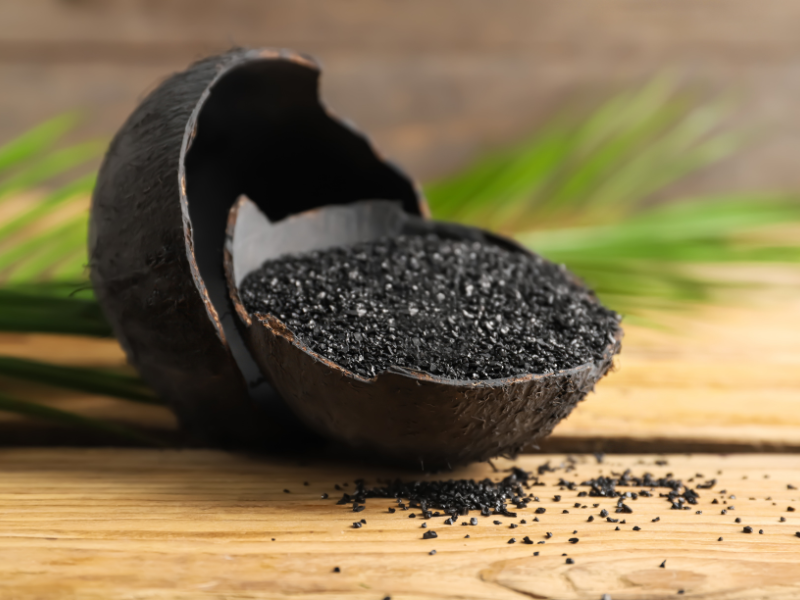
Activated charcoal has genuine adsorption properties and specific uses in odor-control products and certain medical situations.
Neither becomes a miracle substance simply because the two are placed together.
The best approach is to understand what each ingredient actually does and use it for an appropriate purpose.
The Bottom Line
So, what happens when you combine lemon and charcoal?
The answer may be much less mysterious than social media posts suggest.
You don't get a magical detox drink, a powerful fat burner, or a universal household cure.
Instead, you have two substances with very different properties.
Lemon provides acidity and a distinctive citrus aroma. Certain forms of charcoal can adsorb particular molecules and help with some odor-control applications. In carefully selected household uses, each may be useful.
But mixing them together does not automatically make them more effective—and using them on your skin, teeth, or in your diet can create unnecessary risks if done improperly.
Sometimes the most useful “secret” isn't discovering a miraculous combination. It's learning what ordinary ingredients can realistically do and knowing when not to use them.