Chapter 1: The Unusual Parasite That Can Hide Among Human Eyelashes
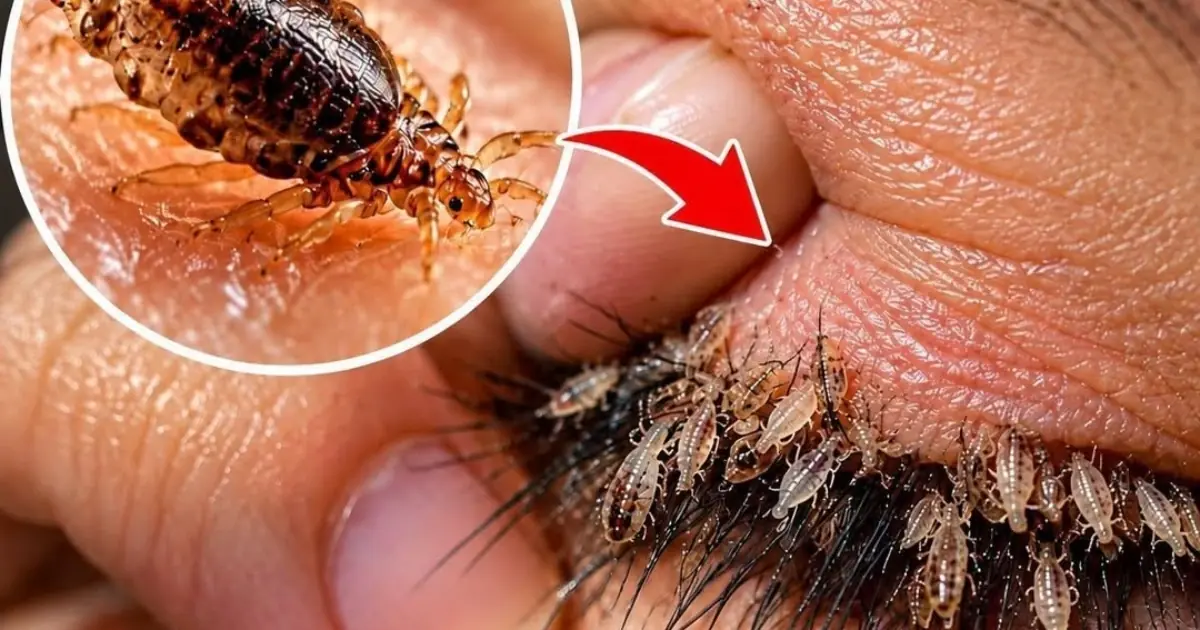
Most people associate lice with the scalp or pubic hair. However, a particular type of parasite can occasionally appear in a much more unexpected location: the eyelashes.
The condition is medically known as phthiriasis palpebrarum, an uncommon infestation of the eyelids and eyelashes caused by the pubic louse, scientifically called Phthirus pubis.
Although the condition is relatively rare, it can cause considerable discomfort and may initially be mistaken for an ordinary eye infection.
1. What exactly are pubic lice?
Pubic lice, sometimes called crab lice because of their distinctive appearance, are small parasitic insects that survive by feeding on human blood.
Unlike head lice, which usually live on scalp hair, pubic lice are adapted to attach themselves to thicker, coarser body hair.
They are commonly found around the genital area, but they can also inhabit other hair-bearing regions, including:
-
Eyebrows and eyelashes.
-
Armpit hair.
-
Chest hair.
-
Beard and mustache hair.
-
Hair around the thighs and abdomen.
Adult pubic lice are extremely small, generally measuring around 1–2 millimeters.
Their bodies are relatively broad and flattened, with claws that help them hold onto individual hairs.
Because of their small size and partly transparent appearance, identifying them without magnification can be difficult.
2. Why can lice appear on the eyelashes?
Pubic lice normally prefer certain types of body hair.
However, when an infestation occurs, the parasites may move to nearby or other suitable hair-bearing areas.
The eyelashes provide a place where these insects can attach themselves close to the skin.
Once there, they use their mouthparts to feed on small amounts of blood.
Their bites and saliva can trigger an inflammatory reaction, producing itching, redness, and irritation.
The eggs, commonly called nits, are attached firmly to individual eyelashes.
Unlike loose particles of dust or ordinary skin flakes, these eggs do not easily brush away.
This is one reason eyelash infestations may persist until the parasites and their eggs are properly removed.
3. What happens during the night?
The phrase in the original image suggests that the problem may develop after sleeping with someone who has an infestation.
There is an important scientific distinction here.
The act of sleeping itself does not create lice, and an individual will not automatically become infested simply by sharing a bedroom.
However, close physical contact with an infested person can allow pubic lice to move from one individual to another.
This is particularly relevant during intimate contact.
The parasites cannot fly or jump. They move by crawling between suitable areas of contact.
Occasionally, transmission may also occur through recently used clothing, towels, or bedding, although this is less common than direct physical contact.
According to the US Centers for Disease Control and Prevention (CDC), pubic lice are usually transmitted through sexual contact, although other forms of close contact can occasionally contribute to transmission.
CDC+1
4. Why might someone not notice the infestation immediately?
One of the most concerning aspects of eyelash lice is that the early symptoms can resemble several ordinary eye conditions.
A person may initially experience mild itching around the eyelids.
They might assume the irritation is caused by cosmetics, dry skin, seasonal allergies, or an environmental irritant.
In other cases, tiny eggs attached to the eyelashes may be mistaken for dandruff or dried eye discharge.
Because the parasites are small and translucent, they may remain unnoticed for some time.
Medical literature describes cases in which patients experienced persistent eye symptoms before the actual cause was identified.
This is why a proper examination is important when ordinary treatments fail to improve persistent eyelid irritation.
NCBI+1
5. Is the condition dangerous?
Eyelash lice are generally treatable, and the infestation does not automatically cause permanent damage to eyesight.
However, ignoring the problem can lead to continuing inflammation.
Repeated scratching or rubbing may damage the delicate skin surrounding the eyes.
Some patients may develop:
-
Inflamed eyelid margins.
-
Persistent itching.
-
Redness and swelling.
-
Crusting around the eyelashes.
-
Irritation of the conjunctiva.
-
Secondary bacterial infection.
More serious complications, such as corneal inflammation, have also been reported, although they are uncommon.
The important message is that an unusual infestation around the eyes should be assessed by an eye-care professional rather than treated with improvised home remedies.
6. Why accurate information matters
People sometimes feel embarrassed when they discover they have pubic lice.
However, an infestation is a medical condition that can be treated.
It should not be used as a reason to humiliate someone or make assumptions about their character.
The most important steps are obtaining an accurate diagnosis, following appropriate treatment, and preventing further transmission.
Chapter 2: How Pubic Lice Spread and Why Close Contact Matters
Understanding how pubic lice spread is essential for preventing repeated infestations.
Many people believe these parasites can only be transmitted through sexual activity.
Although sexual contact is the most common route, there are other possible ways of exposure.
The distinction is particularly important when discussing eyelash infestations because the parasites may be present in unexpected areas of the body.
1. Direct physical contact is the main transmission route
Pubic lice do not fly through the air.
They cannot jump from one person to another like fleas.
Instead, they crawl between people when suitable areas of their bodies come into close contact.
This explains why intimate physical contact is the most common transmission route.
A person may have an infestation without immediately noticing it.
If they have close contact with another individual, the parasites may transfer.
The receiving person may then develop itching or notice tiny insects attached to body hair.
Because symptoms do not always appear immediately, someone may not realize that exposure has occurred.
2. Can sharing a bed cause an infestation?
This is one of the most frequently asked questions.
Sharing a bed with someone who has pubic lice does not guarantee transmission.
Nevertheless, the CDC recognizes that lice can occasionally spread through contaminated bedding, clothing, or towels.
This is why household hygiene becomes important after an infestation is identified.
Bedding and clothing that have been used recently by an affected person should be cleaned appropriately.
The CDC recommends machine washing and drying items used during the two to three days before treatment.