If you've ever opened a car door and noticed a small metal hook, loop, or oddly shaped piece of hardware, you may have wondered why it is there.
It looks so simple that it's easy to assume it is just part of the door's design. But in many vehicles, that small piece plays an important role in keeping the door securely closed.
Depending on the vehicle, the "little hook" people notice may refer to the door-latch mechanism or the metal striker that the latch grabs onto. Some vehicles also have small hooks or loops inside the door for other purposes.
So what does this little piece actually do?
The answer is surprisingly important: it helps keep your car door closed while you're driving.
The Small Part That Does a Very Big Job
A car door has to do more than simply cover the opening.
It needs to remain firmly closed while the vehicle is moving, even when the car is traveling over potholes, making sharp turns, braking suddenly, or experiencing vibrations from the road.
That's where the door-latching system comes in.
When you close the door, a mechanism inside the edge of the door engages with a metal component mounted to the vehicle body.
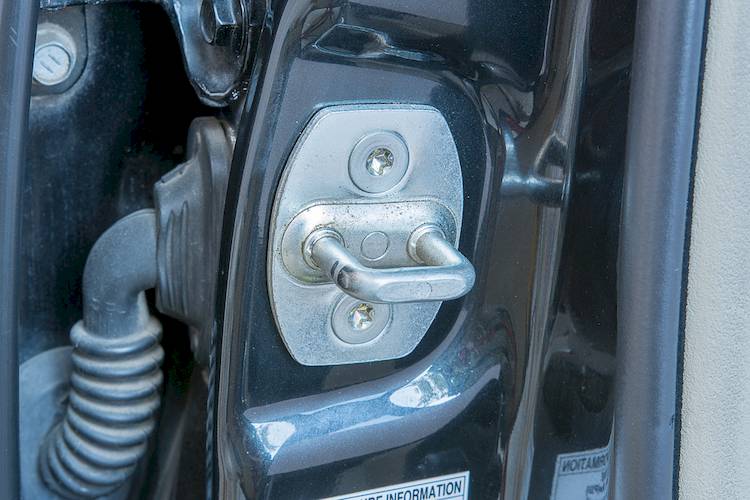
That component is commonly called the door striker.
The striker is usually a sturdy metal loop or bar. Depending on the vehicle's design, it can look somewhat like a small hook.
When the door closes, the latch catches around the striker.
That's what keeps the door shut.
How the Door Latch Works
The system is actually quite clever.
Imagine the door is open.
The latch inside the door is in its open position. As you swing the door toward the body of the vehicle, the latch approaches the striker.
Once the door reaches the correct position, the striker enters the latch mechanism.
The latch then rotates or locks around it.
You hear the familiar:
Click.
That click is the sound of the mechanism engaging.
Once properly latched, the door is held firmly against the vehicle body.
This happens in a fraction of a second every time you close the door.
Why Does the Striker Look So Simple?
One reason people don't recognize its importance is that the striker itself is usually extremely simple.
It may consist of a strong metal loop, bar, or pin secured to the vehicle body.
There are no flashing lights.
No buttons.
No complicated electronics.
Yet it has to withstand substantial forces.
The striker and latch work together to keep the door securely closed during normal driving and in situations involving sudden deceleration.
That's why these components are made from durable materials and attached firmly to the vehicle structure.
It's Not Just a "Hook"
Calling it a hook is understandable because of its appearance, but technically, it isn't simply a hook designed to hang something from.
If you're looking at the metal piece around the door opening, you're probably looking at part of the door-latching system.
The actual design varies between manufacturers and vehicle models.
Some use a loop-shaped striker.
Others use a more compact pin-style design.
Some may appear more like a small metal bar than a hook.
Regardless of the exact shape, the basic purpose is similar:
The latch grabs the striker and keeps the door closed.
What Happens When You Open the Door?
When you pull the interior or exterior door handle, you're not directly "pulling the door open."
Instead, the handle activates a mechanism that releases the latch.
The latch disengages from the striker.
Once the latch releases its grip, you can swing the door open.
That's why a malfunctioning latch or striker can make a door difficult to open or close properly.
The components have to work together precisely.
Why Proper Alignment Matters
One of the most important things about a door-latching system is alignment.
The striker needs to meet the latch at the correct position.
If the door is misaligned, the latch may not engage properly.
You might notice symptoms such as:
-
The door requiring extra force to close
-
A door that seems to sit unevenly
-
Unusual rattling noises
-
Difficulty opening the door
-
The door bouncing back instead of latching
-
Wind noise around the door
-
Warning messages indicating that a door isn't fully closed
These symptoms shouldn't simply be ignored.
A door that doesn't latch securely can become a serious safety concern.
Why You Shouldn't Adjust It Yourself Without Knowing What You're Doing
The striker may look like a simple piece of metal attached with a couple of bolts.
That can make it tempting to loosen it and move it if the door doesn't seem to close correctly.
But this isn't necessarily a good DIY experiment.
The position of the striker is carefully set during vehicle assembly and repair.
Moving it incorrectly can affect:
-
Door alignment
-
Latch engagement
-
Weather sealing
-
Door closing force
-
Road noise
-
Safety-system performance
If the door has suddenly become difficult to close, a qualified technician should inspect it before you start moving the hardware around.
What About the Small Hook Inside Some Car Doors?
Here's where things get interesting.
Not every small hook or loop inside a vehicle is part of the latch.
Some cars have small hooks or loops designed to hold items such as:
-
Shopping bags
-
Small cargo bags
-
Clothing
-
Accessories
-
Straps
These can be located in different places depending on the vehicle.
So if you're talking about a small plastic or metal hook inside the passenger compartment, it may have a completely different purpose.
That's why the exact location matters.

The Difference Between a Door Hook and a Door Striker
A simple way to tell them apart is to look at where the part is located.
If it's on the door frame or body:
It may be the door striker, which works with the latch to keep the door closed.
If it's inside the cabin:
It may be a utility hook designed to hold lightweight items.
If it's on the edge of the door:
You're likely looking at part of the latch mechanism itself.
These components can look surprisingly similar in photographs, which is why viral posts about "mysterious car hooks" sometimes create confusion.
Why the Door Doesn't Fly Open While You're Driving
Think about how much force a car door experiences.
At highway speeds, air pressure is constantly acting on the vehicle.
The car is also moving over uneven surfaces.
The body flexes slightly.
The suspension moves.
The vehicle accelerates, brakes, and turns.
Yet the door stays closed.
That's possible because several systems work together.
The hinges support the door.
The latch locks it.
The striker provides the point that the latch grabs.
The door seals keep out water, wind, and noise.
And the vehicle's structure provides the necessary support.
That tiny-looking piece is therefore part of a much larger engineering system.
What Happens in a Crash?
Modern vehicle doors are designed with safety in mind.
During a collision, the door-latching system needs to resist forces that could otherwise cause the door to open unintentionally.
At the same time, manufacturers design vehicles so that occupants can still exit after a crash when possible.
The exact behavior depends on the type of collision, vehicle design, and condition of the door.
This is one reason seemingly insignificant components receive extensive engineering attention.
A small striker may not look impressive, but its job is important.
Why You Might Hear a Rattle From the Door
A worn or improperly adjusted latch/striker can sometimes contribute to rattling noises.
You may notice a sound that seems to come from the door whenever you drive over rough pavement.
However, not every door rattle is caused by the striker.
Possible causes include:
-
Loose trim
-
Window mechanisms
-
Speakers
-
Door panels
-
Weather stripping
-
Hinges
-
Latch components
If the door also feels loose or doesn't close normally, it's worth having it inspected.
Signs Your Door-Latching System May Need Attention
You should pay particular attention if you notice a change in how a door behaves.
Warning signs can include:
1. The door won't latch on the first attempt
You have to slam it repeatedly before it stays closed.
2. The door feels loose
There may be excessive movement when the door is closed.
3. You hear unusual clicking or rattling
Especially if the sound wasn't there before.
4. The dashboard says a door is open
Even though it appears closed.
5. The door sits unevenly
It may appear higher or lower than the surrounding body panels.
6. The handle feels different
A suddenly loose or unusually stiff handle may indicate a problem with the mechanism.
Any of these signs deserve attention.
Why You Should Never Ignore a Door That Won't Latch Properly
A cosmetic problem can sometimes be harmless.
A door that doesn't latch securely is different.
If the latch isn't engaging correctly, the door may not remain securely closed.
That's why a seemingly minor issue should be treated as a safety-related mechanical problem.
Don't rely on repeatedly slamming the door harder.
Don't tape it shut as a permanent solution.
And don't assume that a warning light is simply a sensor problem without checking the door itself.
Have the vehicle inspected by a qualified mechanic or technician.
A Tiny Piece With a Surprisingly Important Purpose
This is what makes ordinary cars so interesting.
We interact with hundreds of mechanical components every day without thinking about them.
We turn the steering wheel.
We press the brake pedal.
We close the door.
We start the engine.
Most of these actions feel completely automatic.
But behind every action is a network of carefully engineered parts.
That small metal "hook" is one example.
It doesn't look sophisticated.
It doesn't need electricity.
It doesn't have a screen.
It doesn't announce what it does.
But every time you close the door, it quietly performs its job.
It's a Great Example of Automotive Engineering
Modern cars are filled with components that look deceptively simple.
A hinge is just a hinge.
A bolt is just a bolt.
A latch looks like a piece of metal.
But engineers have to consider things such as:
-
Strength
-
Durability
-
Corrosion resistance
-
Alignment
-
Vibration
-
Temperature changes
-
Repeated use
-
Crash forces
-
Manufacturing tolerances
A door may be opened and closed thousands of times throughout its life.
The latching mechanism has to keep working consistently through all of those cycles.
That's why even the smallest components matter.
So, What Is That Little Hook Really For?
If you're referring to the hook- or loop-shaped metal piece near the door opening, it's most likely the door striker.
Its job is simple but essential:
It gives the door's latch something solid to grab onto when the door closes.
Without that interaction, the door wouldn't be securely held against the vehicle body.
If you're referring to a small hook located inside the cabin, however, it may be a utility or cargo hook with a completely different purpose.
The exact location and shape of the part are important when identifying it.
Final Thoughts
The next time you open your car door, take a second to look at the hardware around the door frame.
That small metal loop or hook may not look particularly interesting.
But it plays a key role in one of the most basic and important functions of your vehicle:
keeping the door securely closed.
Every time you shut the door and hear that familiar click, the latch and striker have just done their job.
It's a perfect example of how automotive engineering often hides in plain sight.
We tend to notice the engine, the wheels, the dashboard, and the technology.
But sometimes, the smallest components deserve just as much attention.
That little "hook" isn't there by accident. It is part of the mechanism that helps keep you and your passengers safely inside the vehicle while you're on the road.