Moisture is another major factor.
Termites thrive in damp environments. Leaking pipes, roof leaks, poor drainage, wet crawl spaces, damp basements, and excessive humidity create ideal conditions for termite colonies. Even a small water leak hidden behind a wall can attract termites.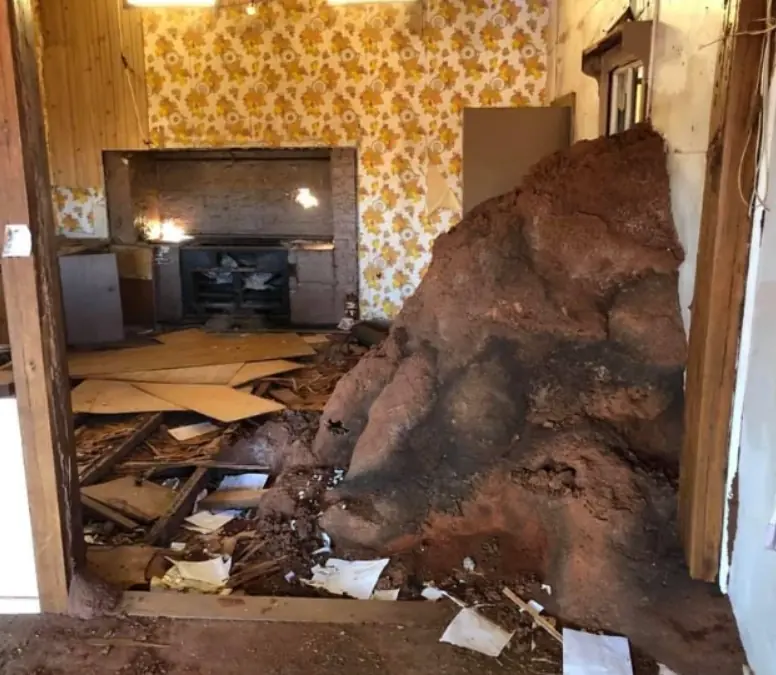
Shelter is equally important. Termites avoid sunlight because their bodies lose moisture quickly when exposed to air and heat. They prefer dark, protected environments such as wall cavities, crawl spaces, attics, wooden beams, foundations, and hidden cracks. Once inside a house, they can travel through concealed pathways without being noticed.
Many homeowners wonder why termites choose one house while leaving another nearby untouched. The answer usually involves a combination of factors. Houses with untreated wood, poor drainage, excessive moisture, wood-to-soil contact, nearby tree stumps, or previous termite activity are significantly more attractive to termites.
A termite colony typically begins when winged reproductive termites, often called swarmers, leave an established colony. These winged termites emerge during certain seasons and fly away to establish new colonies. After landing, they shed their wings, mate, and search for a suitable nesting location.
If they find conditions favorable near a house, they may begin a new colony underground, inside walls, beneath flooring, or within wooden structures. Over time, the colony grows larger and larger.
One of the earliest signs of termite activity is the appearance of discarded wings. After swarmers find a location to reproduce, they shed their wings. Homeowners may notice small piles of transparent wings near windows, doors, or light fixtures.
Mud tubes are another common sign. Subterranean termites build pencil-sized tunnels made of soil, saliva, and wood particles. These tubes protect them from dehydration and predators while allowing them to travel between the nest and food sources.
Wood damage is often discovered later. Termites consume wood from the inside outward, leaving a thin outer surface intact. A wooden beam may appear normal externally while being hollow internally. Tapping infested wood often produces a hollow sound.
As colonies grow, they may build visible nests. Depending on the species, nests can appear underground, inside walls, in wooden structures, or as large above-ground mounds. The nest contains specialized chambers where workers, soldiers, and reproductive termites perform their roles.
Worker termites are responsible for gathering food, feeding other colony members, caring for eggs, and expanding the nest. Soldiers defend the colony against predators such as ants. Reproductive termites are responsible for producing future generations and expanding the colony.
The queen is the most important member of the colony. In mature termite colonies, the queen can live for many years and produce thousands of eggs. Simply killing visible termites does not solve the problem if the queen remains alive.
This is why many homeowners fail when attempting do-it-yourself termite treatments. Spraying visible termites may eliminate only a tiny fraction of the colony. The vast majority remain hidden deep within walls, soil, or structural wood.
To permanently eliminate termites, the entire colony must be destroyed, including the queen.