Hip pain can be surprisingly disruptive. A dull ache may make walking uncomfortable, while a sharp pain can make it difficult to climb stairs, stand up from a chair, or even sleep comfortably at night.
Sometimes hip pain appears after an obvious injury. Other times, it seems to arrive without warning. You may wake up with a sore hip, notice discomfort after a long walk, or gradually realize that certain movements don't feel the way they used to.
The important thing to remember is that hip pain is a symptom, not a diagnosis.
It can come from the hip joint itself, the surrounding muscles and tendons, the lower back, the pelvis, or even other areas of the body. The location, timing, severity, and triggers of the pain can provide useful clues about what may be happening.
Fortunately, many common causes of hip discomfort can improve with appropriate activity modification, gentle movement, strengthening, and time.
But some types of hip pain should not be ignored.
Here's what your hip may be trying to tell you—and what you can do to support a healthier, more comfortable movement pattern.
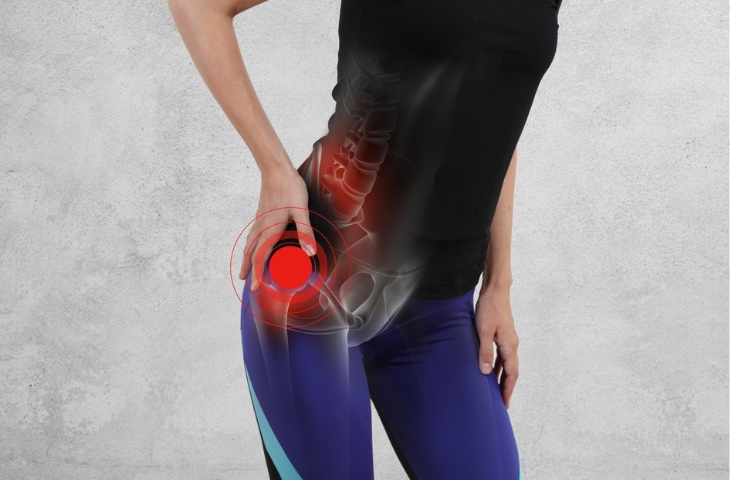
Where Exactly Is Your Hip Pain?
When people say, "My hip hurts," they aren't always talking about the same location.
The hip is a complex region involving bones, joints, muscles, tendons, ligaments, nerves, and surrounding tissues.
Pain can appear in several different places.
Pain in the Front of the Hip
Pain in the front or groin area may be associated with problems involving the hip joint itself.
You may notice discomfort when:
-
Walking
-
Getting into a car
-
Climbing stairs
-
Standing up
-
Rotating the leg
-
Putting on socks or shoes
Pain on the Outside of the Hip
Pain on the outer side of the hip is commonly associated with irritation of the tissues surrounding the hip.
It may become more noticeable when:
-
Lying on the affected side
-
Walking for long periods
-
Climbing stairs
-
Standing for a long time
Pain in the Buttock or Back of the Hip
Pain toward the back of the hip may sometimes originate from the lower back, sacroiliac region, or surrounding muscles.
In some cases, what feels like "hip pain" may actually involve the lumbar spine.
That's why the exact location matters.
1. Muscle Strain or Overuse
One of the most straightforward explanations for hip pain is simply doing too much.
Perhaps you started exercising again after several months.
Maybe you increased your walking distance.
You spent the weekend gardening.
Or you suddenly began climbing more stairs than usual.
The muscles around your hips work hard to stabilize your pelvis and move your legs.
When activity increases faster than your body can adapt, muscles can become irritated or strained.
You may notice:
-
Aching
-
Tenderness
-
Stiffness
-
Pain during certain movements
-
Discomfort that improves with rest
Mild strains often improve gradually with appropriate activity modification.
2. Hip Flexor Irritation
The hip flexors are a group of muscles that help bring your thigh toward your torso.
They are heavily involved in activities such as:
-
Walking
-
Running
-
Climbing stairs
-
Cycling
-
Kicking
-
Getting up from a chair
Activities involving repetitive hip flexion can sometimes irritate these muscles or their tendons.
You may feel discomfort toward the front of the hip, particularly when lifting your knee.
People who sit for long periods and then suddenly become very active may also notice tightness or discomfort in this area.
3. Bursitis and Lateral Hip Pain
Around the hip are small fluid-filled sacs called bursae.
Their job is to help reduce friction between tissues.
When one becomes irritated, it can contribute to pain.
A common pattern is discomfort over the outer side of the hip.
You might notice that:
-
Lying on that side hurts
-
Walking becomes uncomfortable
-
Stairs aggravate the pain
-
The area feels tender when pressed
People sometimes refer to this broadly as "hip bursitis," although lateral hip pain can involve several structures, including the tendons around the hip.
4. Tendon Problems
Tendons connect muscles to bones.
Repeated loading can sometimes irritate or damage tendon tissue.
The tendons around the hip can become painful when they are exposed to more stress than they can currently tolerate.
This can happen after:
-
Increased exercise
-
Running
-
Long walks
-
Repetitive stair climbing
-
Changes in training
-
Prolonged standing
Tendon-related pain often appears gradually rather than following one obvious injury.
5. Osteoarthritis of the Hip
As people age, the protective cartilage within joints can gradually change.
Hip osteoarthritis occurs when the joint undergoes degenerative changes that can lead to pain and stiffness.
Common symptoms include:
-
Groin pain
-
Hip stiffness
-
Reduced range of motion
-
Difficulty walking
-
Pain when standing up
-
Discomfort after prolonged activity
Some people also experience stiffness after sitting for a long time.
A common pattern is that the hip becomes increasingly difficult to move through its full range.
6. Morning Stiffness
Pay attention to when your hip hurts.
If stiffness is especially noticeable after getting out of bed, that information can be useful.
A small amount of stiffness that improves after moving around can occur for many reasons.
However, persistent or prolonged morning stiffness, particularly when accompanied by swelling or pain in multiple joints, may warrant medical evaluation.
The pattern matters more than one isolated morning.
7. Pain After Sitting for a Long Time
Have you ever stood up after sitting at a desk for hours and immediately felt stiff?
You're not alone.
Prolonged sitting can leave the hips feeling tight and uncomfortable.
The problem isn't necessarily that sitting permanently damages your hips.
Rather, remaining in one position for a long time can make movement feel stiff when you finally get up.
Taking regular movement breaks can help.
Try standing up periodically, walking around the room, or performing gentle mobility exercises.
8. Referred Pain From the Lower Back
Sometimes the hip isn't actually the source of the problem.
The lower back contains nerves and structures that can produce pain felt in the buttock or hip region.
This is called referred pain.
You may notice that your hip hurts even though the underlying problem is associated with your spine.
Clues that your back may be involved include:
-
Lower back pain
-
Pain traveling down the leg
-
Tingling
-
Numbness
-
Burning sensations
-
Symptoms that change with spinal movement
This is one reason persistent hip pain deserves proper evaluation rather than self-diagnosis.
9. Nerve Irritation
Nerves can become irritated or compressed in different parts of the body.
When this happens, pain may feel different from ordinary muscle soreness.
You may experience:
-
Burning
-
Electric-like pain
-
Tingling
-
Numbness
-
Shooting sensations
If pain travels from the back or buttock down the leg, a nerve-related problem may be involved.
10. An Injury or Fall
Hip pain after a fall, collision, or sudden twisting movement should be taken seriously.
Even if you can still walk, an injury may involve more than a simple bruise.
Potential injuries include:
-
Muscle strains
-
Tendon injuries
-
Ligament injuries
-
Joint injuries
-
Fractures
The risk of fracture is particularly important in older adults and people with weakened bones.
If you have significant pain after a fall or cannot comfortably put weight on the leg, seek medical attention.
11. Hip Fractures Require Prompt Attention
A hip fracture is a medical emergency, particularly in older adults.
Symptoms can include:
-
Severe hip or groin pain
-
Inability to bear weight
-
Difficulty standing
-
Swelling
-
Bruising
-
The affected leg appearing shorter or positioned differently
Sometimes fractures can occur with relatively minor trauma in people whose bones are fragile.
If you suspect a fracture, don't try to "walk it off."
Seek urgent medical evaluation.
12. Overtraining Can Trigger Hip Pain
Exercise is important for overall health, but more isn't always better.
Increasing your training volume too quickly can overload tissues.
For example, going from:
2,000 steps a day → 10,000 steps a day
overnight may be a major change for your body.
The same applies to:
-
Running
-
Squatting
-
Cycling
-
Hiking
-
Strength training
-
High-intensity workouts
Progressive increases give tissues time to adapt.
13. Weak Hip Muscles Can Contribute to Discomfort
The muscles surrounding your hips help stabilize your pelvis and control leg movement.
Important muscle groups include:
-
Gluteal muscles
-
Hip abductors
-
Hip flexors
-
Hamstrings
-
Quadriceps
-
Core muscles
If these muscles are weak or poorly conditioned, certain movements may place more stress on other tissues.
This doesn't mean weakness is always the cause of pain.
But improving strength can be an important part of rehabilitation for many people.
14. Your Walking Pattern Matters
The way you walk can influence how forces move through your hips.
Changes in gait can happen because of:
-
Pain
-
Previous injuries
-
Muscle weakness
-
Foot problems
-
Knee problems
-
Back problems
Sometimes a painful hip changes the way you walk.
Other times, a problem elsewhere changes your gait and places additional stress on the hip.
If your walking pattern has changed noticeably, a healthcare professional or physical therapist can help identify why.

15. Tight Muscles May Make Movement Uncomfortable
Tightness around the hips doesn't necessarily mean your muscles are damaged.
But restricted mobility can make certain movements uncomfortable.
You may notice difficulty:
-
Squatting
-
Bending
-
Crossing your legs
-
Getting into a car
-
Putting on shoes
-
Rotating your hip
Gentle mobility exercises can sometimes help, particularly when stiffness is related to inactivity.
However, stretching should not cause sharp or severe pain.
16. Sitting All Day Can Affect How Your Hips Feel
Modern life often involves long periods of sitting.
Desk work.
Driving.
Watching television.
Using a computer.
Scrolling on a phone.
Your body is designed to move.
You don't need to avoid sitting altogether, but breaking up long periods of inactivity can help you feel less stiff.
Try incorporating short movement breaks throughout the day.
Even a few minutes of walking can be useful.
17. Sleeping Position Can Aggravate Hip Pain
Your sleeping position may influence symptoms.
If you sleep on your side, direct pressure on the outer hip can sometimes make discomfort worse.
Some people find relief by:
-
Sleeping on the opposite side
-
Placing a pillow between the knees
-
Using a supportive mattress
-
Changing positions during the night
If pain consistently wakes you up or makes it difficult to sleep, that's worth discussing with a healthcare professional.
18. Weight Can Affect Hip Loading
The hips carry substantial mechanical loads during everyday activities.
Body weight can influence the amount of force experienced by the joints during walking and other activities.
If you're carrying excess weight, gradual weight loss may reduce mechanical stress on the hips and can benefit overall health.
This should be approached as a health goal rather than as a reason to blame yourself for pain.
Hip pain can occur at any body size.
19. Foot and Knee Problems Can Affect the Hip
Your body works as a connected movement system.
A problem with the foot can alter your gait.
A knee problem can change how you distribute weight.
Those changes can influence the hip.
That's why treating only the painful area doesn't always solve the underlying problem.
A comprehensive movement assessment may reveal that the hip is compensating for something happening elsewhere.
20. Gentle Movement Is Often Better Than Complete Rest
When a joint hurts, your first instinct may be to stop moving entirely.
Short-term rest can be appropriate after certain injuries.
But prolonged inactivity can lead to:
-
Increased stiffness
-
Muscle weakness
-
Reduced mobility
-
Lower confidence with movement
For many non-serious causes of hip pain, gentle movement within a comfortable range can be more helpful than staying completely still.
The key is avoiding activities that significantly worsen the pain.
21. Walking Can Be a Good Starting Point
If walking is comfortable, it can be a simple form of movement.
Start with a manageable amount.
You don't need to immediately aim for long distances.
A short, easy walk can help maintain mobility and keep surrounding muscles active.
If walking significantly increases pain, however, don't force it.
22. Gentle Stretching May Help
Stretching can be useful when muscles around the hip feel tight.
Examples include gentle stretches targeting:
-
Hip flexors
-
Glutes
-
Hamstrings
-
Inner thighs
Hold stretches comfortably rather than forcing them.
A stretch should generally feel like mild tension, not sharp pain.
If stretching consistently makes symptoms worse, stop and seek professional guidance.
23. Strengthening Can Support Hip Function
Once acute pain has settled, strengthening can be an important part of maintaining healthy hip function.
Exercises may include:
Glute Bridges
Lie on your back with your knees bent and gently lift your hips.
Side-Lying Leg Raises
Lie on your side and slowly lift the upper leg.
Sit-to-Stand
Practice standing up and sitting down from a chair with controlled movement.
Step-Ups
Use a low step and focus on controlled movement.
These exercises aren't appropriate for every condition, especially immediately after an injury or surgery.
If you're unsure, get guidance from a physical therapist or healthcare professional.
24. Heat Can Help With Stiffness
Some people find warmth soothing when their hips feel stiff.
A warm shower or heating pad may temporarily reduce discomfort and make movement easier.
Avoid excessive heat and protect your skin.
Heat isn't appropriate for every situation, particularly immediately after certain acute injuries.
25. Cold May Help After Activity
If the area feels irritated after physical activity, a cold pack may provide temporary relief.
Use a cloth barrier between the cold source and your skin.
Don't apply ice directly to bare skin.
Cold therapy isn't a cure, but it may help manage discomfort while the underlying issue settles.
26. Don't Ignore Persistent Pain
One of the biggest mistakes people make is assuming that all hip pain will eventually disappear.
Some mild pain does improve on its own.
But pain that:
-
Persists for weeks
-
Keeps returning
-
Gradually worsens
-
Interferes with sleep
-
Changes how you walk
-
Limits normal activities
deserves professional evaluation.
The earlier you understand the cause, the easier it may be to address it appropriately.
27. Pay Attention to Pain That Travels
Pain that spreads from the hip toward the thigh, knee, or lower leg may provide useful information.
Pain traveling down the leg with tingling or numbness may suggest nerve involvement.
Pain primarily in the groin may point more toward the hip joint.
Pain on the outer hip may involve surrounding tendons or bursae.
These patterns aren't diagnostic by themselves, but they can help a clinician understand where to investigate.
28. What Does Pain When Walking Mean?
Pain that appears specifically while walking can have several possible causes.
It may be related to:
-
Arthritis
-
Muscle or tendon problems
-
Injury
-
Nerve irritation
-
Gait mechanics
If the pain consistently limits how far you can walk, don't simply keep pushing through it.
A proper assessment can determine whether your walking pattern or underlying joint function needs attention.
29. What Does Groin Pain Mean?
Groin pain is often closely associated with the hip joint.
You may notice it when:
-
Turning your leg
-
Getting out of a car
-
Walking
-
Climbing stairs
-
Putting on shoes
-
Crossing your legs
Hip arthritis is one possible cause, but there are others.
Persistent groin pain should be evaluated rather than assumed to be a simple muscle strain.
30. What Does Outer Hip Pain Mean?
Pain on the outside of the hip is commonly associated with tissues surrounding the hip.
It may be worse when:
-
Lying on the affected side
-
Walking uphill
-
Climbing stairs
-
Standing on one leg
-
Getting up from a chair
The term "greater trochanteric pain syndrome" is sometimes used to describe this type of lateral hip pain.
It can involve tendons and surrounding tissues rather than simply one inflamed bursa.
31. What Does Hip Pain at Night Mean?
Nighttime hip pain deserves attention, particularly if it is persistent.
It can result from:
-
Sleeping position
-
Pressure on the hip
-
Arthritis
-
Tendon problems
-
Other musculoskeletal conditions
If pain repeatedly wakes you from sleep or occurs even when you're resting, talk with a healthcare professional.
32. Red Flags You Shouldn't Ignore
Some symptoms require prompt medical attention.
Seek urgent evaluation if hip pain is accompanied by:
-
Inability to bear weight
-
Severe pain after a fall
-
Obvious deformity
-
Sudden severe pain
-
Fever
-
Significant swelling
-
Redness or warmth around the joint
-
New severe weakness
-
Loss of bladder or bowel control
-
Numbness around the groin or inner thighs
These symptoms can indicate conditions that require urgent treatment.
33. Fever and Hip Pain Need Attention
A painful joint accompanied by fever can sometimes indicate an infection.
Joint infections are uncommon but potentially serious.
Don't attempt to treat unexplained fever and significant hip pain solely with home remedies.
Seek medical evaluation.
34. Don't Assume Hip Pain Is "Just Aging"
Age can increase the likelihood of certain conditions, including osteoarthritis.
But pain isn't something you simply have to accept because you're getting older.
Many causes of hip pain can be managed.
Appropriate exercise, physical therapy, weight management, medication when appropriate, and other treatments can improve mobility and quality of life.
35. Your Hip Is Designed to Move
The hip is a ball-and-socket joint.
This design allows movement in multiple directions while providing stability.
Healthy hip function depends on cooperation between:
-
Bones
-
Cartilage
-
Muscles
-
Tendons
-
Ligaments
-
Nerves
When one part becomes irritated or weakened, movement can change.
That's why strengthening and mobility work can be so valuable.
36. Gentle Relief Starts With Listening
Instead of asking:
"How can I make the pain disappear immediately?"
a better question may be:
"What makes the pain better or worse?"
Pay attention to patterns.
Does walking help?
Does walking make it worse?
Does sitting aggravate it?
Does lying on one side increase pain?
Does stretching help?
Does strengthening help?
Does the pain appear only after exercise?
These observations can provide valuable information.
37. Keep a Simple Pain Journal
If your hip pain keeps returning, consider tracking it for several days.
Write down:
Time: When did it hurt?
Location: Front, side, back, or groin?
Activity: What were you doing?
Intensity: Mild, moderate, or severe?
Duration: How long did it last?
Triggers: What made it worse?
Relief: What made it better?
This information can make conversations with healthcare professionals much more productive.
38. Don't Push Through Sharp Pain
There's an important difference between mild muscle fatigue and sharp pain.
If an exercise causes:
-
Sharp pain
-
Sudden severe pain
-
Increasing pain
-
Numbness
-
Tingling
-
Weakness
stop the activity.
"Push through the pain" is not a universal fitness rule.
Sometimes pain is your body's way of telling you that something needs to change.
39. Gradual Progress Is Better Than Sudden Change
Whether you're returning to exercise or simply trying to become more active, increase your activity gradually.
For example, if you haven't walked much recently, don't suddenly start hiking for two hours.
Start smaller.
Allow your body to adapt.
Then gradually increase:
-
Duration
-
Distance
-
Intensity
-
Frequency
This approach can reduce the likelihood of overuse problems.
40. Supportive Shoes Can Make a Difference
Your feet are the foundation of your walking pattern.
Wearing comfortable, supportive shoes can help you move more naturally.
This is especially relevant if you're walking frequently or exercising.
Shoes won't cure hip arthritis or a serious injury, but appropriate footwear can make activity more comfortable.
41. Don't Forget Your Core
Your abdominal and back muscles help stabilize your pelvis.
A strong and well-conditioned core can support efficient movement.
Core exercises can therefore be a useful component of an overall hip-strengthening program.
Again, the goal isn't to create a perfect body.
It's to build a body that can move comfortably and confidently.
42. When Physical Therapy May Help
A physical therapist can assess:
-
Strength
-
Mobility
-
Balance
-
Walking pattern
-
Joint movement
-
Muscle coordination
They can then create an individualized exercise program.
This can be particularly helpful when hip pain is persistent or when you're recovering from an injury.
-800x450.jpg)
43. Medication May Be Appropriate for Some People
Depending on the cause of your hip pain, healthcare professionals may recommend medications to reduce pain or inflammation.
Common options may include acetaminophen or certain nonsteroidal anti-inflammatory drugs.
However, these medications aren't appropriate for everyone.
Some can interact with other medications or cause problems for people with certain medical conditions.
If you take medication regularly or have chronic health conditions, ask a healthcare professional or pharmacist before using pain medication frequently.
44. Don't Ignore Your Overall Health
Hip pain doesn't exist in isolation.
Your:
-
Sleep
-
Nutrition
-
Activity level
-
Body weight
-
Stress
-
Strength
-
Mobility
can all influence how your body feels.
Improving overall health can sometimes make managing musculoskeletal pain easier.
45. When Surgery Is Considered
Most people with hip pain don't immediately need surgery.
Surgery is generally considered when a structural problem is significant, symptoms are persistent, and conservative treatments haven't provided sufficient improvement.
For severe hip arthritis, hip replacement can be an effective treatment for appropriate patients.
But that decision requires a thorough evaluation.
46. Don't Diagnose Yourself From One Symptom
A common mistake is searching online for one symptom and immediately deciding what condition you have.
Hip pain is particularly complicated because many different conditions can produce similar symptoms.
Instead of thinking:
"This must be arthritis."
think:
"This symptom could have several possible causes, so I need to look at the pattern."
That approach is safer and more realistic.
47. Your Body Doesn't Always Speak in Sharp Pain
Sometimes the first sign of a problem is subtle.
You might notice:
-
Reduced mobility
-
Stiffness
-
Difficulty putting on shoes
-
Avoiding stairs
-
Walking differently
-
Needing to use your arms to get out of a chair
These small changes can be just as informative as pain.
Your body may be adapting to discomfort before you consciously recognize it.
48. Small Changes Can Make a Big Difference
You don't necessarily need an elaborate fitness routine.
Simple habits can help:
Move regularly.
Avoid long periods of sitting.
Strengthen your hips and legs.
Maintain a healthy body weight if appropriate for you.
Choose comfortable footwear.
Increase exercise gradually.
Pay attention to persistent symptoms.
Consistency matters more than perfection.
Final Thoughts
Hip pain can be frustrating, but it isn't always a sign that something is seriously wrong.
Sometimes your body is responding to a new workout, prolonged sitting, muscle weakness, an awkward sleeping position, or simply doing more activity than your tissues are prepared to handle.
In other cases, persistent pain can be related to arthritis, tendon problems, nerve irritation, an injury, or another condition that deserves professional attention.
The location and behavior of the pain can provide clues.
Front or groin pain may involve the hip joint.
Outer hip pain may involve surrounding tendons or bursae.
Buttock or radiating pain may sometimes involve the lower back or nerves.
Pain after an injury requires particular caution.
And symptoms such as severe pain, inability to bear weight, fever, significant swelling, deformity, or new neurological problems should not be ignored.
For mild, non-serious discomfort, gentle movement, appropriate activity modification, gradual strengthening, and attention to your overall health may help.
Most importantly, don't treat pain as something you simply have to live with.
Listen to the pattern. Pay attention to what your body is telling you. And when the pain persists, worsens, or interferes with everyday life, get it properly evaluated.
Your hips carry you through thousands of movements every day. Giving them the right balance of movement, strength, recovery, and care can go a long way toward keeping you active and independent for years to come.