Breast size is something many women think about at some point in their lives. It can change during puberty, pregnancy, weight gain or loss, hormonal fluctuations, and aging. Yet despite how common these changes are, there are still plenty of misconceptions about what breast size means and what it says about a woman’s health.
Some people assume that larger breasts automatically mean higher hormone levels, better fertility, or greater femininity. Others believe that smaller breasts indicate a hormonal problem or that breast size can reveal whether someone is healthy.
Neither assumption is accurate.
Breast size is influenced by a combination of genetics, hormones, body composition, age, pregnancy history, and other biological factors. Most importantly, breast size by itself is not a reliable measurement of overall health, fertility, or physical well-being.
Understanding why breasts differ from person to person can help replace unnecessary worry with a more realistic picture of normal anatomy.
1. Genetics Play a Major Role
Just as genetics influence height, body shape, hair texture, and many other physical characteristics, they also contribute significantly to breast size and shape.
You may notice that women in the same family have similar breast characteristics, although there can also be considerable variation between relatives.
Genetics can influence the amount and distribution of breast tissue, the structure of connective tissue, body-fat distribution, and the way breasts respond to hormones.
This means that two women who have similar diets, exercise habits, and body weights can naturally have very different breast sizes.
There is no single genetic formula that determines an exact cup size. Breast development results from many genes interacting with hormonal and environmental factors.
So, having smaller or larger breasts than your mother or sister does not necessarily indicate that anything is wrong.
2. Hormones Influence Breast Development
Hormones are another major factor in breast development, particularly during puberty and throughout a woman's reproductive years.
Estrogen and progesterone play important roles in the development and changes of breast tissue. During puberty, rising hormone levels stimulate breast development. Hormonal changes also occur during the menstrual cycle, pregnancy, breastfeeding, and menopause.
This is why breasts can temporarily feel fuller, heavier, swollen, or more sensitive at certain times of the month.
Hormonal birth control and some hormone-based medications may also affect breast fullness or tenderness.
These fluctuations are normal for many women.
However, breast size should not be used as a simple way to determine whether someone has “high” or “low” hormone levels. Hormonal health is much more complicated than appearance alone.
3. Body Weight and Fat Distribution Matter
Breasts contain different types of tissue, including glandular tissue, connective tissue, and fatty tissue.
Because body fat contributes to breast volume in many women, changes in body weight can lead to changes in breast size.
Some women notice that their breasts become smaller after losing weight, while others notice little difference. Similarly, weight gain may increase breast size for some people but not for everyone.
The reason is that fat is distributed differently from person to person.
One woman may store more fat in the hips and thighs, another around the abdomen, and another in the breasts. Genetics plays a role in these patterns.
This is one reason why breast size cannot be used to make assumptions about someone's fitness or health.
A woman with a lower body weight may naturally have larger breasts than another woman with a higher body weight.
4. Age Can Change Breast Size and Shape
Breasts do not stay exactly the same throughout life.
During puberty, the breasts develop and mature. In adulthood, their appearance can continue to change as hormone levels fluctuate and the proportions of fatty, glandular, and connective tissue shift.
After pregnancy and breastfeeding, some women notice changes in breast volume or shape. During menopause, declining estrogen levels can lead to changes in breast tissue, and breasts may become softer or less dense over time.
The skin and supporting connective tissues also change with age.
As a result, breasts may appear less firm or may sit differently on the chest than they did when a woman was younger.
These changes are part of normal aging and do not automatically indicate poor health.
5. Pregnancy and Breastfeeding Can Cause Major Changes
Pregnancy is one of the clearest examples of how dynamic breast tissue can be.
During pregnancy, hormonal changes prepare the breasts for milk production. Many women experience enlargement, increased sensitivity, and changes in the nipples and areolae.
After childbirth, the breasts can become even fuller as milk production increases.
Once breastfeeding ends, breast size may gradually change again. Some women return close to their previous size, while others notice lasting differences in volume or shape.
These changes can happen even in women who have healthy pregnancies and no underlying health problems.
It is also worth noting that breastfeeding does not guarantee that breasts will return to exactly their pre-pregnancy appearance and there is no “correct” outcome.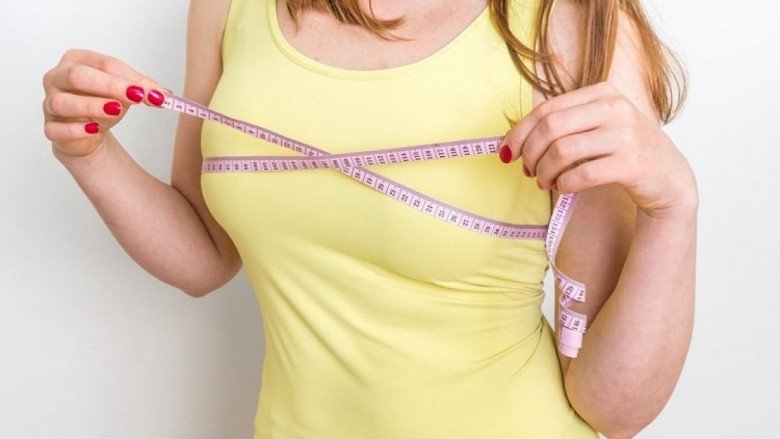
6. Breast Size Does Not Determine Fertility
One of the most persistent myths is that breast size is connected to fertility.
There is no reliable relationship between having larger breasts and being more fertile.
Fertility depends on many complex factors involving the reproductive organs, ovulation, hormones, age, sperm health in a partner, and other aspects of reproductive function.
Breast size does not tell you whether a woman is ovulating regularly, whether her eggs are healthy, or whether she can become pregnant.
A woman with a small bust may have completely normal reproductive health, while a woman with larger breasts may experience fertility problems.
Appearance simply cannot provide that information.
7. Breast Size Does Not Determine Breastfeeding Ability
Another common misconception is that larger breasts produce more breast milk.
This is generally not how lactation works.
Breast size is influenced partly by the amount of fatty tissue, while milk production depends more heavily on the glandular tissue and the process of milk removal.
Women with smaller breasts can successfully breastfeed, and women with larger breasts can also experience breastfeeding difficulties.
In other words, cup size is not a useful measurement of milk-producing ability.
Breastfeeding success can be influenced by many factors, including infant latch, feeding frequency, milk transfer, maternal and infant health, previous breast surgery, and other circumstances.
8. Breast Size Is Not a Reliable Measure of Hormonal Health
Another myth is that larger breasts automatically mean higher estrogen levels.
While hormones influence breast development, breast size reflects many factors at once.
Someone with larger breasts does not necessarily have unusually high estrogen, and someone with smaller breasts does not necessarily have a hormonal deficiency.
Hormonal disorders are assessed through symptoms, medical history, physical examination, and sometimes laboratory testing—not by looking at breast size.
This distinction matters because using body appearance as a substitute for medical evaluation can create unnecessary anxiety.
9. Asymmetry Is Extremely Common
Many women worry that their breasts are not exactly the same size.
In reality, some degree of breast asymmetry is very common.
One breast may be slightly larger, sit differently, or have a somewhat different shape. This can become more noticeable during puberty, pregnancy, hormonal changes, or changes in body weight.
Perfect symmetry is not the biological norm.
However, a new and noticeable change in one breast should be taken more seriously than long-standing mild asymmetry.
A healthcare professional should evaluate changes such as a newly developed lump, persistent swelling, skin changes, nipple inversion, or unexplained discharge.
The key issue is not whether both breasts look identical. It is whether something has changed from what is normal for you.
10. Breast Size and Breast Cancer Risk Are Not the Same Thing
One particularly important misconception is the belief that breast size itself determines breast cancer risk.
Breast size is not considered a simple direct measure of breast cancer risk.
Breast cancer risk is influenced by factors such as age, genetics, family history, certain inherited mutations, reproductive and hormonal factors, alcohol consumption, body composition, and other established risk factors.
Breast density is a different concept from breast size.
Breast density refers to the relative amount of fibroglandular tissue compared with fatty tissue on a mammogram. It can affect how clearly abnormalities appear on mammographic images and is itself associated with breast cancer risk.
A woman can have small breasts with dense tissue or large breasts with less dense tissue.
So, size and density should not be confused.
11. Exercise Usually Does Not Dramatically Change Breast Tissue
Many women wonder whether working out can make breasts larger or smaller.
Exercise can certainly change the appearance of the chest, but not because it directly enlarges breast tissue.
Breasts themselves do not contain skeletal muscle. The muscles underneath them—the pectoral muscles—can become stronger and more developed through resistance training.
Building those muscles may make the chest look firmer or more lifted in some people.
At the same time, significant exercise-related weight loss can reduce breast volume if some of the lost body fat comes from the breasts.
So, exercise can influence how the chest looks, but it does not provide a simple way to increase or decrease breast tissue itself.
12. There Is No “Healthy” Breast Size
This may be the most important point of all.
There is no universally ideal breast size.
Breasts naturally come in a huge range of shapes, sizes, positions, and proportions. What is normal for one woman may be completely different from what is normal for another.
Health is not measured by cup size.
A woman's overall health is better assessed by factors such as blood pressure, metabolic health, nutrition, physical activity, mental well-being, sleep, medical history, and appropriate screening.
Trying to judge health from body shape alone can lead to misleading conclusions.
13. Bra Size Is Not a Perfect Biological Measurement
Even bra size itself can be confusing.
Different brands use different sizing systems, and the same person may wear different sizes depending on the manufacturer, style, and shape of the garment.
Breast shape also matters. Two women with the same measured bust circumference may need very different bra styles.
This is another reason why cup size should not be treated as a precise biological measurement.
It is mainly a tool for finding a more comfortable garment—not a medical category.
14. What Changes Should You Actually Pay Attention To?
While breast size itself is generally not a health score, changes in the breasts can sometimes be important.
Pay attention to changes that are new, persistent, or unexplained, such as:
-
A new lump or thickening
-
A significant change in size or shape on one side
-
Persistent swelling
-
Skin dimpling or puckering
-
Redness or changes in skin texture that do not resolve
-
A newly inverted nipple
-
Unexplained nipple discharge, especially if bloody
-
Persistent localized pain or discomfort
Many of these symptoms can have benign causes, including cysts, hormonal changes, infections, or other non-cancerous conditions.
Still, unusual changes should be evaluated rather than diagnosed at home.
15. Knowing Your Normal Matters More Than Comparing Yourself With Others
Instead of asking whether your breasts are “too large,” “too small,” or “the right size,” a more useful question is:
What is normal for my body?
Knowing your usual breast appearance can make it easier to notice meaningful changes.
You may naturally have asymmetry, tenderness before your period, or fluctuations in fullness. Those patterns may simply be part of your normal.
The important thing is to recognize when something is different from your baseline and does not resolve.
This approach is much more useful than comparing your body with celebrities, influencers, advertisements, or unrealistic beauty standards online.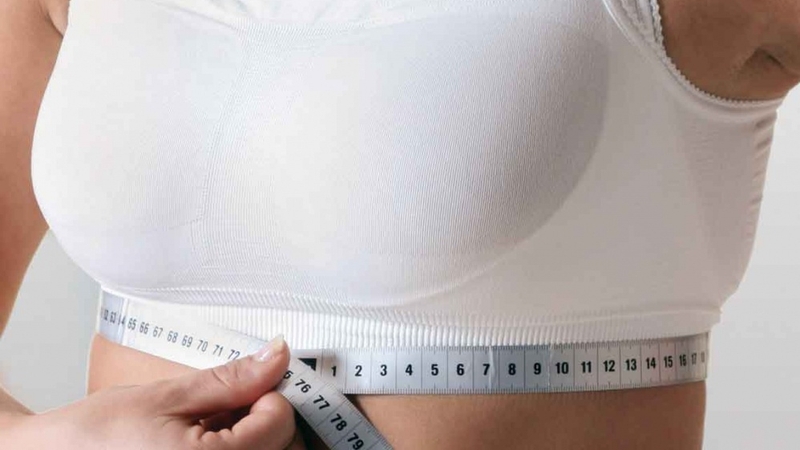
The Bottom Line
Breast size is shaped by genetics, hormones, body composition, age, pregnancy, breastfeeding, and individual anatomy. There is no single factor that determines it, and there is no universally “healthy” or ideal breast size.
Most importantly, breast size does not define a woman's fertility, femininity, fitness, or overall health.
Small breasts can be completely healthy. Large breasts can be completely healthy. Asymmetrical breasts can be completely normal.
What deserves attention is not simply how large or small the breasts are, but whether there are new or persistent changes that are unusual for you.
Rather than judging your health by appearance, focus on understanding your own baseline, attending recommended health screenings, and seeking medical advice when something genuinely changes.
Your body does not need to fit a particular size to be healthy.