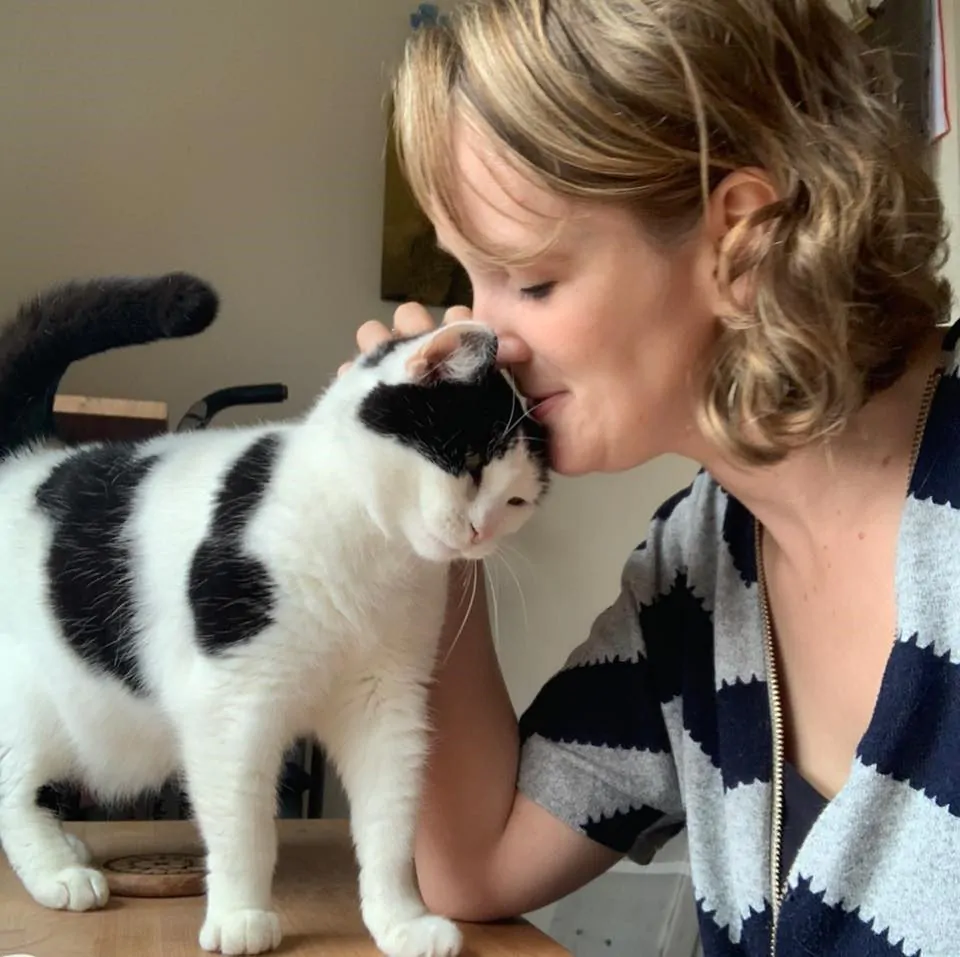
If a cat walks up and presses their head, cheek, or whole body against your leg, arm, or face, it might look casual - but it’s actually loaded with
meaning. This behavior, often brushed off as “being cute,” is one of the most important social signals in cat language.
Cats don’t waste energy on random actions. When they rub against someone, they’re communicating clearly and intentionally.
Here’s what’s really going on.
It’s Called “Bunting” And It’s a Big Deal
The technical term for this behavior is bunting. It happens when a cat rubs their head, cheeks, or body against an object - or a person.
Cats have scent glands located on:
-
Their cheeks
-
Forehead
-
Chin
-
Sides of the body
-
Base of the tail
When a cat rubs against you, they are depositing their scent. Not in a gross way—this scent is odorless to humans but deeply meaningful to
cats.
In cat logic, scent equals identity.
Meaning #1: “You’re Mine”
This is the most important reason.
Cats are territorial by nature, but not always aggressively so. When a cat rubs against you, they are marking you as part of their territory.
That means:
-
You’re familiar
-
You’re safe
-
You belong in their world
This isn’t ownership in a controlling way - it’s inclusion. The cat is essentially saying, “You’re one of us.”
That’s not casual behavior. That’s trust.
Meaning #2: Affection (But the Cat Version)
Cats don’t show affection the same way dogs do. There’s no jumping, licking, or tail-wagging chaos. Cat affection is quieter and more
selective.
Rubbing is one of their strongest affection signals.
It often means:
-
The cat feels comfortable around you
-
They enjoy your presence
-
They choose interaction - not obligation
Important detail: cats don’t rub against people they dislike. If they tolerate someone, they ignore them. If they rub against someone, that’s
intentional affection.
Meaning #3: Social Bonding
In multi-cat households, cats rub against each other to:
-
Create a shared group scent
-
Reinforce social bonds
-
Reduce tension
When a cat rubs against a human, they’re doing the same social behavior, just across species.
In other words, the cat doesn’t see you as “just a human.”
You’re part of their social circle.
That’s elite status.
Meaning #4: A Request (Yes, There’s an Agenda)
Let’s be honest - sometimes it’s not that deep emotionally.
Cats also rub against people when they want something.
Common reasons include:
-
Hunger
-
Attention
-
Playtime
-
Door-opening services
-
Lap availability
The rubbing gets your attention first. Then comes the stare, the meow, or the dramatic floor flop.
Affection and manipulation can coexist. Cats are excellent at multitasking.
Meaning #5: Comfort and Stress Relief
Rubbing is soothing for cats.
The act of scent-marking:
-
Helps them feel secure
-
Reduces anxiety
-
Reinforces familiar surroundings
If a cat rubs against you more during:
-
Changes in environment
-
Loud noises
-
New people or animals
That usually means you’re being used as an emotional anchor. The cat is grounding themselves through something familiar—your presence.
That’s trust at a deep level.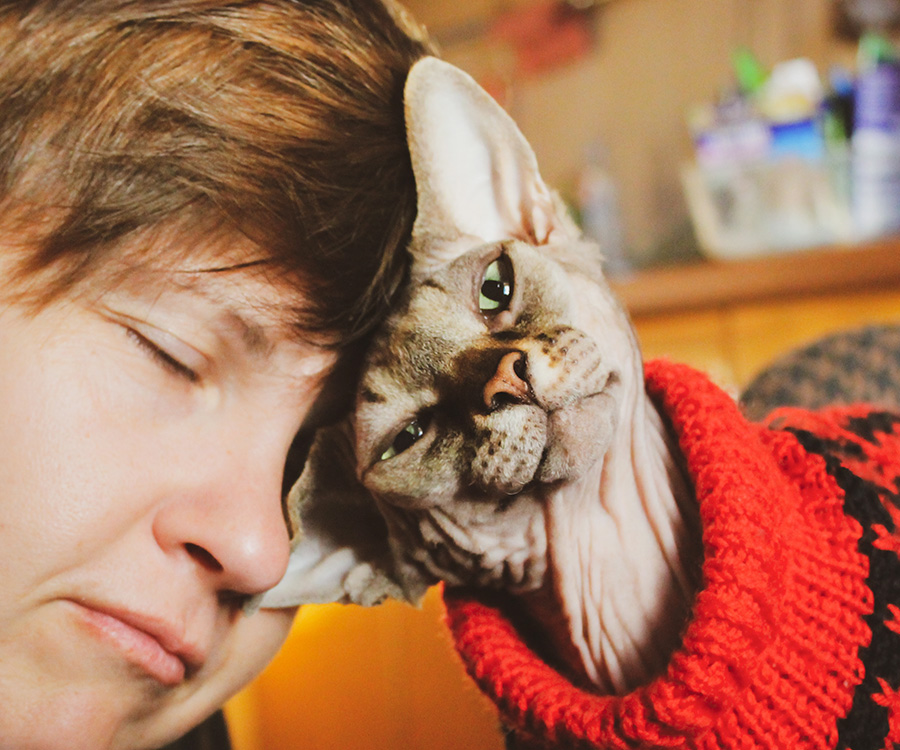
Why Cats Target Legs (and Faces)
Legs
Legs are:
-
Vertical
-
Easy to rub
-
Always moving (interesting target)
Rubbing legs is efficient scent-marking. Plus, it blocks your movement just enough to guarantee attention.
Strategic.
Faces
If a cat rubs their face against your face, that’s next-level trust.
Cats protect their heads instinctively. Face rubbing means:
-
Zero fear
-
High comfort
-
Strong bond
This behavior is usually reserved for people the cat feels deeply safe with.
What It Does NOT Mean
Let’s clear a few myths.
-
It does not automatically mean the cat wants to be picked up
-
It does not guarantee the cat wants to be petted everywhere
-
It does not mean the cat is submissive
Rubbing is a greeting and a signal - not an open contract for unlimited physical contact.
Always watch body language after.
How to Respond the Right Way
If a cat rubs against you, the best responses are:
-
Stay relaxed
-
Let the cat initiate next contact
-
Offer gentle cheek or head scratches if invited
-
Avoid grabbing or restraining
Respecting the moment builds trust. Forcing interaction breaks it.
Why This Behavior Matters More Than Meowing
Meowing is mostly for humans.
Rubbing is for real communication.
Cats evolved bunting to interact with other cats, not people. So when they use it on humans, it means they’re adapting their natural language
to include you.
That’s not random. That’s intentional connection.
The Bottom Line
When a cat rubs against you, it means:
-
You are familiar
-
You are trusted
-
You are part of their territory
-
You are emotionally safe
Sometimes it also means:
-
“Feed me.”
Both can be true at the same time.
In cat terms, rubbing isn’t just affection - it’s acceptance. And in the cat world, that’s about as meaningful as it gets.