People tend to interpret unfamiliar events through the explanations they already know.
This is a normal part of human thinking. We often use personal experience and cultural knowledge to make sense of uncertain situations.
But cultural variation also demonstrates why no single interpretation should be presented as a universal truth.
If you hear that lizards symbolize luck in one community, it does not follow that every culture shares the belief. Nor does a story from one region necessarily apply to every species of lizard.
Learning about local traditions can be interesting, especially when the stories are approached with respect and curiosity.
A careful account distinguishes between what a community believes, what an individual experiences, and what scientific evidence can establish.
That distinction allows cultural stories to be explored without misleading readers about the natural world.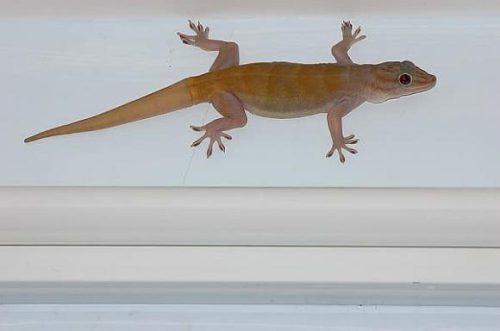
12. A Lizard's Visit Can Be a Reminder to Pay Attention to Your Surroundings
There is one interpretation that does not depend on supernatural beliefs: the appearance of a lizard can encourage people to notice their immediate environment.
Perhaps you have never paid attention to the small insects around your porch light. Maybe you have not noticed a gap beneath a door or the plants growing close to a window.
An unexpected animal can draw attention to these details.
It may prompt you to improve screens, seal openings, reduce insect activity, or think more carefully about how wildlife interacts with your home.
The encounter can also encourage a broader appreciation of nature.
Even in crowded cities, homes are connected to surrounding ecosystems. Insects, birds, reptiles, and other animals respond to food, temperature, shelter, and seasonal changes.
Observing them can help us understand that our homes are not completely separate from the natural world.
For children, seeing a small gecko may become an opportunity to learn about animal behavior, habitats, and the importance of treating living creatures responsibly.
Parents can explain why the lizard may have entered, what it eats, and why it is better to observe unfamiliar wildlife without touching it.
In this sense, a lizard's visit can have a meaningful outcome without being a supernatural sign.
It can turn an ordinary moment into an opportunity to learn something new.
Final Thoughts: Is a Lizard Entering Your House a Sign of Something Important?
When a lizard visits your house, its meaning depends largely on the perspective through which you view the encounter.
Some people associate lizards with good luck, prosperity, adaptability, or changes in life. Others see them as ordinary animals that occasionally enter buildings while searching for food, warmth, or shelter.
These interpretations can coexist as cultural stories and personal reflections, but they should not be confused with scientific predictions.
There is no reliable evidence that a lizard entering a home guarantees financial success, signals an approaching tragedy, or determines what will happen to a family.
From a practical standpoint, a small lizard near a wall or window is often responding to environmental conditions. It may have found insects, a sheltered place to rest, or an opening through which it can enter.
If the animal appears occasionally and poses no problem, there may be little reason for concern. If lizards repeatedly enter your home, checking screens, sealing gaps, and reducing insect activity may help.
Above all, avoid letting frightening stories create unnecessary anxiety or encouraging beliefs that could lead to harmful decisions.
You can respect traditional beliefs without assuming they are scientifically established. You can appreciate the symbolism of an animal while recognizing that its behavior has natural explanations.
Perhaps the most interesting part of a lizard's unexpected visit is not whether it predicts the future, but how it reminds us to look more closely at the world around us.
Sometimes, a small visitor on the wall is simply a small visitor.
And sometimes, the meaning we take from an ordinary moment says more about our hopes, memories, and traditions than it does about the animal itself.