At first glance, this behavior may seem like a simple request for attention. Sometimes, that is exactly what it is. But when a cat rubs against you, it may also be communicating familiarity, affection, curiosity, or a desire for interaction.
Cats use a combination of body language, scent, posture, facial movements, and vocalizations to communicate with people and other animals. Rubbing is one of their most recognizable social behaviors, and it can serve several purposes depending on the situation.
Understanding what your cat is trying to communicate can help you build a stronger relationship with your pet. It can also help you recognize when rubbing is ordinary behavior and when a sudden change may deserve closer attention.
So, what does it really mean when your cat rubs against you?
The answer depends on how your cat behaves, which part of its body makes contact, what is happening around it, and whether the behavior is typical for that particular animal.
Here are the most important reasons cats rub against their owners and what you should know about each one.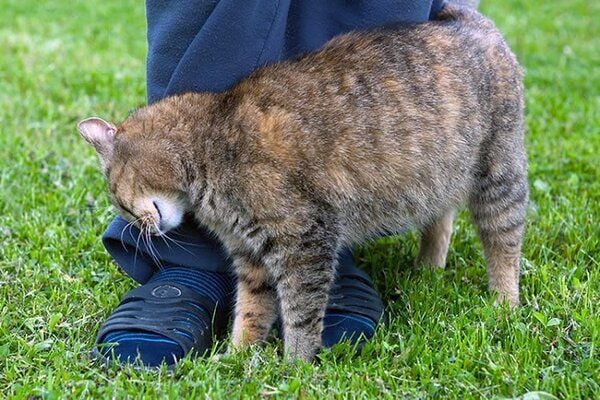
1. Your Cat May Be Showing Affection and Trust
One of the most common reasons cats rub against their owners is social bonding.
Although cats are often described as independent animals, many develop strong attachments to the people who care for them. They may seek physical contact, follow family members around the home, greet them at the door, or settle nearby when they want company.
Rubbing can be one way of maintaining that social connection.
When your cat approaches you voluntarily, presses its head or cheek against your hand, and continues rubbing while appearing relaxed, it may be showing that it feels comfortable around you.
This behavior is particularly meaningful when the cat chooses to initiate contact rather than being picked up or restrained.
Why does your cat choose to rub against you?
Cats are sensitive to their surroundings. They learn which people provide food, safety, warmth, play, and predictable interactions.
Over time, these experiences can help them associate a particular person with security and positive attention.
Your cat may therefore approach you after you return home, rub against your legs while you sit down, or rest its head against your hand when you begin petting it.
These actions can be part of an established social routine.
However, it is important not to assume that every rub has exactly the same emotional meaning. Some cats are highly affectionate and enjoy extended contact, while others prefer brief greetings before moving away.
A cat can also rub against a person because it wants something specific, such as food or access to a room.
The surrounding body language helps you interpret the behavior more accurately.
How can you tell whether your cat is comfortable?
Look for a combination of relaxed signals, including:
-
A loose, natural body posture.
-
Ears held in a neutral or forward-facing position.
-
Gentle cheek or forehead contact.
-
A relaxed tail, sometimes held upright.
-
Voluntary return for more interaction.
-
A willingness to remain nearby without appearing tense.
Purring may accompany affectionate rubbing, although purring can also occur when cats are stressed or unwell.
The most useful clue is the overall pattern of behavior.
If your cat approaches willingly, rubs gently, and remains relaxed, the interaction is generally consistent with positive social engagement.
2. Your Cat Is Leaving Its Scent on You
Another important reason cats rub against people is scent communication.
Cats possess scent-producing glands in several areas of the body, including around the cheeks, chin, forehead, and the base of the tail. When they rub these areas against objects or other animals, they can deposit chemical signals associated with their scent.
This process is often described as scent marking.
Humans may not notice these signals, but scent plays an important role in how cats experience their environment.
What does scent marking accomplish?
Cats use scent to gather information and communicate familiarity. Rubbing their cheeks against furniture, doorframes, or familiar people can help establish a recognizable scent profile in their surroundings.
When your cat rubs its face against your hand or leg, it may be participating in this normal scent-marking behavior.
The action does not necessarily mean the cat considers you its possession in the human sense. Rather, rubbing can help associate you with a familiar and socially meaningful part of its environment.
Familiar scents may contribute to a cat's sense of continuity and security, particularly in a home where people, animals, and objects regularly interact.
Why does your cat rub against you after you return home?
Your scent changes throughout the day. You may pick up unfamiliar odors from work, public transportation, other animals, outdoor environments, or different household products.
When you return home, your cat may investigate these unfamiliar smells and rub against you.
This may involve both information gathering and scent marking. The cat is exploring what is different while also engaging in a familiar social behavior.
It is tempting to interpret this as your cat deliberately trying to cover up every outside scent, but that explanation is too simplistic. Cats use scent in several ways, and the exact motivation behind an individual rubbing episode cannot always be determined.