Noticing tiny white bumps on your face can be frustrating, especially when they appear around the nose, cheeks, eyelids, or chin. You may wonder whether they are acne, clogged pores, milia, or something else entirely.
The good news is that many small white bumps on the face are harmless. However, different skin conditions can look surprisingly similar, and the best way to treat them depends on what is actually causing the bumps.
Some disappear on their own, while others respond to gentle skin-care products. Trying to squeeze or pick them can sometimes make the problem worse.
Here's what those small white bumps may be and what you can safely do about them.
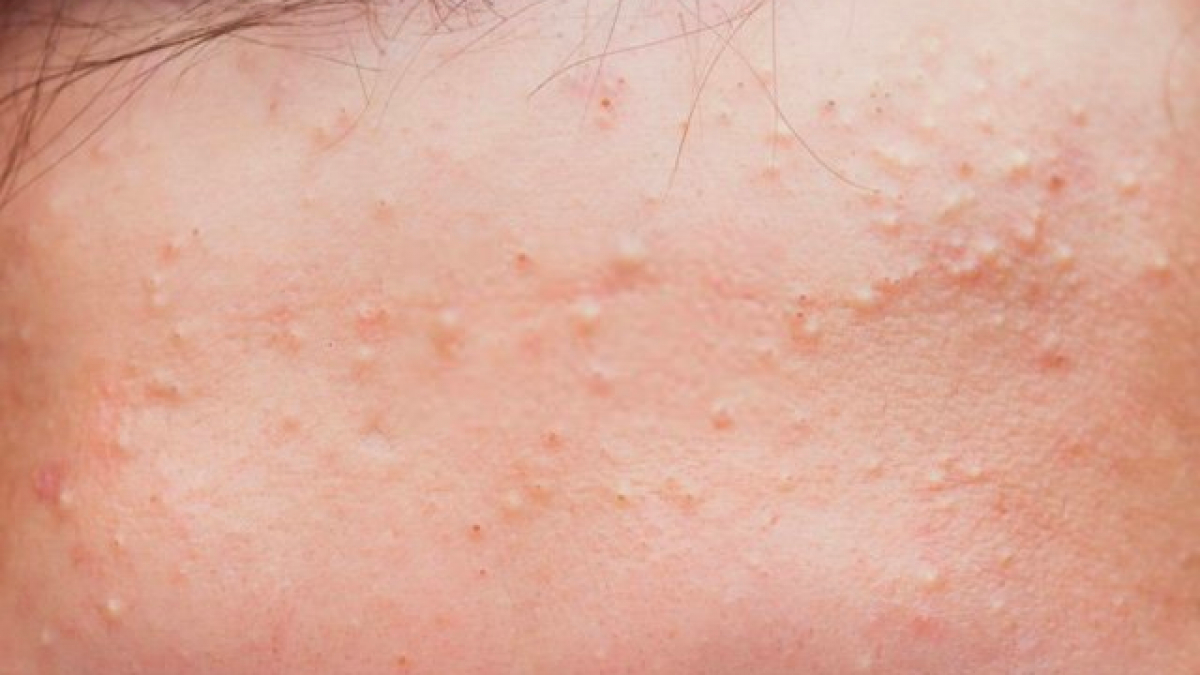
What Causes White Bumps on the Face?
"White bumps" isn't a medical diagnosis. It's simply a description of how something looks on the skin.
Several different conditions can appear as small white, flesh-colored, or pale bumps, including:
-
Milia
-
Closed comedones
-
Sebaceous filaments
-
Sebaceous hyperplasia
-
Fordyce spots
-
Irritated hair follicles
-
Certain types of acne
-
Small cysts
-
Less commonly, infections or other skin conditions
The location, texture, size, and whether the bumps are itchy, painful, or inflamed can provide clues.
1. Milia Are a Very Common Cause
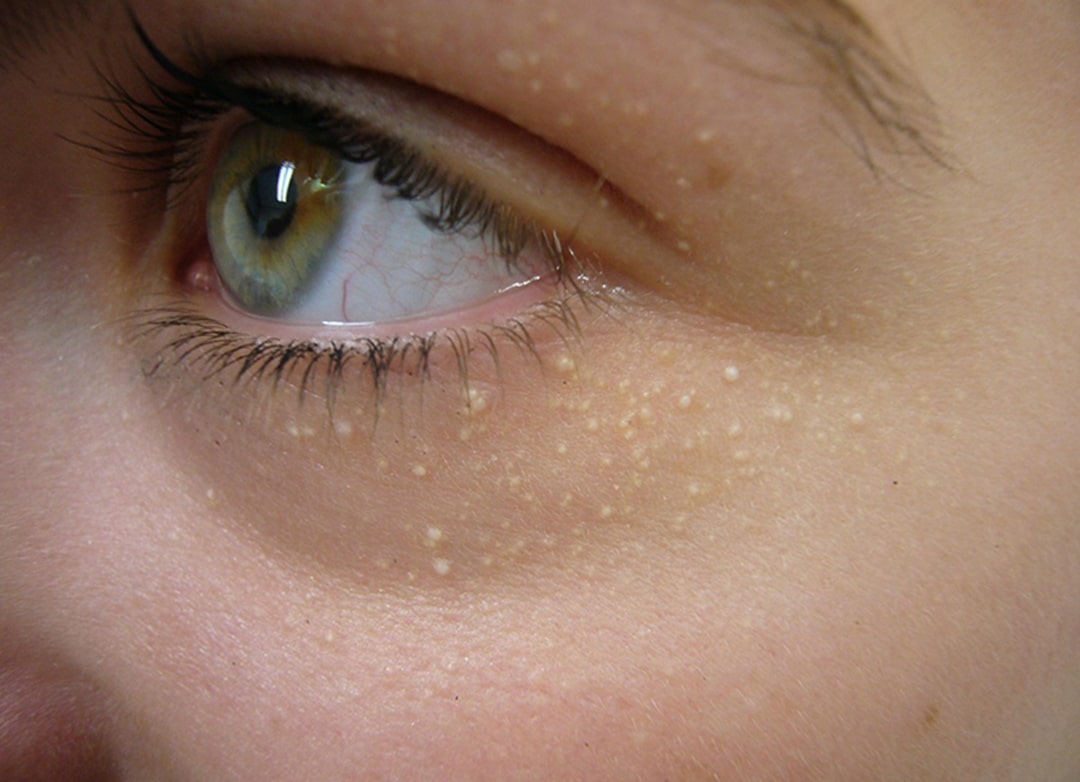
One of the most common explanations for tiny white bumps—especially around the eyes, cheeks, nose, and upper face—is milia.
Milia are small, firm, pearl-like cysts containing keratin, a protein found naturally in the skin.
They often appear as:
-
Tiny white or yellowish bumps
-
Firm bumps that don't easily pop
-
Individual spots or clusters
-
Painless lesions
-
Smooth bumps beneath the skin surface
Unlike ordinary pimples, milia usually don't have a typical pore opening.
They're also not caused by poor hygiene.
Why Do Milia Form?
Milia can develop when keratin becomes trapped beneath the surface of the skin.
They may occur spontaneously, but they can also develop after:
-
Skin irritation
-
Sun damage
-
Certain skin injuries
-
Some skin conditions
-
Use of particularly heavy products in susceptible people
Milia can occur in people of any age.
They're especially common around the eyes and cheeks, where the skin is relatively delicate.
2. Closed Comedones Can Look Like White Bumps
Another possibility is closed comedonal acne.
A closed comedone forms when oil and dead skin cells block a hair follicle.
Because the opening remains covered, it can look like a small:
-
White bump
-
Flesh-colored bump
-
Skin-colored raised spot
Unlike inflammatory acne, closed comedones aren't necessarily red or painful.
They can appear on:
-
Forehead
-
Cheeks
-
Chin
-
Around the nose
-
Jawline
If you have many tiny bumps clustered together, clogged pores may be part of the explanation.
3. Sebaceous Filaments Around the Nose
Look closely at your nose and you may notice many tiny dots or pale plugs inside the pores.
These are often sebaceous filaments.
They are normal structures that help move sebum through the pore.
They're particularly visible around:
-
The nose
-
Chin
-
Forehead
Sebaceous filaments can look like tiny white, gray, or yellowish dots.
The important distinction is that they are normal and cannot be permanently removed.
You can make them less noticeable, but they naturally refill as the skin continues producing oil.
4. Sebaceous Hyperplasia
Sebaceous hyperplasia occurs when sebaceous glands become enlarged.
It can appear as small:
-
White
-
Yellowish
-
Flesh-colored
bumps, often with a tiny indentation in the center.
They commonly appear on the:
-
Forehead
-
Cheeks
-
Nose
Sebaceous hyperplasia is generally benign.
However, it can sometimes resemble other skin lesions, so a dermatologist may be helpful if you're unsure what you're seeing.
5. Fordyce Spots
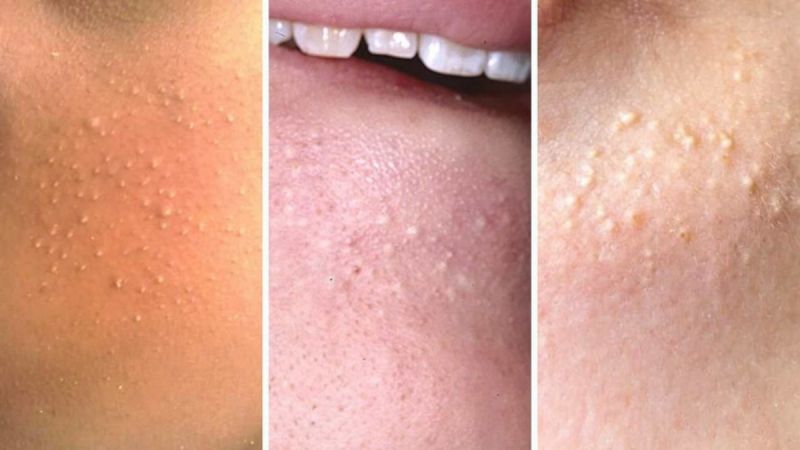
Fordyce spots are visible sebaceous glands that occur in areas where they may be more noticeable.
They appear as tiny:
-
White
-
Yellowish
-
Flesh-colored
spots or bumps.
They can occur around the lips and other areas of the body.
They are not an infection and are not contagious.
They also aren't caused by poor hygiene.
Because they're a normal anatomical variation, they generally don't require treatment unless someone wants cosmetic treatment.
6. Folliculitis Can Sometimes Look Like Small White Bumps
Folliculitis occurs when hair follicles become inflamed.
Depending on the cause, bumps may look like small pimples or white-headed spots.
They may also be:
-
Red
-
Tender
-
Itchy
-
Irritated
Possible triggers include:
-
Friction
-
Shaving
-
Sweat
-
Occlusive skin products
-
Bacterial or fungal overgrowth
If the bumps are painful, spreading, or repeatedly returning, professional evaluation can help determine the cause.
7. Acne Can Appear as More Than Red Pimples
Many people associate acne with large, inflamed pimples.
But acne can also be subtle.
You might have:
-
Whiteheads
-
Blackheads
-
Small skin-colored bumps
-
Deeper nodules
-
Occasional inflamed pimples
If your bumps are accompanied by oily skin and clogged pores, acne may be contributing.
The treatment approach can be very different from the approach used for milia.
Why Do These Bumps Often Appear Around the Nose?
The nose and surrounding facial area contain many sebaceous glands.
These glands produce sebum, an oily substance that helps protect the skin.
Because the area tends to produce more oil, it is particularly prone to:
-
Visible pores
-
Sebaceous filaments
-
Comedones
-
Acne
-
Sebaceous hyperplasia
This doesn't necessarily mean your skin is "dirty."
In many cases, it's simply related to normal skin biology.
Should You Squeeze White Bumps?
This is one of the most important things to avoid.
If a bump is actually milia, squeezing it usually won't work because the material is trapped beneath the skin.
Trying to force it out can cause:
-
Redness
-
Swelling
-
Bleeding
-
Infection
-
Scarring
-
Dark marks
The same applies to many clogged pores and other lesions.
If you can't easily identify what the bump is, don't try to pop it.
Why Picking Can Make Your Skin Look Worse
Repeated touching or picking can damage the skin barrier.
Even if you successfully remove some material, you may leave behind:
-
A scab
-
Post-inflammatory hyperpigmentation
-
A small scar
-
Persistent redness
This is especially frustrating because the original bump may have been harmless.
Your fingers also carry bacteria, which can increase the risk of irritation or infection when the skin is repeatedly broken.
Can You Remove Milia at Home?
It depends on the situation.
Small milia often don't require treatment and may eventually disappear on their own.
For persistent milia, a dermatologist can remove them using an appropriate sterile technique.
Professional removal is generally preferable to trying to puncture the skin yourself.
Avoid using needles, pins, or other sharp objects at home.
Even a tiny skin lesion can become infected or scar if handled improperly.
What About Exfoliation?
Gentle exfoliation can be useful for some types of clogged pores.
Ingredients commonly used in acne and pore-care routines include:
Salicylic Acid
A beta-hydroxy acid that can help exfoliate inside pores and is commonly used for acne and comedones.
Retinoids
Topical retinoids can help normalize skin-cell turnover and are commonly used for acne.
Alpha-Hydroxy Acids
Ingredients such as glycolic or lactic acid can help exfoliate the skin surface.
However, more exfoliation isn't necessarily better.
Overusing acids can damage the skin barrier and cause:
-
Burning
-
Dryness
-
Peeling
-
Redness
-
Increased sensitivity
Start gradually and follow product instructions.
What About Retinol?
Retinoids can be helpful for certain forms of acne and clogged pores.
Over-the-counter retinol is generally milder than prescription retinoids.
A typical routine might involve using a small amount at night and gradually increasing frequency as tolerated.
But not every white bump is caused by clogged pores.
If the bumps are actually milia, sebaceous hyperplasia, or another condition, retinoids may not make them disappear.
Pregnant people should consult their healthcare professional before using topical retinoids.
Don't Forget Sunscreen
Sun exposure can contribute to premature skin aging and can worsen some types of skin damage.
A broad-spectrum sunscreen can help protect your skin from ultraviolet radiation.
For daily facial use, choose a sunscreen that is comfortable enough for you to use consistently.
If you are prone to clogged pores, you may prefer products labeled:
Non-comedogenic
However, no product label guarantees that a particular sunscreen will work perfectly for every skin type.
Choose Skin-Care Products Carefully
Heavy or highly occlusive products may contribute to clogged pores in some people.
If you frequently develop facial bumps, look at:
-
Moisturizers
-
Sunscreens
-
Makeup
-
Hair products
-
Cleansing products
This doesn't mean you need to eliminate all oils or moisturizers.
Healthy skin still needs hydration.
The goal is to find products that your skin tolerates well.
A Simple Routine for White Bumps
If you're not sure exactly what the bumps are, avoid creating an aggressive routine.
A basic approach can include:
Morning
1. Gentle cleanser
Remove excess oil and residue without aggressively scrubbing.
2. Lightweight moisturizer
Choose one suitable for your skin type.
3. Broad-spectrum sunscreen
Use as directed.
Evening
1. Gentle cleanser
Remove sunscreen, makeup, sweat, and daily buildup.
2. One active ingredient if appropriate
For example, salicylic acid may be useful for clogged pores.
3. Moisturizer
Support the skin barrier.
Don't introduce multiple strong acids, scrubs, retinoids, and acne treatments all at once.
What Not to Put on White Bumps
Social media is full of DIY skin-care tricks.
Be careful with ingredients such as:
-
Undiluted essential oils
-
Lemon juice
-
Baking soda
-
Toothpaste
-
Strong alcohol
-
Harsh scrubs
These can irritate the skin and potentially cause burns or inflammation.
Natural doesn't automatically mean gentle.
Your facial skin is particularly sensitive to irritating substances.
Can Diet Cause White Bumps?
It's tempting to blame a new skin problem on one particular food.
The relationship between diet and skin conditions is complicated.
For acne, some research suggests that certain dietary patterns—particularly diets with a high glycemic load—may contribute to acne in some people.
Dairy has also been studied in relation to acne, but the evidence isn't strong enough to recommend that everyone eliminate dairy.
Milia and sebaceous filaments, however, aren't simply caused by eating a particular food.
Don't follow restrictive diets just because you have a few white bumps.
Does Poor Hygiene Cause These Bumps?
Usually, no.
White bumps such as milia, sebaceous filaments, and sebaceous hyperplasia are not signs that someone isn't washing their face properly.
In fact, over-washing can make some skin problems worse.
Aggressive scrubbing can damage the skin barrier and trigger irritation.
Clean your skin gently rather than trying to scrub every pore completely clear.
What If the Bumps Suddenly Appear?
Pay attention to timing.
Ask yourself:
-
Did you start a new skincare product?
-
Did you change sunscreen?
-
Did you start new makeup?
-
Have you been sweating more?
-
Did you begin using a new hair product?
-
Have you been shaving the area?
-
Are the bumps itchy?
-
Are they painful?
-
Are they spreading?
These details can help distinguish simple clogged pores from irritation or inflammation.
When Should You See a Dermatologist?
Consider seeing a dermatologist if:
-
The bumps persist despite gentle skin care
-
They are spreading
-
They repeatedly return
-
They become painful
-
They bleed
-
They itch intensely
-
They become inflamed
-
You're unsure what they are
-
A bump changes in appearance
-
A lesion doesn't heal
A dermatologist can examine the skin directly and determine whether the bumps are milia, acne, sebaceous hyperplasia, another benign lesion, or something requiring different treatment.
A Bump That Changes Deserves Attention
Most tiny white facial bumps are harmless.
But don't assume every skin lesion is cosmetic.
Pay attention to any spot that:
-
Changes rapidly
-
Grows significantly
-
Bleeds without obvious injury
-
Develops a persistent crust
-
Becomes an open sore
-
Changes color
-
Has an irregular appearance
-
Doesn't heal
These features don't automatically mean cancer, but persistent or changing skin lesions deserve professional evaluation.
What If the Bumps Are Around Your Eyes?
The skin around the eyes is delicate.
Milia commonly occur in this area.
Avoid applying strong acids, retinoids, or harsh scrubs close to the eyes unless the product is specifically intended for that area and used according to instructions.
And don't try to puncture a bump near the eye yourself.
A dermatologist or qualified medical professional can remove persistent lesions safely if necessary.
Can Moisturizer Make White Bumps Worse?
Sometimes.
Certain heavy products may contribute to clogged pores in people who are acne-prone.
But skipping moisturizer completely can also leave the skin dry and irritated.
If you notice more bumps after starting a new moisturizer, stop and evaluate whether the product may be contributing.
Look for a lightweight product that suits your skin type rather than assuming all moisturizers are bad.
What About Facial Oils?
Facial oils aren't automatically bad.
Some people tolerate them very well.
But if you're prone to clogged pores, introducing several oils at once can make it harder to determine what's causing changes in your skin.
Introduce one new product at a time.
That way, if your skin reacts, you have a better idea of which product may be responsible.
Can Washing Your Face More Often Remove the Bumps?
Not necessarily.
If the bumps are caused by milia or sebaceous hyperplasia, washing more frequently won't remove them.
If they're caused by clogged pores, a consistent gentle cleansing routine may help, but aggressive washing won't necessarily speed up the process.
For most people, gentle and consistent beats aggressive and excessive.
What a Dermatologist May Do
Treatment depends on the diagnosis.
For milia, a dermatologist may perform professional extraction.
For comedonal acne, treatments may include topical retinoids, salicylic acid, or other acne medications.
For sebaceous hyperplasia, options can include certain procedures such as electrosurgery, laser treatment, or other dermatologist-directed techniques.
For inflammatory folliculitis, treatment depends on whether bacteria, fungi, irritation, or another factor is involved.
This is why identifying the cause matters.
There isn't one universal cream that removes every type of white bump.
A Simple Checklist
If you notice white bumps on your face, ask:
☐ Are they tiny and firm?
☐ Are they mostly around the eyes or cheeks?
☐ Are they inside visible pores around the nose?
☐ Are they skin-colored rather than bright white?
☐ Are they itchy or painful?
☐ Did they appear after a new skincare product?
☐ Are they changing or growing?
☐ Have they persisted for weeks or months?
These observations can help you understand what you're dealing with, although only a healthcare professional can make a proper diagnosis.
The Bottom Line
Small white bumps on the face and around the nose are very common and often harmless.
They may be:
Milia
Closed comedones
Sebaceous filaments
Sebaceous hyperplasia
Fordyce spots
Folliculitis
or another type of skin lesion.
The biggest mistake is assuming every bump is a pimple and trying to squeeze it.
That can cause irritation, infection, dark marks, and scarring.
Instead, start with gentle cleansing, appropriate moisturizing, sun protection, and carefully selected skin-care ingredients. If the bumps persist or you're unsure what they are, a dermatologist can usually identify them through a physical examination and recommend the appropriate treatment.
Final Thoughts
Your skin doesn't need to be perfectly smooth to be healthy.
Tiny bumps around the nose and face are often part of normal skin biology, particularly in areas with many oil glands.
If you notice them, don't immediately reach for harsh DIY treatments or start aggressively scrubbing your face.
Take a closer look, consider how the bumps behave, and give your skin a gentle routine.
And if a bump is persistent, painful, rapidly changing, bleeding, or simply doesn't look like your usual skin, getting it checked is the safest move.
The right treatment starts with knowing what the bump actually is—not simply trying to remove it as quickly as possible.