At first, it may seem like a harmless cosmetic change. You might assume the spots are caused by dry skin, sun exposure, aging, or a lack of certain vitamins. You may even try moisturizing creams or home remedies, hoping the original skin color will return.
But white patches on the skin can have several different explanations, and not all of them are the same.
Some are associated with common skin conditions that are generally harmless. Others may result from previous inflammation, fungal infections, or changes in the cells responsible for producing skin pigment. In certain cases, persistent or spreading white patches may be a sign of a condition that deserves medical attention.
The important thing is not to panic, but also not to ignore changes that continue to develop.
Understanding what white patches look like, where they appear, and whether they are accompanied by itching, scaling, or other symptoms can help you recognize when professional advice may be necessary.
So why do these tiny white spots appear? Could they be related to sun exposure, a fungal infection, or a condition such as vitiligo? And how can you tell the difference?
Let's explore the most common possible causes and what you can do to protect your skin.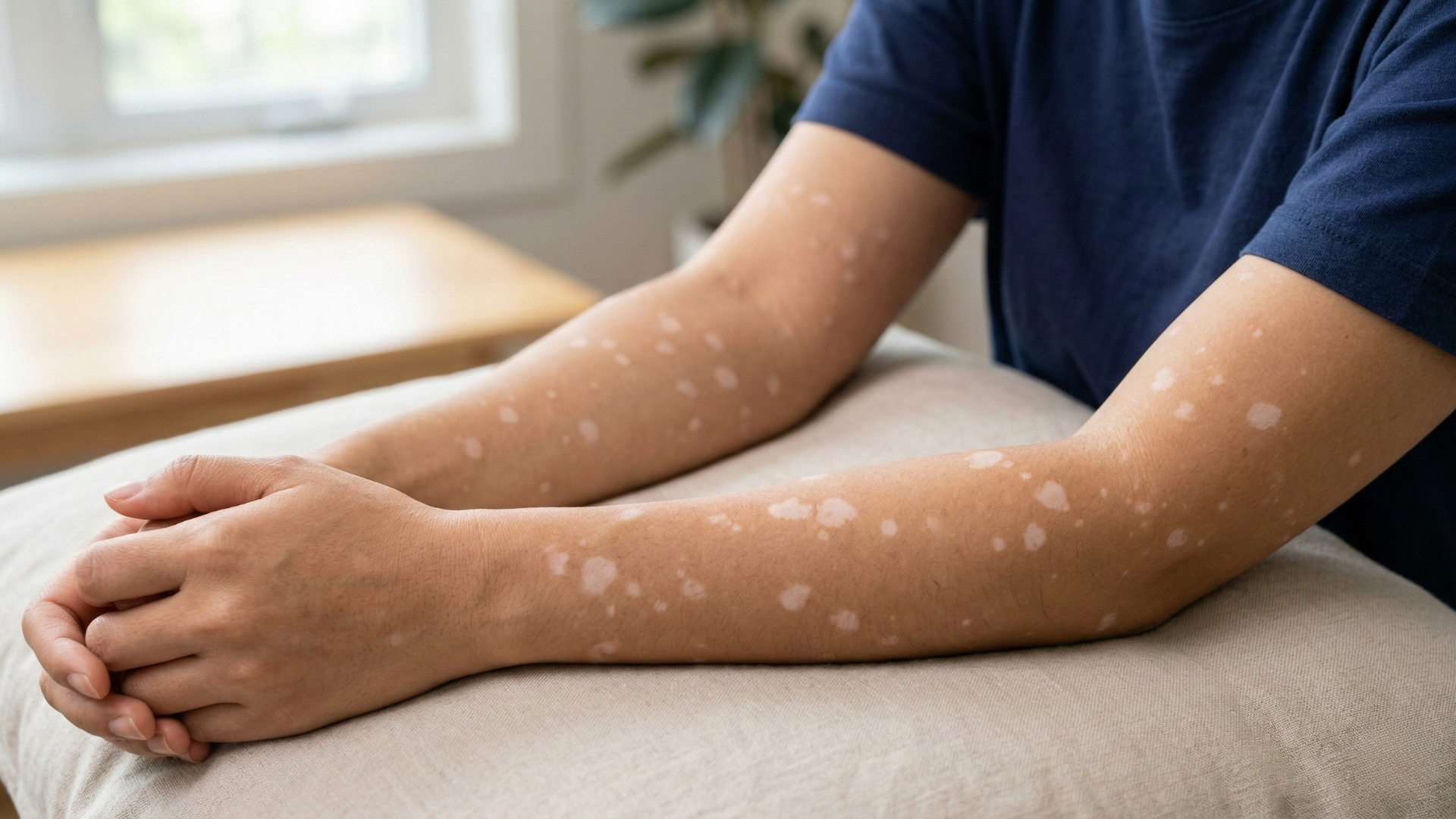
1. Idiopathic Guttate Hypomelanosis: Small White Spots Often Associated With Aging and Sun Exposure
One possible explanation for tiny white spots on the arms and legs is a condition called idiopathic guttate hypomelanosis, often abbreviated as IGH.
The name may sound complicated, but the appearance is relatively characteristic.
IGH typically causes small, flat, pale or white spots that commonly develop on areas exposed to sunlight, particularly the forearms and lower legs. The spots are usually round or oval and often measure only a few millimeters across.
They may become more noticeable with age.
The condition is frequently seen in middle-aged and older adults, although it can occur earlier in life. The spots are generally harmless and do not usually cause itching, pain, or other symptoms.
Why does it happen?
The exact cause is not completely understood. However, cumulative sun exposure and changes associated with aging are believed to contribute.
The skin contains specialized cells called melanocytes. These cells produce melanin, the pigment that helps determine skin color and provides some protection against ultraviolet radiation.
In areas affected by IGH, pigmentation is reduced. This creates small pale spots that contrast with the surrounding skin.
Repeated ultraviolet exposure over many years may contribute to these changes, although not every person with IGH has the same history of sun exposure.
How can you recognize it?
Typical features include:
-
Small, well-defined white or pale spots.
-
Most commonly found on the forearms and lower legs.
-
Usually flat and smooth.
-
Generally no itching or pain.
-
More noticeable against tanned or darker surrounding skin.
-
Often appearing in multiple areas over time.
IGH is not contagious and does not indicate that someone has poor hygiene.
There is also no evidence that these spots are caused simply by a vitamin deficiency.
Treatment is often unnecessary because the condition is harmless. However, if the appearance is bothersome, a dermatologist can discuss cosmetic options. Some treatments may produce limited improvement, and results are not guaranteed.
Protecting the skin from excessive ultraviolet exposure can also help prevent additional sun-related damage.
2. Vitiligo: When the Skin Loses Its Natural Pigment
Another important cause of white patches is vitiligo.
Unlike the tiny spots commonly associated with IGH, vitiligo often produces larger patches of skin that are noticeably lighter than the surrounding areas. In some people, the affected areas become completely white.
Vitiligo is a chronic condition involving the loss or destruction of melanocytes, the cells responsible for producing melanin.
It is generally understood to be an autoimmune condition. This means the immune system mistakenly targets the body's own pigment-producing cells.
What does vitiligo look like?
The patches are often:
-
Milky white or very pale.
-
Clearly defined, although borders can vary.
-
Usually smooth rather than scaly.
-
Able to appear on almost any part of the body.
-
Sometimes symmetrical, appearing in corresponding areas on both sides.
Common locations include the hands, face, elbows, knees, feet, and areas around body openings.
Vitiligo can also affect the hair. Hair growing within an affected patch may gradually become white or gray.
The condition can develop at any age, although it often begins before adulthood.
Is vitiligo dangerous?
Vitiligo itself is not contagious and is not generally physically dangerous. It does not spread through touching, sharing clothing, or being near someone who has the condition.
However, the affected skin contains less melanin, which means it is more vulnerable to sunburn.