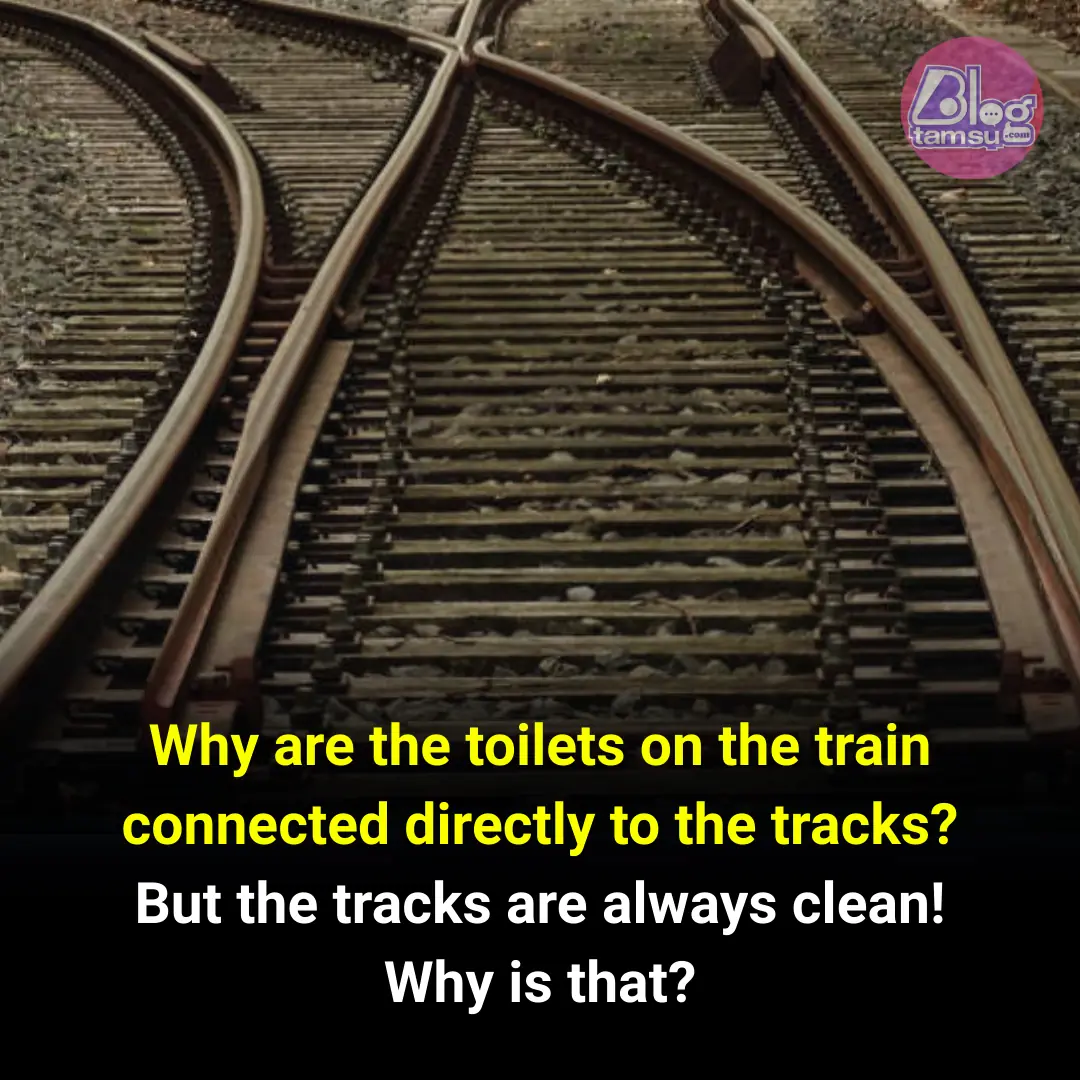
In today’s convenient transportation system, trains have won the hearts of many travelers due to their unique advantages. However, a concerning and controversial phenomenon while traveling by train is that the toilets on trains are directly connected to the tracks.
This design surely raises doubts for passengers, especially from a hygiene and environmental protection perspective. Many people can’t help but wonder: Why do train toilets use a system that discharges waste directly onto the tracks? Does this result in dirty tracks?
First, let’s explore how train toilets work. Traditional train toilets often use a “direct discharge” system, meaning that when passengers use the restroom, the waste is discharged directly through a pipe onto the tracks below. The original purpose of this design was to simplify the waste disposal process while the train was in motion and to avoid problems like unpleasant odors and water accumulation in the toilet.
Compared to other modes of transportation, trains move at high speeds, and the space between the tracks is relatively wide. Designers believe that this discharge method will not have a significant negative impact on the environment. Moreover, when the train is running at high speeds, the waste is quickly dispersed by the airflow, thereby reducing direct pollution to the tracks and surrounding environment.
So, if the waste in train toilets is discharged directly, why do the tracks still appear relatively clean and tidy? This is mainly due to the following aspects:
First, track maintenance is regularly performed. The railway department places great importance on track maintenance, conducting routine cleaning and inspections to ensure the health and safety of the tracks. This regular cleaning and maintenance help keep the tracks in good condition.
Second, natural environmental factors play a role. In many areas, natural conditions along railway routes are favorable for waste management. For instance, rainwater can dilute waste, and wind can disperse it, thereby reducing direct harm to the environment to a certain extent.
Third, waste disposal technology is continuously innovating. With advances in science and technology, the railway industry has gradually introduced new technologies to mitigate hygiene issues. In modern train toilet designs, some models have started using sealed waste containers, which are collected and processed when the train reaches a station, minimizing the impact on the tracks.
Fourth, environmental awareness is increasing. With societal development, people’s environmental protection concepts have continued to improve. The railway management sector is also paying more attention to environmental protection during the design and operation processes, actively implementing measures to reduce environmental pollution.
On social media, the topic of train toilets designed to discharge waste directly onto the tracks has sparked widespread discussion among netizens. Some argue that while the convenience of this design can be understood in certain aspects, they still feel uncomfortable using the toilet and consider it not entirely civilized. They hope that the railway industry will introduce more advanced toilet systems to ensure passenger comfort and environmental hygiene.
Looking to the future, as technology continues to advance, train toilet designs are expected to evolve toward more environmentally friendly and humane solutions. For instance, many countries have started developing new biological toilets that can convert waste into harmless substances, further reducing the impact on the environment. At the same time, the railway department could place more focus on passengers’ experience and hygiene as they develop new models, striving to improve the overall level of service.
In conclusion, while the design of train toilets discharging onto the tracks has sparked some controversy, the reasons and actual effectiveness behind it reflect a balance between environmental protection and the convenience of railway transportation. As passengers, while enjoying the convenience of train travel, we should also understand and respect the original intention behind this design. It is hoped that future train toilets will strike a better balance between environmental protection and passenger comfort, contributing to the sustainable development of railway travel.