Chapter 1: The Green Ring Around an Egg Yolk – A Surprising Kitchen Mystery
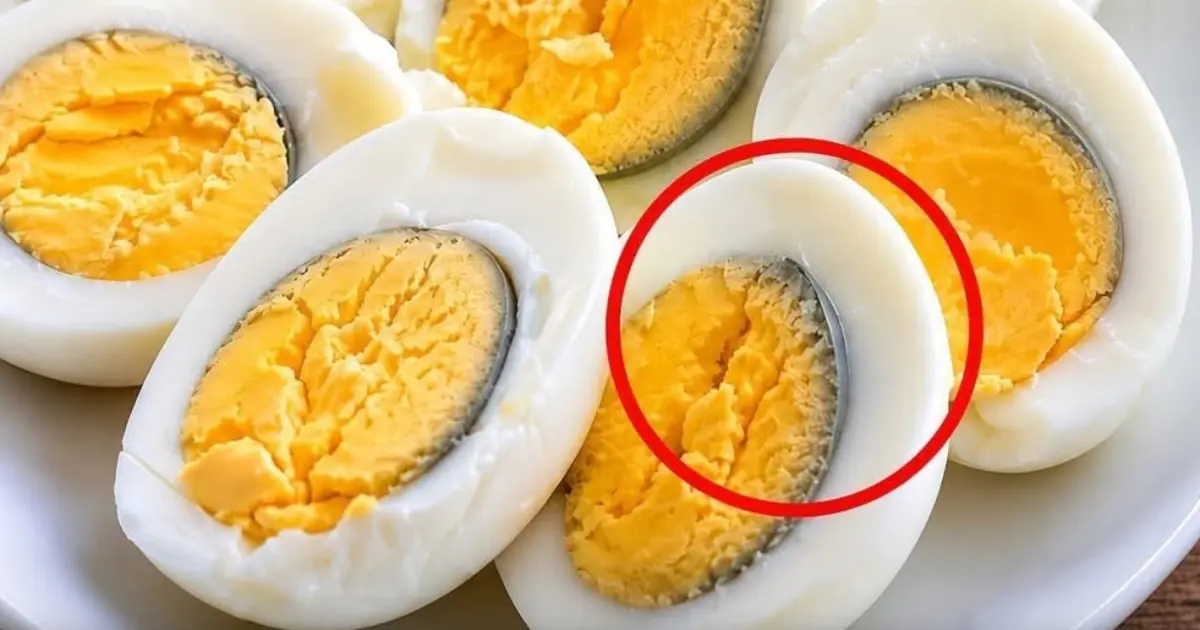
You prepare breakfast, boil several eggs, remove their shells, and cut them in half. The eggs look perfectly normal at first, but something unusual catches your attention: a thin greenish-gray ring surrounding the bright yellow yolk.
For many people, this discovery immediately raises questions. Has the egg spoiled? Is it contaminated? Could eating it cause stomach problems? Should the entire batch be thrown away?
The good news is that a green ring around the yolk of a properly cooked hard-boiled egg is usually harmless. It is generally a sign that the egg has been exposed to heat for too long or cooked at an excessively high temperature.
Although the color may look unpleasant, the explanation is surprisingly simple. It involves two naturally occurring elements already present inside the egg: sulfur and iron.
What exactly causes the green ring?
An egg contains several important nutrients and chemical compounds. The white, also known as albumen, contains water and proteins. The yolk contains fats, proteins, vitamins, minerals, and iron.
When an egg is heated, its proteins undergo a process called denaturation. This means that heat changes the structure of the proteins, causing them to unfold and form new connections.
During prolonged heating, sulfur-containing compounds in the egg white can release hydrogen sulfide. This compound then reacts with iron present in the yolk.
The reaction produces iron sulfide, which has a characteristic grayish-green appearance.
Because the reaction takes place where the egg white and yolk meet, the discoloration commonly appears as a thin ring around the outside of the yolk.
The United States Department of Agriculture confirms that this green ring results from sulfur and iron compounds reacting on the surface of the yolk. It also explains that the discoloration is safe to consume.
Ask USDA+1
In other words, the unusual color is usually related to cooking conditions rather than contamination.
Why does the ring sometimes look gray instead of green?
Not every egg develops exactly the same shade.
Some yolks display a pale gray outline, while others have a darker greenish band. The intensity can vary depending on the cooking time, temperature, and other conditions.
The amount of discoloration may also differ between eggs cooked in the same saucepan.
This does not necessarily mean that one egg is healthier than another.
The green ring is primarily a visual result of a chemical reaction. It does not automatically indicate that the egg has lost its nutritional value or become dangerous.
Research and food-safety explanations from Washington State University indicate that the greenish ring does not change the egg's nutritional value.
Washington State University+1
Does a green ring mean the egg is spoiled?
This is perhaps the most important question for anyone who regularly eats boiled eggs.
A green ring around an otherwise normal, properly stored hard-boiled egg is not, by itself, evidence of spoilage.
However, people should understand the difference between harmless discoloration caused by cooking and unusual changes associated with bacterial contamination.
A normal overcooked egg generally has firm white, a cooked yolk, and a gray-green band at the boundary between the two.
A spoiled egg may show different warning signs, including an unpleasant odor, unusual discoloration of the egg white, or abnormal texture.
The USDA explains that certain unusual colors in egg whites, particularly pink or iridescent discoloration, can indicate bacterial spoilage. Such eggs should not be eaten.
Ask USDA+1
Therefore, people should never rely on the green ring alone to determine whether an egg is safe.
Proper refrigeration, handling, cooking, and storage remain essential.
Why this discovery matters for everyday cooking
Eggs are among the most frequently used ingredients in households.
They are inexpensive, versatile, easy to prepare, and can be incorporated into breakfast, lunch, dinner, and snacks.
Because boiling eggs is such a familiar activity, many people assume that there is very little to learn about the process.
Yet cooking time and temperature can influence the final appearance, texture, and quality of the food.
Understanding why the green ring develops allows people to avoid unnecessary food waste.
Instead of immediately throwing away every egg with a gray-green yolk, they can assess its overall condition and storage history.
The important distinction is that a harmless cooking-related color change should not be confused with genuine signs of food spoilage.
Chapter 2: What Happens Inside an Egg During Cooking?
Suggested image 1 – Clean photograph, without text or logos: Several freshly boiled eggs cut in half and arranged on a white ceramic plate, showing bright yellow yolks and natural egg-white texture.
The transformation of an ordinary raw egg into a firm, hard-boiled egg is an interesting example of food chemistry.
Before cooking, the egg white is mostly transparent and liquid. The yolk is soft, rounded, and surrounded by a thin membrane.
Once heat is applied, the internal structure begins changing.
These changes explain not only why eggs become firm but also why their color, texture, and appearance can vary depending on how they are prepared.
The science of egg proteins
Egg whites contain a mixture of proteins that remain suspended in water.
In their natural state, these proteins have specific folded structures. Heat disrupts the forces maintaining those structures.
As the temperature increases, the proteins unfold and begin connecting with one another.
This creates a network that traps water and changes the egg white from a liquid into a solid.
The yolk undergoes a similar transformation, becoming increasingly firm as cooking continues.
This process is called protein denaturation and coagulation.
It is also responsible for many familiar changes in food preparation, including the transformation of meat, fish, and other protein-rich ingredients during cooking.