If you’ve ever stayed in a hotel, you’ve probably noticed a narrow piece of fabric stretched across the foot of the bed. It often contrasts with the white sheets and adds a decorative touch to the room. Many people assume it’s purely aesthetic — just part of the hotel’s design.
However, that strip of fabric, often called a bed runner, actually serves several practical purposes beyond decoration. From hygiene to convenience, this small detail plays a surprisingly important role in the overall guest experience.
1. Protecting the Bed from Dirt and Luggage
One of the primary reasons hotels use bed runners is to protect the bedding from dirt.
Guests frequently place:
- Suitcases
- Backpacks
- Handbags
…on the bed, especially after arriving from travel. These items often carry dust, bacteria, and debris from outside.
Instead of dirtying the clean white sheets, the bed runner acts as a protective barrier. It’s much easier for housekeeping to clean or replace a runner than to change the entire bedding set.
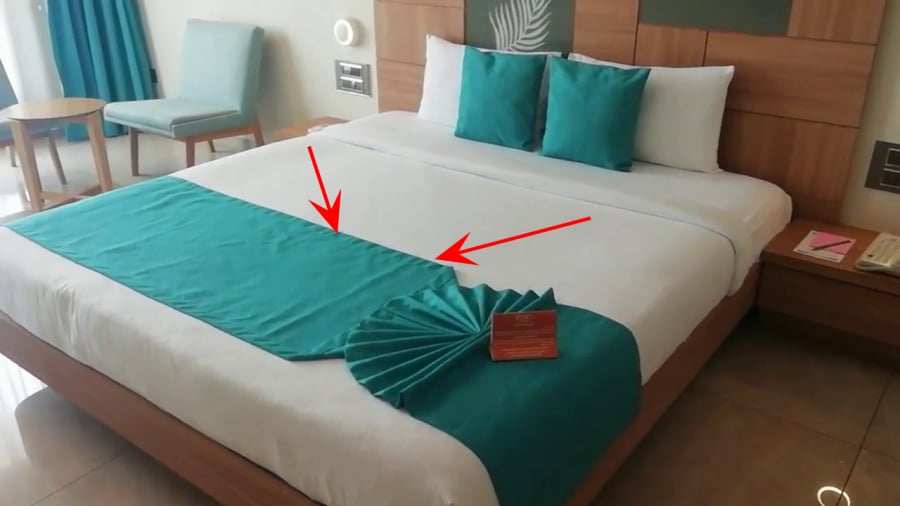
2. A Clean Spot for Shoes or Personal Items
After a long day, guests may sit on the edge of the bed while still wearing shoes or place personal items like coats and shopping bags nearby.
The bed runner provides a designated area where you can:
- Sit briefly without worrying about dirtying the sheets
- Place items that may not be perfectly clean
This helps maintain the overall cleanliness of the bed while offering convenience to guests.
3. Enhancing Room Aesthetics
Hotels carefully design their rooms to create a welcoming and luxurious atmosphere. The bed runner plays a key role in this visual presentation.
Typically, bed runners:
- Feature bold colors or patterns
- Match the room’s overall design theme
- Add contrast to plain white bedding
This small detail can make the bed look more polished, stylish, and inviting — which is important in hospitality, where first impressions matter.
4. Indicating Cleanliness and Order
A neatly placed bed runner can signal that the room has been properly prepared and cleaned.
When guests walk into a room, visual cues like:
- Smoothly tucked sheets
- Symmetrical pillows
- A perfectly aligned bed runner
…create a sense of order and professionalism. It reassures guests that attention has been paid to detail.

5. Multi-Purpose Use for Guests
Some guests even use the bed runner in creative ways during their stay. For example, it can be used as:
- A temporary surface for food trays
- A place to rest items while packing
- A light cover for legs when lying down
While not its primary purpose, this versatility adds to its practical value.
6. Easy Maintenance for Housekeeping
From an operational perspective, bed runners are efficient for hotel staff.
Compared to full bedding, they:
- Are smaller and easier to wash
- Can be replaced quickly if stained
- Help reduce wear and tear on sheets and duvets
This makes them a cost-effective solution for maintaining cleanliness and presentation.
Why Most Bed Runners Are Darker in Color
You may have noticed that bed runners are often darker or patterned rather than white. This is intentional.
Darker colors:
- Hide stains more effectively
- Maintain a clean appearance for longer
- Complement the room’s design
This practical choice helps hotels balance aesthetics with functionality.
A Small Detail with a Big Purpose
At first glance, the fabric strip across a hotel bed might seem like a minor decorative element. But in reality, it serves multiple roles - from protecting bedding to enhancing guest comfort and maintaining cleanliness.
It’s a perfect example of how the hospitality industry pays attention to even the smallest details to improve the overall experience.

Final Thoughts
The next time you check into a hotel, take a closer look at the bed runner. What appears to be a simple strip of fabric is actually a thoughtful feature designed to make your stay cleaner, more comfortable, and visually pleasing.
Sometimes, the most overlooked details turn out to be the most practical.