Explanation:
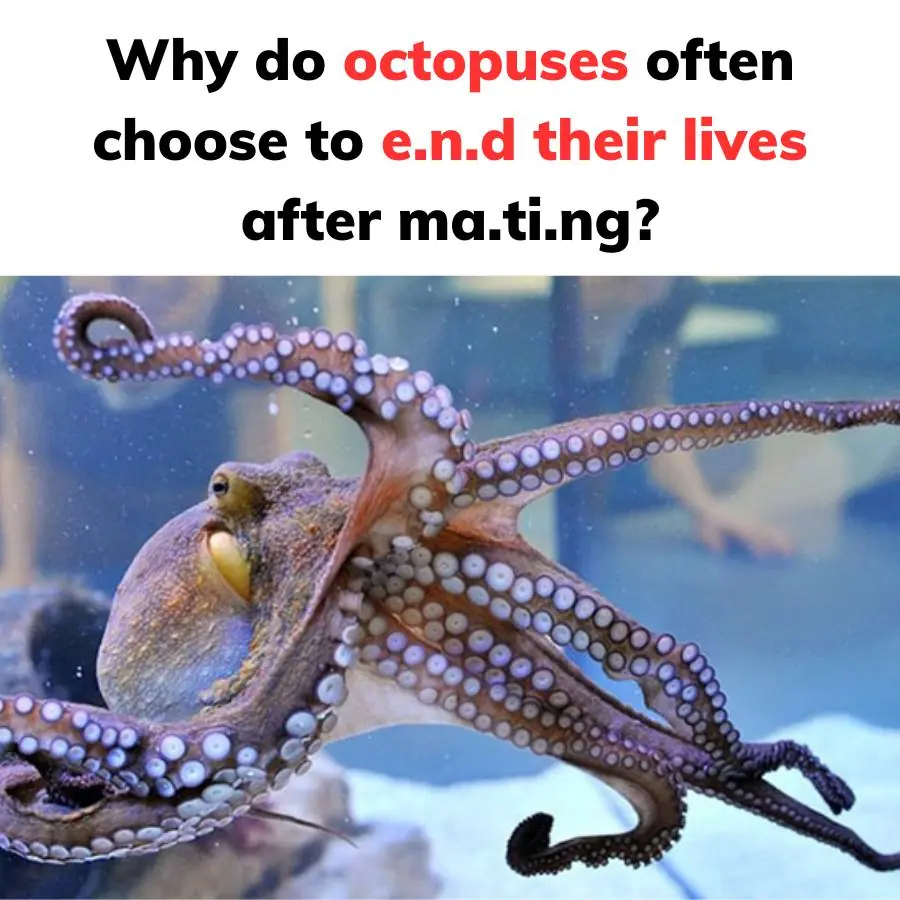
By studying the period when an octopus is about to “commit suicide”, which is also after mating, researchers have found higher levels of activity in several genes that control sex hormones, insulin and cholesterol metabolism.
All three molecules inadvertently interfere with the octopus’ central nervous system, leading to signals that trigger its death. Or, perhaps it is simply the accumulation of these molecules in the octopus’s body that causes it to die, as it does in humans.
Now, nearly 80 years later, that obscure hypothesis has finally been debunked. Researchers have recently discovered that mating appears to change several key biochemical pathways that rely on cholesterol to produce various hormones in octopuses.