What’s the Purpose of That Tiny Hole in a Safety Pin? 🧷 You May Be Surprised!
Have you ever looked closely at a safety pin and noticed the tiny hole near the clasp?
Most people probably haven't given it a second thought.
We use safety pins to secure clothing, attach tags, fix loose fabric, and handle countless little emergencies. They’re simple, inexpensive, and have been around for generations.
But that tiny detail in the design has made many people wonder:
Why is that little hole there? Does it actually serve a purpose?
The answer is more interesting than you might expect.
It’s Part of the Safety Pin’s Design
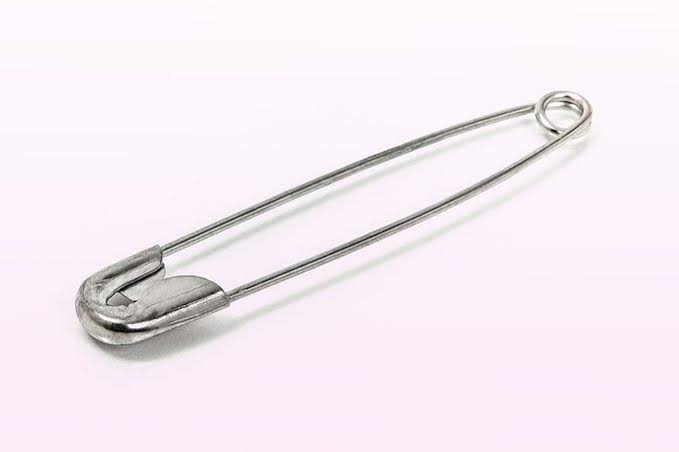
A traditional safety pin consists of several important parts: the sharp point, the coiled spring, the clasp that covers the point, and the metal loop or opening near the clasp.
That small opening isn't simply decorative.
It is closely connected to the way the pin is constructed and how the clasp works.
The metal is shaped and bent in a way that allows the pointed end to be captured securely when the pin is closed. The overall design helps keep the sharp point from accidentally poking the person wearing or handling the pin.
In other words, what looks like a tiny, insignificant feature is part of a much larger design intended to make the safety pin practical and safer to use.
Why Does a Safety Pin Need So Many Bends?
The cleverness of a safety pin is actually in its simplicity.
A single piece of wire is carefully shaped into a spring-like coil and then formed into the body of the pin.
When you open the pin, the wire flexes.
When you release it, the spring tension helps bring the point back toward the clasp.
That spring action is one of the reasons a safety pin can stay closed without requiring a complicated locking mechanism.
The tiny opening near the clasp works together with these bends and curves to create the familiar shape and function of the pin.
The Safety Pin Was Designed to Solve a Simple Problem
The modern safety pin is generally credited to American inventor Walter Hunt, who patented his design in 1849.
According to historical accounts, Hunt developed the design using a length of brass wire, creating a pin with a spring mechanism and a clasp that could protect the sharp point.
The basic concept was remarkably practical: create a pin that could hold fabric together while reducing the risk of the sharp point being exposed.
That simple idea became one of the most recognizable household objects in the world.
Why Is the Clasp So Important?
Imagine using an ordinary straight pin to hold your clothing together.
The sharp point would remain exposed, making it easy to prick your finger—or worse, your skin.
A safety pin solves that problem by giving the sharp point a protected place to rest.
When the pin is closed properly, the clasp covers the point.
This is why you should always make sure the point is completely secured inside the clasp rather than leaving the pin partially open.
Is the Tiny Hole a Secret Hidden Feature?
Not exactly.
There are many viral posts claiming that the small opening on a safety pin has a secret function, such as being designed specifically to hold a certain object or perform a particular trick.
Some of these claims are exaggerated or simply incorrect.
The safest explanation is that the small opening is part of the pin's overall metal construction and clasp mechanism, rather than a mysterious hidden feature with one special purpose.
The exact appearance can also vary depending on the style and manufacturer of the safety pin.
Why Do Safety Pins Look Different?
You may have noticed that not every safety pin looks exactly the same.
Some are tiny and delicate, while others are large and heavy-duty.
Some have a simple clasp, while others have more elaborate shapes.
That's because safety pins are made for different purposes.
Small pins may be used for sewing or delicate fabrics. Larger versions can be used for heavier materials or temporary repairs.
Despite these differences, the basic principle remains the same: a spring-loaded wire pin combined with a protective clasp.
A Tiny Object With Surprisingly Clever Engineering
The safety pin may look like one of the simplest objects in your home.
But look closely and you'll see several clever engineering principles working together.
The wire acts as a spring.
The bends create tension.
The pointed end provides the fastening function.
The clasp protects the point.
And the small openings and curves are part of the carefully shaped structure that allows everything to work together.
It's a good reminder that everyday objects don't necessarily need to be complicated to be clever.
The Next Time You Use a Safety Pin…
Take a closer look.
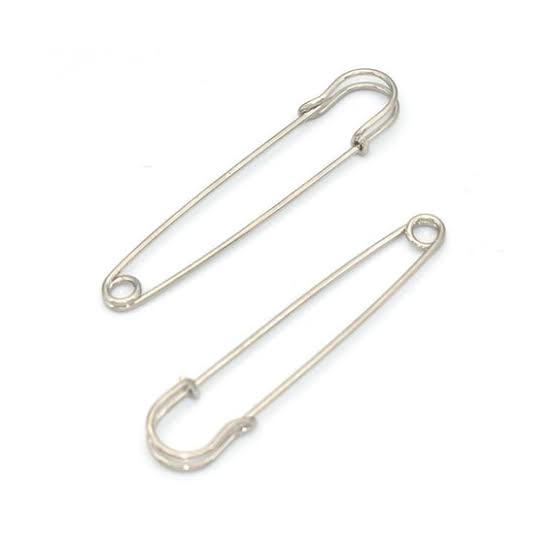
Notice how the wire bends around the center.
Watch how the spring tension pulls the pin back into position.
Then look at the tiny opening and the clasp that catches the pointed end.
What seems like a random little hole is actually part of a design that has remained remarkably useful for generations.
And that's perhaps the most fascinating thing about ordinary household objects:
Sometimes, the smallest details have the biggest stories behind them.
So the next time someone asks, “What’s that tiny hole on a safety pin for?”, you’ll know that it isn't simply there by accident.
It's one small part of a surprisingly clever piece of everyday engineering. 🧷