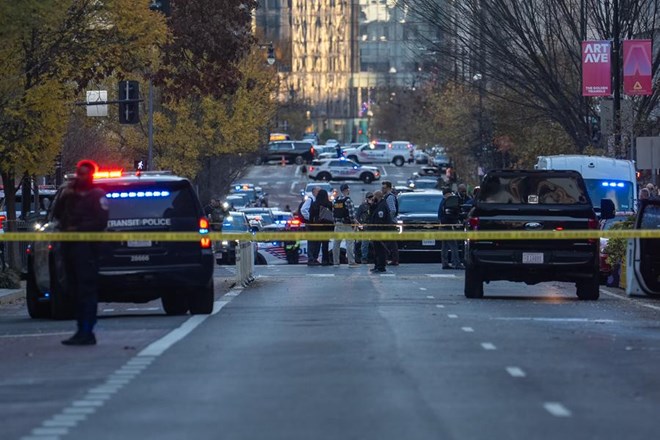
The morning had started like any other. People were preparing for work, children were getting ready for school, buses were moving along familiar routes, and residents were settling into the routines they had followed countless times before. Then, without much warning, sirens began echoing through the neighborhood. Within minutes, an otherwise ordinary morning had been transformed by flashing emergency lights, blocked streets, and a growing sense of uncertainty.
At first, there was no obvious explanation.
Emergency vehicles began appearing in the area.
Police activity increased.
Barricades were placed across roads that residents normally used without a second thought. Traffic was redirected, pedestrians were kept away from certain areas, and parts of the neighborhood suddenly became inaccessible.
From windows, front porches, and doorways, residents watched the situation unfold.
The flashing lights reflected against nearby buildings.
Vehicles slowed as they approached the closures.
People tried to understand what had happened and why so many emergency personnel were suddenly present.
Yet one detail made the situation especially unsettling:
There was no immediate, clearly confirmed explanation available to everyone nearby.
That uncertainty left residents with more questions than answers.
What had happened?
Was there an immediate danger?
Why had the area been sealed off?
Were people being asked to stay inside?
How long would the restrictions remain in place?
And perhaps most importantly, was the situation still developing?
A Familiar Neighborhood Suddenly Feels Unfamiliar
There is something deeply unsettling about seeing an everyday place suddenly transformed by an emergency response.
A street that is normally filled with traffic can become strangely quiet.
A familiar intersection may disappear behind police tape.
A bus route can suddenly be diverted.
People who normally walk freely through the area may find themselves unable to pass.
For residents watching from nearby homes, that visual transformation can be startling even before they know what caused it.
The emergency vehicles themselves become the first sign that something unusual is happening.
Then come the barriers.
Then the questions.
And eventually, if information is slow to arrive, speculation.
A place that only minutes earlier felt routine can suddenly feel unfamiliar.
The Hardest Part May Be Not Knowing What Happened
In situations like this, uncertainty can be almost as stressful as the emergency itself.
People can see that something serious enough to require an official response is happening.
They can hear sirens.
They can see officers moving around the area.
They may notice road closures or emergency crews arriving.
But they may not know exactly why.
That creates a strange gap between what people observe and what they understand.
And when information is missing, people naturally try to fill in the blanks.
One person may wonder whether there has been a serious accident.
Another may suspect a fire or structural problem.
Someone else may think authorities are responding to a dangerous object, a hazardous substance, or a criminal investigation.
None of those assumptions is necessarily correct.
But when clear information is unavailable, speculation can spread surprisingly quickly.
Why Authorities May Restrict an Area
A police or emergency cordon can mean many different things.
The presence of barricades does not automatically indicate one specific kind of danger.
Authorities may restrict access because of:
-
A serious traffic collision
-
A fire or structural concern
-
A damaged gas or utility line
-
A suspected hazardous substance
-
A suspicious package
-
An explosive-device investigation
-
An active search
-
Dangerous debris
-
An unstable structure
-
A major public-safety incident
-
An investigation that requires a scene to remain undisturbed
From the outside, many of these situations can look remarkably similar.