If you've spent enough time scrolling through travel tips online, you may have come across a curious suggestion: pour hot water into the toilet before using it at a hotel.
The idea sounds simple. Pouring hot water into the bowl seems as though it might clean the surface, reduce germs, remove unpleasant odors, or provide an extra layer of hygiene before using an unfamiliar bathroom.
But does this popular travel habit actually work?
The answer is more complicated than social media videos often suggest. Hot water alone is not a reliable way to disinfect a hotel toilet, and using very hot or boiling water can potentially damage certain plumbing components. However, there are a few reasons why people may choose to do it—and some much more effective ways to maintain bathroom hygiene while traveling.
Let's take a closer look.
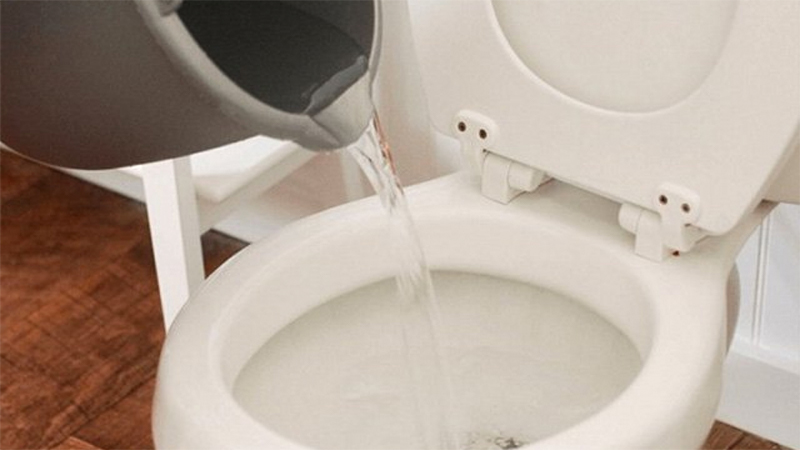
Why Do People Pour Hot Water Into a Hotel Toilet?
There isn't one universal reason.
People may pour hot water into a hotel toilet because they believe it can:
-
Help loosen residue
-
Reduce unpleasant odors
-
Rinse the bowl
-
Provide a feeling of cleanliness
-
Loosen minor buildup
-
Make the toilet feel more hygienic before use
For some travelers, it is simply a personal hygiene ritual.
The important distinction is that a cleaning ritual is not necessarily the same thing as a disinfection method.
A toilet can look cleaner after being rinsed with hot water without actually becoming microbiologically disinfected.
Does Hot Water Kill Germs in a Toilet?
This is where the biggest misconception appears.
Heat can kill microorganisms, but the effectiveness depends on several factors, including:
-
Temperature
-
Duration of exposure
-
Type of microorganism
-
Amount of organic material present
-
Whether the entire contaminated surface reaches the required temperature
Simply pouring a small amount of hot water into a toilet bowl does not guarantee that all potentially harmful microorganisms will be killed.
The water cools quickly when it contacts the toilet bowl, surrounding air, and existing water.
Therefore, pouring hot water into a toilet should not be considered a substitute for proper cleaning and disinfection.
Hot Water Is Not the Same as Disinfectant
Cleaning and disinfecting are two different processes.
Cleaning
Cleaning physically removes dirt, residue, and some microorganisms from a surface.
Disinfection
Disinfection uses an appropriate chemical or physical process to destroy or inactivate many harmful microorganisms.
Hot water can contribute to cleaning under certain circumstances, but the brief exposure created by pouring hot water into a toilet is not equivalent to using a properly formulated disinfectant according to its instructions.
This distinction is particularly important in hotel bathrooms, where travelers may assume that something that looks clean is automatically hygienically disinfected.
Can Hot Water Help With Odors?
Possibly, but only temporarily.
Hot water can help rinse away some residue that contributes to unpleasant smells.
However, persistent toilet odors can originate from:
-
Drain or sewer gases
-
Plumbing problems
-
Mineral deposits
-
Organic buildup
-
Poor ventilation
-
Problems with the toilet trap or seals
If a hotel bathroom has a persistent sewage-like odor, pouring hot water into the toilet is unlikely to solve the underlying problem.
In that situation, asking hotel staff to inspect the bathroom is a better solution.
Can Hot Water Remove Toilet Residue?
Warm or hot water can sometimes help loosen certain residues.
Heat can make some substances softer or easier to rinse away.
However, toilet bowls can accumulate:
-
Mineral deposits
-
Hard-water scale
-
Organic residue
-
Soap or cleaning-product residue
These generally require appropriate cleaning products and mechanical cleaning rather than simply pouring hot water into the bowl.
The Potential Problem With Boiling Water
This is an important point that is often missing from viral travel tips.
Extremely hot or boiling water is not necessarily better.
A toilet consists of different materials and plumbing components, and sudden exposure to very high temperatures can create thermal stress.
Depending on the toilet and plumbing system, pouring boiling water into the bowl could potentially:
-
Stress porcelain or ceramic
-
Damage seals or plastic components
-
Affect plumbing connections
-
Cause unexpected splashing or burns
You also don't know what materials are present in the hotel's plumbing system.
For that reason, there is little reason for an ordinary traveler to pour boiling water into a toilet.
What About Using Hot Water From the Hotel Room?
Another issue is the source of the water.
Hotel rooms often provide hot water through:
-
Bathroom faucets
-
Showers
-
Kettles
-
Coffee machines
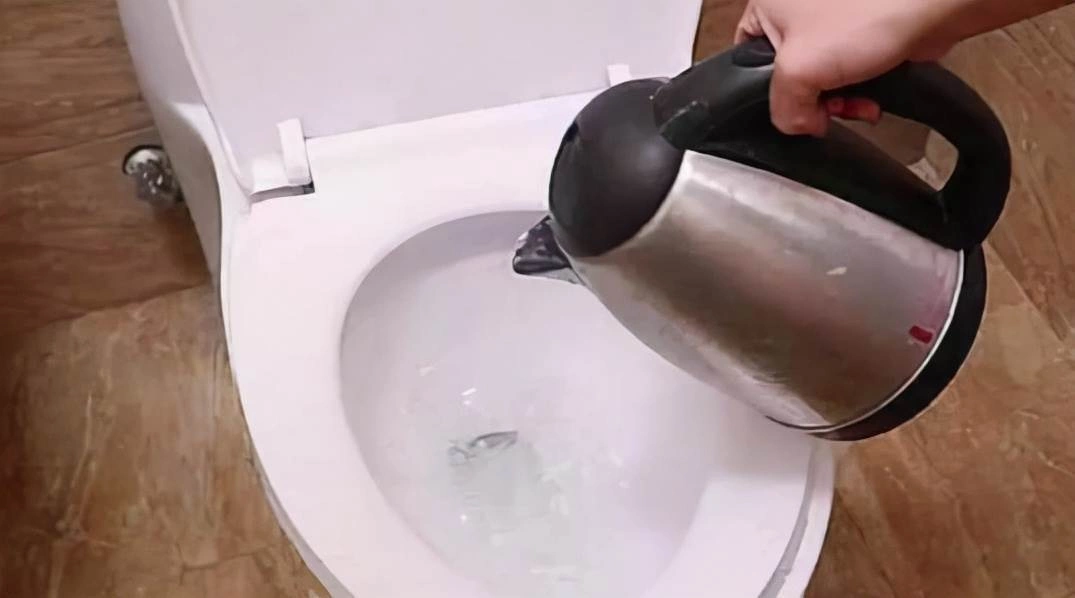
Water from a kettle can be extremely hot.
If you're considering pouring water into a toilet for cleaning purposes, there is no real advantage to using near-boiling water.
A safer approach is to rely on the hotel's normal cleaning process or use an appropriate bathroom disinfectant when necessary.
Are Hotel Toilets Actually Dirty?
Hotel bathrooms vary considerably.
Professional housekeeping teams generally clean and disinfect bathrooms between guests.
However, cleanliness can depend on:
-
Hotel standards
-
Housekeeping procedures
-
Staff workload
-
Room turnover time
-
The quality of cleaning products
-
How frequently surfaces are disinfected
A bathroom that looks clean may still have microorganisms on frequently touched surfaces.
This is true of many public and shared environments—not just hotels.
The goal shouldn't be to become afraid of every hotel toilet. Instead, focus on practical hygiene measures that actually make a difference.
What Parts of a Hotel Bathroom Deserve More Attention?
Interestingly, the toilet bowl isn't necessarily the only—or even the most important—surface to consider.
High-touch surfaces may include:
-
Toilet flush handle
-
Bathroom door handle
-
Faucet handles
-
Light switches
-
Countertops
-
Shower controls
-
Remote controls or other frequently touched objects outside the bathroom
These surfaces are touched repeatedly by different people.
Washing your hands after using the bathroom remains one of the simplest and most effective ways to reduce the spread of infectious organisms.
Should You Wipe the Toilet Seat?
If you're uncomfortable using an unfamiliar toilet, wiping the seat can provide peace of mind.
You can use a suitable disinfecting wipe if the product is appropriate for the surface.
Allow the surface to remain wet for the contact time specified by the product instructions when disinfection is intended.
Do not mix different cleaning chemicals.
In particular, never mix bleach-containing products with ammonia or acidic cleaners because dangerous gases can be produced.
What Is the Best Way to Handle a Hotel Toilet?
For most travelers, you don't need an elaborate routine.
A practical approach is:
1. Inspect the Bathroom
Take a quick look at the toilet, sink, shower, and surrounding area.
If something appears visibly dirty, contact hotel staff.
2. Clean the Seat if Necessary
If you want an additional layer of reassurance, use an appropriate disinfecting wipe.
3. Wash Your Hands
Wash your hands thoroughly with soap and water after using the bathroom.
4. Avoid Touching Your Face
Especially before washing your hands.
5. Report Problems
If the bathroom has visible contamination, a strong sewage odor, overflowing water, mold, or another sanitation problem, ask for housekeeping assistance or request a different room.

What If the Toilet Looks Dirty?
Don't try to solve a serious sanitation problem with boiling water.
If you see:
-
Visible feces
-
Blood
-
Mold
-
Heavy buildup
-
Overflowing wastewater
-
Strong sewage odors
contact hotel staff.
Professional housekeeping has appropriate cleaning products and procedures.
If the problem is significant and cannot be resolved, requesting another room may be the most practical option.
What About Toilet Bowl Disinfectant?
If you're traveling and want additional peace of mind, you can carry a small, travel-appropriate cleaning product or disinfecting wipes.
However, always check:
-
Whether the product is suitable for the surface
-
Whether it requires rinsing
-
Required contact time
-
Ventilation requirements
-
Airline or transportation restrictions
Never pour random chemicals into a hotel toilet.
Some cleaning products can react with one another or damage plumbing.
Can You Catch an Infection From a Hotel Toilet Seat?
The risk from simply sitting on a clean toilet seat is generally much lower than viral social media posts sometimes suggest.
Many infectious diseases are not easily transmitted simply by touching a toilet seat.
For example, infections that require respiratory droplets, blood exposure, sexual contact, or ingestion of contaminated material generally cannot be acquired simply because you sat on a toilet seat.
The more relevant concern in many bathroom situations is hand hygiene.
Hands can touch contaminated surfaces and then transfer microorganisms to the mouth, nose, or eyes.
That's why proper handwashing remains so important.
Why the "Hot Water Toilet Trick" Became Popular
Travel hacks spread quickly because they offer a sense of control.
When staying in an unfamiliar hotel, travelers don't know exactly how thoroughly the previous guest used the bathroom or how recently housekeeping cleaned it.
A simple ritual—such as pouring hot water into the toilet—can make people feel that they have taken an extra precaution.
There is nothing inherently wrong with wanting reassurance.
The problem arises when a ritual is presented as a scientifically proven disinfection technique when it isn't.
Does Pouring Hot Water Make a Toilet Safer?
Not reliably.
It may:
-
Rinse some residue
-
Help loosen minor buildup
-
Temporarily reduce some odors
-
Make the bowl appear cleaner
But it does not guarantee the elimination of harmful microorganisms.
If sanitation is your goal, appropriate cleaning and disinfection are much more reliable.
What About Public Toilets?
The same basic principles apply.
If you're using a public restroom:
-
Avoid touching unnecessary surfaces.
-
Use toilet paper or a barrier if appropriate.
-
Wash your hands thoroughly.
-
Avoid touching your face before washing your hands.
-
Use hand sanitizer when soap and water are unavailable, while remembering that hand sanitizer does not replace washing when hands are visibly dirty.
Again, there is generally no need to pour boiling water into a public toilet.
A Better Hotel Hygiene Routine
Instead of spending time boiling water, focus on a few evidence-based habits.
Wash Your Hands
This is the big one.
Use soap and running water and wash thoroughly, including the backs of your hands and between your fingers.
Keep Personal Items Off Bathroom Surfaces
Avoid placing:
-
Toothbrushes
-
Phones
-
Makeup
-
Food
-
Contact lens supplies
directly on questionable surfaces.
Use Your Own Personal Toiletries
Keep toothbrushes and other personal items protected and closed when not in use.
Clean High-Touch Surfaces
If you're concerned, wipe frequently touched surfaces such as faucet handles and door handles with an appropriate disinfectant.
Report Poor Hygiene
Hotels have housekeeping staff for a reason. Don't hesitate to ask for assistance if a bathroom is visibly unsanitary.
What If You Are Staying in a Luxury Hotel?
Even expensive hotels aren't completely free of microorganisms.
Cleanliness is not determined simply by how much a room costs.
The same practical approach applies:
Inspect → clean if needed → wash hands → report problems.
You don't need to sterilize the entire bathroom.
What If You Are Traveling With Children?
Children may touch bathroom surfaces and then put their hands near their mouths.
In this case, hand hygiene becomes particularly important.
Teach children to:
-
Wash their hands after using the bathroom
-
Avoid touching their face unnecessarily
-
Avoid playing with toilet water
-
Keep toothbrushes away from potentially contaminated surfaces
If the bathroom is visibly dirty, ask the hotel for cleaning rather than attempting a DIY deep clean.
What If You're Worried About Hotel Cleanliness?
A quick visual inspection can tell you a lot.
Look for:
-
Visible dirt
-
Hair
-
Mold
-
Standing water
-
Unusual odors
-
Damaged plumbing
-
Overflowing drains
If something seems wrong, contact hotel staff.
A professional cleaning request is more effective than relying on viral hacks.
Common Myths About the Hot-Water Toilet Trick
Myth: Boiling water sterilizes the toilet instantly.
Fact: Effective microbial inactivation depends on temperature, exposure time, and the organism involved. Briefly pouring hot water into a toilet does not guarantee sterilization.
Myth: Hot water makes a hotel toilet completely germ-free.
Fact: It does not. A bathroom cannot realistically be assumed to be sterile simply because hot water was poured into the bowl.
Myth: The hotter the water, the safer the toilet.
Fact: Extremely hot water can create unnecessary risks, including burns and potential damage to plumbing or ceramic components.
Myth: Hot water is better than proper disinfectant.
Fact: Appropriate cleaning and disinfection methods are generally more reliable for controlling microorganisms on bathroom surfaces.
Myth: Every hotel toilet is dangerous.
Fact: Most hotel bathrooms are routinely cleaned. Basic hygiene and handwashing are usually much more useful than worrying about invisible contamination everywhere.
The Bottom Line
Pouring hot water into a hotel toilet has become a popular travel habit because it seems like a quick way to make an unfamiliar bathroom feel cleaner. Hot water may rinse away some residue or temporarily reduce odors, but there is no good reason to consider it a reliable toilet-disinfection method.
In particular, pouring boiling water into a toilet is unnecessary and may create risks from burns, thermal shock, or damage to certain plumbing components.
If you're concerned about hotel bathroom hygiene, focus on what actually helps: inspect the bathroom, wipe appropriate high-touch surfaces when needed, keep personal items away from questionable surfaces and most importantly - wash your hands thoroughly with soap and water.
And if a hotel bathroom is visibly dirty, has a strong sewage odor, or appears unsanitary, the best "travel hack" is much simpler: call housekeeping and ask them to clean it properly or request another room.