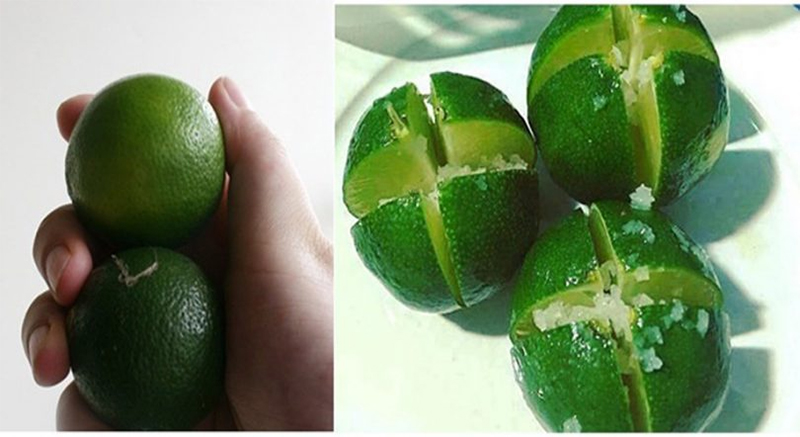
Across different cultures, people have developed countless household traditions that are passed down from one generation to the next. Some are rooted in practical experience, while others are based on cultural beliefs, symbolism, or folklore. One practice that continues to attract attention is placing a lemon cut into sections and sprinkled with salt in different rooms of the home.
Supporters of this tradition claim it can freshen the air, absorb unpleasant odors, create a more pleasant atmosphere, or even bring positive energy into the home. Social media has helped popularize these ideas, with videos and articles often making dramatic claims about the benefits of salted lemons.
But what does science actually say?
While lemons and salt each have useful properties, there is limited scientific evidence that placing salted lemons around the house provides the wide range of health or environmental benefits often claimed online. However, there are several practical reasons why this tradition has remained popular.
Let's take a closer look.
The Origins of the Salted Lemon Tradition
The practice appears in various forms across different regions of the world.
In some households, people place:
-
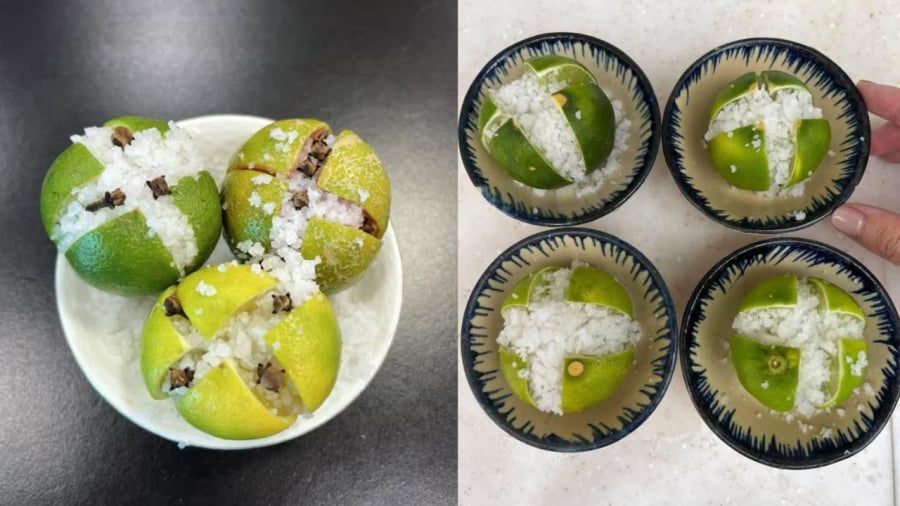
A whole lemon covered with salt.
-
A lemon cut into four pieces with salt sprinkled on top.
-
Lemon slices mixed with coarse sea salt.
-
Salted lemons placed near doorways, kitchens, or bedrooms.
Depending on the culture, the practice may symbolize:
-
Freshness
-
Hospitality
-
Cleansing
-
Good fortune
-
Protection
-
Beginning a new season
These meanings vary widely and are based on local customs rather than scientific evidence.
Why Do People Place Salted Lemons Around the House?
People commonly report several reasons for doing this.
These include:
-
Creating a fresh citrus scent.
-
Reducing mild household odors.
-
Decorating the home naturally.
-
Following family traditions.
-
Practicing cultural rituals.
-
Creating a calming atmosphere.
Some of these reasons have practical explanations, while others are based on personal beliefs.
1. A Natural Citrus Fragrance
One of the most noticeable effects of freshly cut lemons is their pleasant aroma.
The peel contains essential oils rich in naturally occurring compounds such as:
-
Limonene
-
Citral
-
Pinene
When a lemon is cut, these aromatic oils are released into the surrounding air.
This fresh scent may temporarily make a room feel cleaner or more pleasant.
However, the fragrance gradually fades as the lemon dries out.
2. It May Help Reduce Mild Odors
Lemons have long been used in kitchens to help neutralize food odors on cutting boards, countertops, or hands after handling ingredients such as garlic or fish.
Similarly, placing freshly cut lemons in a room may temporarily mask or reduce mild odors nearby.
However, this effect is limited.
Salted lemons cannot remove the source of indoor odors, such as:
-
Mold
-
Smoke
-
Poor ventilation
-
Pet waste
-
Household chemicals
Persistent unpleasant odors should be addressed by identifying and eliminating their source.
3. Salt Has Practical Household Uses
Salt has been used for centuries in food preservation because it helps reduce available moisture on food surfaces.
This property sometimes leads people to believe that a bowl of salt or salted lemons can "purify" the air.
While salt can absorb small amounts of moisture under certain conditions, ordinary table salt or sea salt placed in a room does not function as an effective air purifier or dehumidifier.
Purpose-built dehumidifiers and proper ventilation are much more effective for controlling indoor humidity.
4. A Decorative and Budget-Friendly Home Accent
Many people simply enjoy the appearance of bright yellow lemons.
Combined with coarse salt and placed in a decorative bowl, they can create an attractive natural centerpiece for:
-
Dining tables
-
Kitchens
-
Entryways
-
Living rooms
Because lemons are inexpensive and widely available, they are an easy way to add seasonal color to a home.
5. Cultural and Traditional Beliefs
In many communities, salted lemons are associated with customs that symbolize:
-
Cleansing the home
-
Welcoming guests
-
Positive intentions
-
New beginnings
-
Seasonal celebrations
These traditions are part of cultural heritage and personal belief systems.
While such practices may hold meaningful symbolic value, they should not be interpreted as scientifically proven methods for improving health or changing physical environments.
What Does Science Say?
Scientific research supports several facts about lemons.
Lemons contain:
-
Vitamin C
-
Flavonoids
-
Citric acid
-
Essential oils
-
Antioxidant compounds
These nutrients may provide health benefits when lemons are eaten as part of a balanced diet.
However, there is no strong scientific evidence that simply placing salted lemons in a room can:
-
Remove airborne viruses.
-
Eliminate bacteria throughout a room.
-
Detoxify indoor air.
-
Absorb harmful chemicals.
-
Improve lung health.
-
Prevent illness.
-
Remove allergens.
Good indoor air quality depends on factors such as ventilation, filtration, humidity control, and reducing pollution sources.
Common Claims About Salted Lemons
Claim: They purify the air.
What the evidence says:
There is no reliable scientific evidence showing that salted lemons purify indoor air in the way an air filtration system does.
Claim: They eliminate germs.
What the evidence says:
Although lemon juice has acidic properties and some laboratory studies have examined its effects on certain microorganisms, placing a cut lemon in a room has not been shown to disinfect indoor air.
Claim: They absorb toxins.
What the evidence says:
There is no scientific evidence that salted lemons absorb toxins or harmful chemicals from the air inside a home.
Claim: They improve mood.
What the evidence says:
Many people enjoy citrus aromas.
Pleasant scents may help create a more enjoyable environment for some individuals, but responses vary from person to person.
Better Ways to Improve Indoor Air Quality
If your goal is a healthier indoor environment, evidence-based strategies include:
-
Opening windows when outdoor air quality allows.
-
Using exhaust fans in kitchens and bathrooms.
-
Changing HVAC filters regularly.
-
Controlling moisture to prevent mold.
-
Vacuuming and dusting frequently.
-
Avoiding indoor smoking.
-
Using certified air purifiers when appropriate.
These measures have much stronger scientific support than household folklore.
If You Want to Try the Tradition
If you enjoy the appearance or scent of salted lemons, there is generally no harm in using them as decoration.
For best results:
-
Use fresh lemons.
-
Replace them once they begin to dry out or develop mold.
-
Keep them away from pets that may be sensitive to citrus.
-
Dispose of them promptly if spoilage appears.
Remember that cut fruit left at room temperature for extended periods can eventually attract insects or develop mold.
Common Myths About Salted Lemons
Myth: Salted lemons remove viruses from the air.
Fact: There is no strong scientific evidence supporting this claim.
Myth: They detoxify your home.
Fact: The concept of "detoxifying" indoor air with lemons and salt has not been demonstrated in scientific studies.
Myth: Salted lemons replace air purifiers.
Fact: Mechanical air filtration systems and proper ventilation are much more effective for improving indoor air quality.
Myth: Everyone will experience the same benefits.
Fact: While many people enjoy the fresh citrus aroma, individual experiences and preferences differ.

The Bottom Line
Placing salted lemons around the house is a tradition practiced in many cultures for reasons ranging from symbolism and decoration to enjoying a pleasant citrus scent. Fresh lemons release aromatic essential oils that may temporarily make a room smell fresher, and the practice can be a meaningful part of family customs or seasonal rituals.
However, there is no strong scientific evidence that salted lemons purify indoor air, eliminate airborne germs, remove toxins, prevent illness, or provide the many health benefits sometimes claimed on social media. If you enjoy this tradition, it can be a simple and attractive way to add a natural fragrance to your home, but it should not be viewed as a substitute for proven methods of improving indoor air quality or protecting your health.