For generations, families in many parts of the world have followed a quiet and deeply emotional tradition: someone stays beside a deceased loved one after death.
Sometimes it happens for only a few hours.
Sometimes family members take turns throughout the night.
In some cultures, people remain beside the body until a funeral or burial takes place.
To someone unfamiliar with the tradition, it may seem strange.
Why would a deceased person need someone nearby?
Is it because of religious beliefs?
Is it connected to ancient customs?
Or is there a practical reason that people have continued this tradition for centuries?
The answer is more complicated—and more fascinating—than many people realize.
The idea that the dead should never be left alone has roots in religion, culture, grief, family traditions, and practical concerns surrounding death. It does not mean that a deceased person will suffer, wake up, or experience something supernatural if left alone. Rather, staying with the dead has traditionally been a way for the living to show respect, provide companionship, and ensure that the person is not abandoned during the final transition between life and funeral rites.
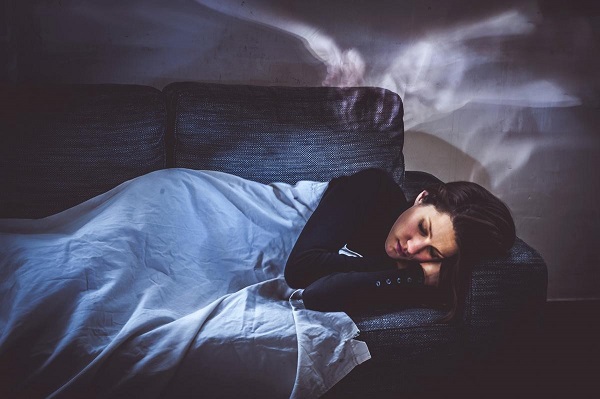
The Tradition of Keeping Vigil
The practice of staying beside a deceased person is often called keeping vigil or watching over the dead.
A vigil can take many forms.
Family members may sit quietly in the same room.
They may pray.
They may talk about the person who died.
They may light candles where permitted by tradition.
They may invite relatives and friends to come and pay their respects.
In some cultures, people remain awake throughout the night.
The purpose isn't necessarily to “protect” the dead from something frightening.
Instead, it can represent a final act of love.
The person who has died spent a lifetime surrounded by people.
Keeping vigil ensures that their final hours before burial or cremation are not treated as an ordinary period when everyone simply walks away.
For many families, being present is a way of saying:
“You are still part of us.”
Why Did This Tradition Become So Important?
One reason is simply human emotion.
Death can be difficult to understand.
When someone dies, the people around them often experience shock, disbelief, sadness, confusion, and sometimes even fear.
Remaining physically close to the deceased can provide a sense of reality.
It gives family members time to say goodbye.
They can sit beside the person.
Hold their hand if appropriate.
Speak words they may never have had the opportunity to say while the person was alive.
In this sense, a vigil isn't really for the deceased.
It is also for the people who remain.
It gives them a moment to begin processing their loss.
The Ancient Fear Behind Death
There is another reason the tradition developed in many societies.
For much of human history, people did not have modern medical technology.
Determining whether someone had truly died could be difficult.
There were no modern monitors showing heart rhythm.
There were no advanced neurological examinations.
There were no emergency departments equipped with today's diagnostic technology.
In some historical periods, people feared that someone might appear dead but still be alive.
This contributed to customs in which family members watched over a body for a period of time.
Although modern medicine has far more reliable ways to determine death, the tradition of keeping watch survived in many cultures.
What may have originally included practical concerns eventually became deeply connected with ritual, respect, and mourning.
Religious Traditions Have Also Shaped the Practice
Many religions have traditions surrounding the period immediately after death.
The exact customs vary dramatically.
Some communities emphasize prayer.
Others focus on scripture.
Some hold formal vigils.
Others gather family members around the deceased.
In Christianity, for example, prayers and vigils for the deceased have long been part of various traditions.
In Judaism, the practice of shemira, traditionally involving watching over the deceased, has a specific religious and cultural history.
Other religious and cultural communities have their own customs concerning what should happen between death and burial.
These practices should not be treated as interchangeable.
Each tradition has its own theological meaning and historical development.
But they share a common theme:
The dead deserve dignity, and the transition from death to funeral rites should be treated with care.
Staying With the Dead Is Not About the Dead Being Afraid
One misconception that sometimes appears online is that a deceased person might become frightened if left alone.
There is no scientific evidence supporting that idea.
After death, the body no longer has the normal brain activity associated with conscious awareness, thought, fear, or perception.
So when families stay beside someone who has died, the purpose is not to prevent the person from becoming lonely in the same way a living person might.
The meaning is symbolic, emotional, cultural, or religious.
That distinction is important.
It prevents a beautiful tradition from becoming an unnecessary source of fear.
What Actually Happens to the Body After Death?
Understanding the biology of death can make the tradition easier to understand.
After the heart stops and circulation ceases, the body's organs and tissues no longer receive oxygen in the normal way.
The brain is particularly sensitive to oxygen deprivation.
Over time, the body's cells undergo irreversible changes.
The muscles initially become relaxed.
Later, chemical changes contribute to rigor mortis, the temporary stiffening of muscles after death.
The body also gradually undergoes other physical changes.
These processes are natural parts of what happens after death.
They aren't signs that the deceased person is conscious or experiencing fear.
For families, understanding this can help separate normal biological changes from frightening myths.
Why Families May Still Want Someone Nearby
Even when there is no medical reason for someone to remain physically beside a deceased person, the emotional reasons can be powerful.
A family member may want to sit there because they aren't ready to leave.
Someone may want to say goodbye privately.
Another person may want to pray.
Someone else may simply feel that leaving would be disrespectful.
These feelings are deeply personal.
There is no single correct way to grieve.
For some people, sitting quietly beside a loved one is comforting.
For others, stepping away and remembering the person through photographs, stories, or prayer may feel more natural.
Both responses can be completely valid.
The Night Watch Can Become a Final Family Gathering
In many traditions, a vigil becomes more than simply sitting in a room.
It becomes a gathering.
Relatives arrive.
Old friends visit.
People share stories.
Someone remembers a funny moment.
Another person tells a story that younger family members had never heard.
People may cry.
They may laugh.
They may sit in silence.
And slowly, the person who died becomes the center of a final gathering of people whose lives they touched.
This can transform the atmosphere.
Instead of focusing exclusively on death, people begin remembering the person's life.
Their personality.
Their habits.
Their accomplishments.
Their mistakes.
Their kindness.
Their sense of humor.
Their relationships.
Their ordinary moments.
In that way, a vigil can become a bridge between grief and remembrance.

Why Some Cultures Consider It Disrespectful to Leave the Dead Alone
Cultural beliefs surrounding death are often built over hundreds or even thousands of years.
In some communities, remaining beside the deceased is considered a duty.
Leaving the person alone may be interpreted as abandonment or a failure to fulfill one's responsibility.
These beliefs aren't necessarily based on fear.
They can reflect a broader cultural idea:
A person deserves companionship and respect from their community even after death.
This is similar to many other funeral customs.
Wearing particular clothing.
Preparing specific foods.
Saying prayers.
Lighting candles.
Holding ceremonies.
Visiting graves.
Each practice provides a structure for grief.
It tells people what to do when ordinary life suddenly feels unfamiliar.
What About Funeral Homes and Hospitals?
In modern healthcare and funeral settings, the situation is different.
Professionals may handle the deceased person according to medical, legal, and cultural procedures.
A body may be transferred to a morgue, funeral home, or other appropriate facility.
Family members generally do not need to remain physically beside the body at all times.
In fact, whether relatives can remain with a deceased person depends on the circumstances, location, applicable procedures, and wishes of the family.
So the phrase “never leave a deceased person alone” should not be interpreted as a universal medical rule.
It is primarily a cultural or religious practice in many contexts.
What Should You Do Immediately After Someone Dies?
When someone dies unexpectedly at home, the priority should not be performing a traditional vigil.
The first priority is determining what has happened and obtaining appropriate medical or emergency assistance.
If the death is unexpected or you are not certain the person has died, contact emergency services immediately and follow the instructions provided.
If the death was expected because of a terminal illness and appropriate arrangements are already in place, follow the person's care plan and contact the relevant healthcare or hospice professionals.
Legal and medical procedures surrounding death vary by location.
That's why families should not rely on social-media advice when an actual death occurs.
Don't Confuse Tradition With Medical Necessity
This is perhaps the most important distinction.
A tradition can be meaningful without being medically necessary.
Keeping vigil can help a family emotionally.
It can provide an opportunity for prayer.
It can honor cultural beliefs.
It can allow loved ones to say goodbye.
But there is no scientific evidence that a deceased person must have someone physically watching them to prevent something supernatural from happening.
Similarly, families shouldn't be frightened into believing that leaving a deceased person alone will somehow cause harm to the person's spirit or body.
Those are matters of belief, not established medical fact.
The Real Reason May Be About the Living
This is where the title of the story takes an unexpected turn.
People often assume that keeping vigil exists because the dead need someone beside them.
But in many cases, the deeper reason is that the living need the opportunity to be there.
Grief is not a simple switch.
A person doesn't stop loving someone because that person's heart has stopped beating.
The relationship continues in memory.
For some people, sitting beside the body is part of accepting that reality.
It can be the final moment when they can physically say:
“Thank you.”
“I love you.”
“I'm sorry.”
“Goodbye.”
Those words can be incredibly important.
A Final Opportunity to Say Goodbye
There are conversations people wish they had.
Apologies that were never made.
Questions that were never answered.
Hugs that were postponed.
Affection that wasn't expressed often enough.
Death can make all those unfinished emotions suddenly feel enormous.
A vigil cannot change the past.
But it can provide a quiet moment for reflection.
Someone might sit beside the deceased and remember their childhood.
Another person might whisper a final message.
Someone might simply hold their hand.
Even if the deceased cannot hear those words, speaking them may help the person grieving.
Why Silence Can Be Powerful
Not every goodbye needs a speech.
Sometimes the most meaningful moment is simply sitting quietly.
No television.
No phone.
No conversation.
Just silence.
The room may feel completely different from how it did when the person was alive.
That silence can feel uncomfortable at first.
But eventually, it can become peaceful.
The family may begin remembering the person's life instead of focusing only on the moment of death.
This is one reason rituals surrounding death can be so important.
They create space for emotions that everyday life rarely allows us to express.
The Tradition Has Changed Over Time
Modern life has changed the way many people experience death.
In previous generations, death often occurred at home.
Family members might personally wash and prepare the body.
Relatives could remain nearby for long periods.
Funerals were closely integrated into everyday community life.
Today, many deaths occur in hospitals, hospices, nursing facilities, or other professional settings.
Funeral homes handle many practical responsibilities.
As a result, families may have fewer opportunities to spend time with a deceased loved one before the funeral.
For some people, this makes the traditional vigil feel even more meaningful.
It provides a chance to slow down and personally participate in the goodbye.
Every Family Grieves Differently
There is no single correct way to respond to death.
One family may want a long overnight vigil.
Another may prefer a short private goodbye.
One person may want to pray.
Another may want to sit silently.
Someone else may find it too painful to remain in the room.
All of these reactions can be understandable.
Grief is deeply individual.
Cultural traditions can provide guidance, but they shouldn't become a source of unnecessary guilt.
If someone cannot remain beside a deceased loved one, that does not mean they loved that person any less.
Love isn't measured by how many hours someone sits beside a body.
The Deeper Meaning Behind the Tradition
When you look beyond the myths and frightening stories, the tradition of staying with the dead reveals something deeply human.
We don't like the idea of people we love disappearing suddenly.
We want to remain close.
We want to honor them.
We want to protect their dignity.
We want to make sure they are remembered.
And sometimes, we simply aren't ready to say goodbye.
Keeping vigil gives people a structured way to express all of those emotions.
It transforms an overwhelming moment into something people can participate in.
They can sit.
Pray.
Remember.
Cry.
Talk.
And eventually, say goodbye.
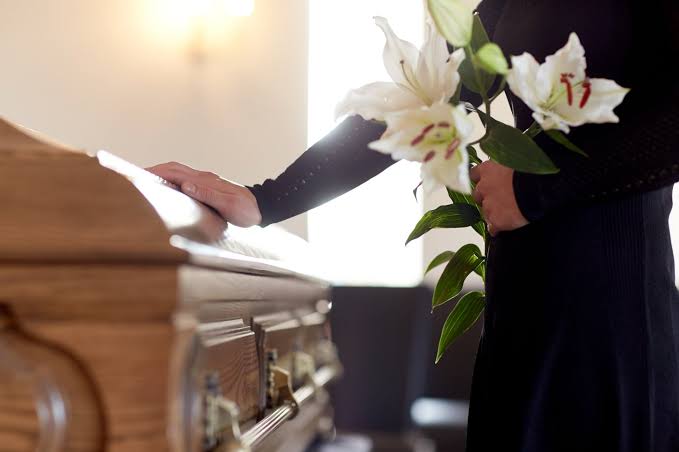
The Most Important Lesson
The phrase “Never leave a deceased person alone” can sound frightening when taken literally.
But its deeper history is much less about fear and much more about respect, ritual, love, and remembrance.
In many cultures, staying beside the dead represents a final act of care.
It says that the person mattered.
That their life mattered.
That their relationships mattered.
And that even after death, they deserve to be treated with dignity.
There is no scientific evidence that a deceased person becomes frightened or suffers because they are left alone.
But there is plenty of evidence from human history that rituals surrounding death can help communities and families process grief.
Perhaps that's why the tradition has survived for so long.
Because when someone we love dies, there is often nothing we can do to change what has happened.
But we can still be present.
We can remember.
We can show respect.
And we can say goodbye.
Sometimes, keeping watch over the dead isn't about what happens to them after death. It's about what their final moments mean to the people who loved them while they were alive.