Capture:
-
The entire suitcase
-
Any distinctive markings
-
The luggage tag
-
Its color and model
-
Any existing scratches or damage
If your suitcase is delayed or lost, having a recent photo can make it easier to describe the bag to airline staff.
It can also document the suitcase's condition before travel.
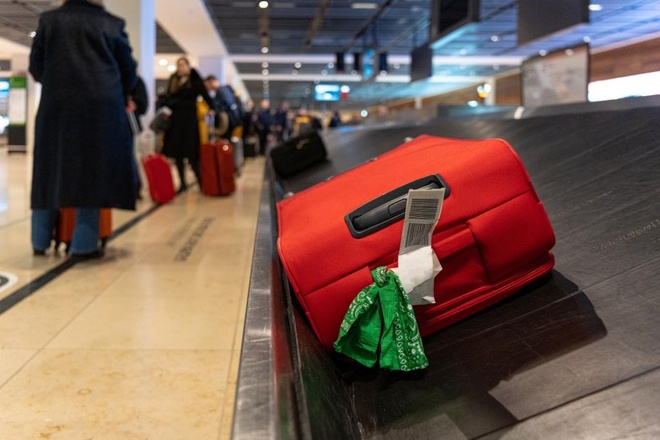
Remove Old Baggage Tags
If you've traveled before, your suitcase may still have old baggage stickers attached.
That's something worth cleaning up before your next flight.
Old tags and outdated barcodes can potentially create confusion during handling.
Before checking your bag:
Remove old airline baggage tags and destination stickers.
Keep only the current identification provided for the current journey.
Your suitcase doesn't need a collection of souvenirs from every airport you've ever visited.
Why Black Suitcases Are So Difficult to Identify
The popularity of black luggage creates another issue.
Black is practical.
It doesn't show dirt as easily.
It's easy to match with other travel accessories.
And manufacturers produce enormous numbers of black suitcases.
The downside?
Everyone else has one too.
That's why people use ribbons, bright tags, stickers, or other markers.
If you're buying new luggage, choosing a distinctive color or pattern can eliminate much of the problem from the beginning.
Your Ribbon Isn't What Determines Whether Your Bag Arrives
It's also important not to exaggerate the warning.
A ribbon on a suitcase does not automatically mean your luggage will be lost.
Millions of travelers use ribbons, tags, and other identifiers without experiencing any problems.
The concern is simply that loose accessories can create an unnecessary point of failure.
Baggage systems are complicated.
The fewer loose objects attached to a checked bag, the simpler it is for the bag to move through the system.
What Baggage Handlers Really Want Travelers to Understand
The main lesson isn't:
"Decorations are forbidden."
It's closer to:
"Make sure your suitcase is prepared for automated handling."
That means:
-
Secure all zippers
-
Remove loose straps
-
Avoid dangling accessories
-
Keep baggage tags visible
-
Remove old tags
-
Don't overpack
-
Make sure handles are properly stored when possible
-
Use durable identification
These small steps can make your luggage easier to process.
What Happens to a Suitcase After Check-In?
Once you hand over your checked luggage, it begins a journey that most passengers never see.
The suitcase may enter a conveyor system beneath or behind the terminal.
It can pass through security screening and automated sorting equipment.
From there, it may travel toward a specific loading area.