If you've ever looked closely at a residential fence, you may have noticed something interesting.
One side often looks smooth, finished, and carefully designed, while the other side reveals the posts, rails, brackets, and structural supports.
At first, it can seem like a strange design choice.
After all, wouldn't the homeowner naturally want the nicest-looking side facing their own yard?
So why are fence panels often installed with the better-looking side facing outward?
The answer involves a combination of appearance, construction methods, property boundaries, neighborhood etiquette, safety, and local regulations.
But there's an important detail that many people overlook: there is no universal rule requiring every fence to have its finished side facing the neighbor. The correct orientation depends on the fence design, property ownership, local rules, and any agreements between neighboring property owners.
Still, there are several good reasons why this arrangement is so common.

What Is the “Good Side” of a Fence?
Before getting into the reasons, it's helpful to understand what people mean by the “good side.”
Many traditional wood fences are constructed from individual boards or panels attached to horizontal rails.
One side may have a clean, uniform appearance.
The opposite side may expose:
-
Horizontal support rails
-
Vertical posts
-
Nails or screws
-
Brackets
-
Structural connections
-
Uneven board surfaces
The finished side is sometimes called the “good side,” “face side,” or “pretty side.”
The structural side is often referred to as the “back side” or “rail side.”
With certain fence designs, the difference is dramatic.
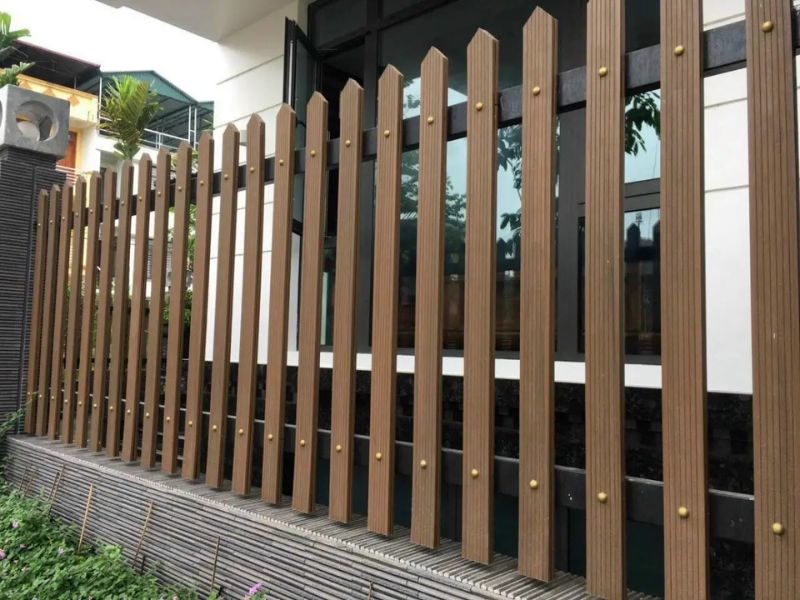
With others, such as good-neighbor or board-on-board fencing, both sides are deliberately designed to look attractive.
1. It Can Be a Matter of Neighborhood Etiquette
One of the biggest reasons homeowners choose to face the finished side outward is simply consideration for the people on the other side.
Imagine two neighboring homes sharing a property boundary.
If one homeowner installs a fence with the attractive side facing inward, the neighbor may be left looking directly at exposed rails and posts.
That can make the neighboring yard look less finished.
Facing the finished side outward creates a more visually appealing boundary for both properties.
It sends a simple message:
“This fence is part of the shared visual environment, so let's make it look good from both sides.”
It's not always a legal requirement, but it can be a thoughtful design decision.
2. A Fence Is Visible From More Than One Property
A common mistake is thinking of a fence as something that belongs visually to only one yard.
In reality, fences are usually visible from:
-
Your property
-
Your neighbor's property
-
The street
-
Sidewalks
-
Nearby homes
-
Public spaces
A fence can therefore have a noticeable effect on the overall appearance of a neighborhood.
When the finished side faces outward, people walking or driving past the property see a cleaner appearance.
This can matter particularly in residential developments where homeowners want fences to create a consistent streetscape.
3. The Structural Side Can Be Easier to Climb
There is also a practical consideration.
Traditional fences with horizontal rails exposed on one side can provide convenient footholds.
Someone attempting to climb the fence may be able to use those rails as steps.
With the smoother side facing outward, the fence may be somewhat less convenient to climb from that direction.
However, this shouldn't be interpreted as making a fence climb-proof or security-proof.
A determined person can climb many fences regardless of orientation.
And if security is the primary objective, fence height, gates, lighting, landscaping, locks, and other measures are generally more important than simply deciding which side faces outward.
4. The Fence May Be Designed for a Particular Installation Direction
Sometimes the orientation isn't really a matter of personal preference.
Certain fence systems are specifically engineered to be installed in a particular direction.
The manufacturer may have designed the panel so that:
-
Posts are positioned in a certain way
-
Rails attach from one side
-
Fasteners are concealed
-
Decorative components face outward
-
Panels interlock in a particular direction
If you're installing a manufactured fence system, it's important to follow the manufacturer's instructions.
Turning components around simply because you prefer one appearance could interfere with the intended installation.
5. Some Fences Are Designed to Look Good on Both Sides
Modern fencing has moved well beyond the traditional “good side/bad side” arrangement.
One example is board-on-board fencing.
In this style, overlapping boards are arranged so that gaps are minimized or eliminated, creating a relatively finished appearance from both sides.
Another option is a good-neighbor fence, which is specifically designed to provide a similar appearance on either side.
These designs can be especially useful when neighbors share a boundary and both care about appearance.
They can also prevent arguments about who gets the attractive side.
6. Property Lines Make Fence Orientation More Complicated
Here's where things can become important.
A fence isn't necessarily placed exactly where someone assumes the property line is.
Before installing a fence, homeowners should understand where their legal boundary lies.
A fence that accidentally crosses onto a neighbor's property can create a dispute even if the fence itself looks beautiful.
Property boundaries may be established using:
-
A professional survey
-
Recorded property documents
-
Existing boundary markers
-
Local land records
If there's uncertainty about the boundary, relying on a guess—or simply copying the location of an old fence—can cause problems.
7. Local Laws May Affect Fence Design
Fence rules vary significantly between jurisdictions.
Local regulations may address:
-
Maximum fence height
-
Required setbacks
-
Materials
-
Visibility near intersections
-
Pool fencing
-
Front-yard versus backyard fences
-
Permit requirements
-
Fence placement
-
Shared boundary responsibilities
Some areas may also have specific requirements or customary practices concerning fence orientation.
That's why homeowners shouldn't assume that a rule they've heard online applies everywhere.
Check local regulations before construction.
8. The “Good Side Out” Rule Isn't Universal
This is one of the biggest myths surrounding fences.
You may hear people say:
“The finished side must always face the neighbor.”
That's simply not universally true.
There is no single nationwide rule that applies to every residential fence.
Depending on the location and circumstances, the fence may be governed by local ordinances, subdivision rules, property agreements, homeowners' association requirements, or the fence manufacturer's specifications.
Some places may regulate fence construction in specific ways, while others leave the choice largely to the property owner.
So if you're planning a new fence, don't rely on a general rule.
9. It Can Make Maintenance Easier
Fence orientation can also influence maintenance.
If the structural rails and fasteners are located on one side, that side may require easier access for repairs.
A homeowner may need to reach the rails to:
-
Replace damaged boards
-
Tighten hardware
-
Repair posts
-
Inspect connections
-
Repaint or stain wood
-
Replace sections of fencing
This means the best orientation isn't always simply the one that looks nicest.
A practical fence needs to remain accessible for maintenance.
10. Weather Exposure Matters Too
Wood fencing is constantly exposed to the elements.
Rain, sunlight, humidity, snow, insects, and temperature changes can gradually affect the material.
The way a fence is constructed and finished can influence how water moves across its surfaces.
However, the orientation of the “good side” isn't a magic solution for preventing rot.
More important factors include:
-
Proper drainage
-
Quality materials
-
Appropriate ground clearance
-
Protective finishes
-
Proper post installation
-
Adequate airflow
-
Regular maintenance
If a fence is constantly exposed to moisture, even a beautiful finished side won't prevent deterioration.
11. Fence Posts Should Be Installed Correctly
Another detail people sometimes overlook is the posts.
The posts provide much of the fence's structural support.
If they aren't installed correctly, the fence may eventually lean, wobble, or fail.
Depending on the fence type and local conditions, proper installation may involve:
-
Correct post depth
-
Appropriate spacing
-
Suitable footing
-
Proper alignment
-
Drainage considerations
-
Correct fasteners
A fence can look perfect from the outside while still having serious structural problems underneath.
That's why good installation matters more than simply choosing which side looks better.
12. A Fence Can Affect the Appearance of the Entire Yard
A fence isn't just a boundary.
It's also a major visual element.
A tall wooden fence can dominate a backyard.
A decorative fence can become part of a garden design.
A clean finished surface can make a property appear more organized and polished.
That's one reason homeowners often spend considerable time choosing:
-
Fence color
-
Board style
-
Height
-
Cap design
-
Post style
-
Gate design
-
Decorative elements
The orientation of the panels is just one part of the overall design.
13. Your Neighbor May Appreciate the Finished Side
If you have a choice, putting the more attractive side toward the neighboring property can be a small gesture of consideration.
This can be especially helpful when:
-
The fence sits directly on a shared boundary
-
Both yards are frequently used
-
The fence is visible from a neighbor's main living area
-
The neighborhood has appearance standards
-
You want to avoid unnecessary disputes
Good neighbor relationships aren't built entirely through fences, of course.
But thoughtful design choices can prevent surprisingly common disagreements.
14. Discuss Shared Fences Before Building
If the fence will sit on or near a boundary shared with another property, communication can save a lot of trouble.
Before construction, discuss:
-
Exact location
-
Fence height
-
Material
-
Color
-
Style
-
Which side faces where
-
Gate placement
-
Maintenance
-
Cost-sharing
-
Future repairs
Even when the law doesn't require agreement, talking beforehand can prevent misunderstandings.
A five-minute conversation can sometimes prevent months of frustration.
15. Don't Assume the Existing Fence Is Correct
If you're replacing an old fence, you might think the safest option is simply to build the new one in exactly the same place.
That isn't always wise.
The old fence may have been installed years ago.
Property boundaries may have changed or been misunderstood.
The old fence could even have been positioned incorrectly from the beginning.
If you're making a major investment, verifying the property line first can be worthwhile.
What If You Want the Good Side Facing Your Yard?
There's nothing inherently wrong with preferring the finished side on your own property.
You may want the fence to look beautiful from your patio, garden, pool area, or living room.
If the fence is entirely within your property and local rules don't require a particular configuration, you may have more flexibility.
The important thing is to consider the full situation:
Is it a shared boundary?
Are there HOA requirements?
Does local law specify anything?
Does the manufacturer require a particular orientation?
Will maintenance access be affected?
Once those questions are answered, you can choose the design that makes the most sense.
The Rise of “Good Neighbor” Fencing
Because traditional fences can create a visual imbalance, manufacturers developed designs intended to look attractive from both sides.
Good-neighbor fencing is particularly popular because it eliminates the classic argument:
“Why does my neighbor get the pretty side?”
With a properly designed two-sided fence, both properties can enjoy a finished appearance.
For shared boundaries, this can be one of the most neighbor-friendly solutions.
Don't Forget the Gate
A fence isn't complete without considering the gate.
The gate should match the fence where possible and provide convenient access for the people who need to use it.
Depending on the property, you may need to consider:
-
Gate swing direction
-
Width
-
Latching mechanism
-
Security
-
Maintenance access
-
Clearance
-
Accessibility
If the fence is near a property boundary, make sure the gate doesn't create an access problem for the neighboring property.
What Makes a Fence Look Professional?
Interestingly, the “good side” is only one part of a professional-looking installation.
A well-built fence typically has:
-
Straight posts
-
Consistent spacing
-
Level rails
-
Even board heights
-
Secure fasteners
-
Properly aligned gates
-
Clean corners
-
Appropriate ground clearance
Even expensive materials can look poor if they're installed incorrectly.
On the other hand, a simple wooden fence can look excellent when the installation is precise.
A Fence Should Do More Than Look Good
The best fence balances appearance, privacy, durability, safety, maintenance, and local requirements.
Choosing which side faces outward is only one decision among many.
Before installing a fence, think about what you actually want it to accomplish.
Do you want privacy?
Security?
Pet containment?
A decorative boundary?
Noise reduction?
A windbreak?
Each goal may influence the ideal fence style.
So, Why Is the Better Side Often Facing Out?
The answer isn't simply because there's a law saying it has to be that way.
In many cases, it's a combination of tradition, appearance, practicality, neighborhood etiquette, and fence construction methods.
Facing the finished side outward can make the property look more attractive from the street and give the neighboring property a cleaner view.
It can also hide structural rails and hardware from the outside.
But modern fencing offers plenty of alternatives.
If you want both sides to look good, a board-on-board or good-neighbor design may be a better choice.
And if you're dealing with a shared property boundary, the smartest approach is to consider your neighbor's perspective before construction begins.
The Bottom Line
The “good side” of a fence doesn't necessarily have to face your neighbor everywhere.
There is no universal rule that applies to every fence and every location.
However, facing the finished side outward can provide several practical and aesthetic advantages. It can create a cleaner appearance from the street, improve the visual experience for neighboring properties, and conceal structural components.
Before installing a fence, check local regulations, property boundaries, HOA requirements, manufacturer instructions, and any agreements with your neighbor.
And if you have the budget for it, consider a fence that looks good from both sides.
Because ultimately, a fence isn't just a line between two properties.
It's part of the landscape both households have to live with.
A little planning before the first post goes into the ground can make the finished fence look better, function better, and—perhaps most importantly—keep the relationship on both sides of it a whole lot more peaceful.