As estrogen levels change during the years leading up to and following menopause, the balance between estrogen and androgen activity can shift.
As a result, some women may notice:
- More chin or upper-lip hair
- Thicker facial hairs
- Hair becoming darker or more noticeable
- Changes in the texture or distribution of body hair
At the same time, hair on the scalp may become thinner.
This combination can make facial hair seem especially noticeable compared with earlier years.
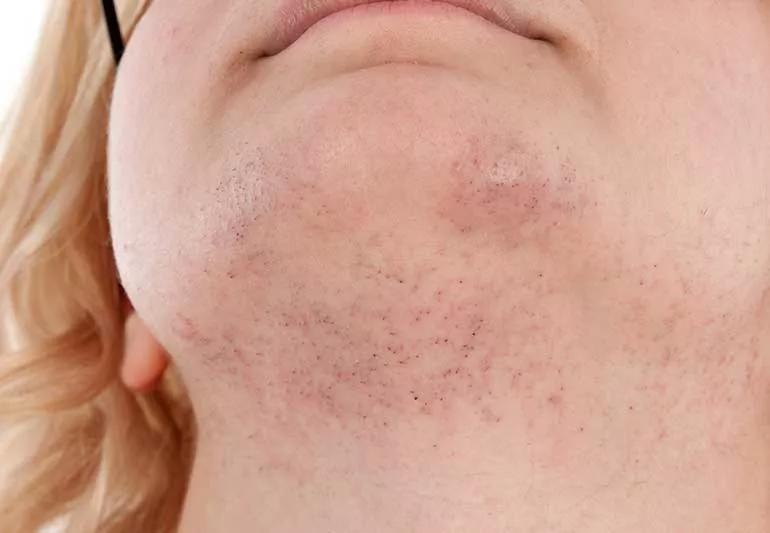
🧬 Genetics May Matter Too
Have your mother or sisters experienced noticeable facial hair?
Genetics can influence hair growth patterns.
Some women naturally have more body or facial hair than others, and this can run in families.
Your ethnicity and individual genetics can also influence how much facial hair you naturally develop.
Therefore, having chin hair by itself doesn't necessarily indicate a medical problem.
⚖️ Hormonal Changes Can Sometimes Be Involved
If facial hair suddenly becomes much thicker or more widespread, hormones may be one factor worth considering.
One condition commonly associated with increased facial hair growth is polycystic ovary syndrome (PCOS).
PCOS can be associated with increased androgen activity and may cause symptoms such as: