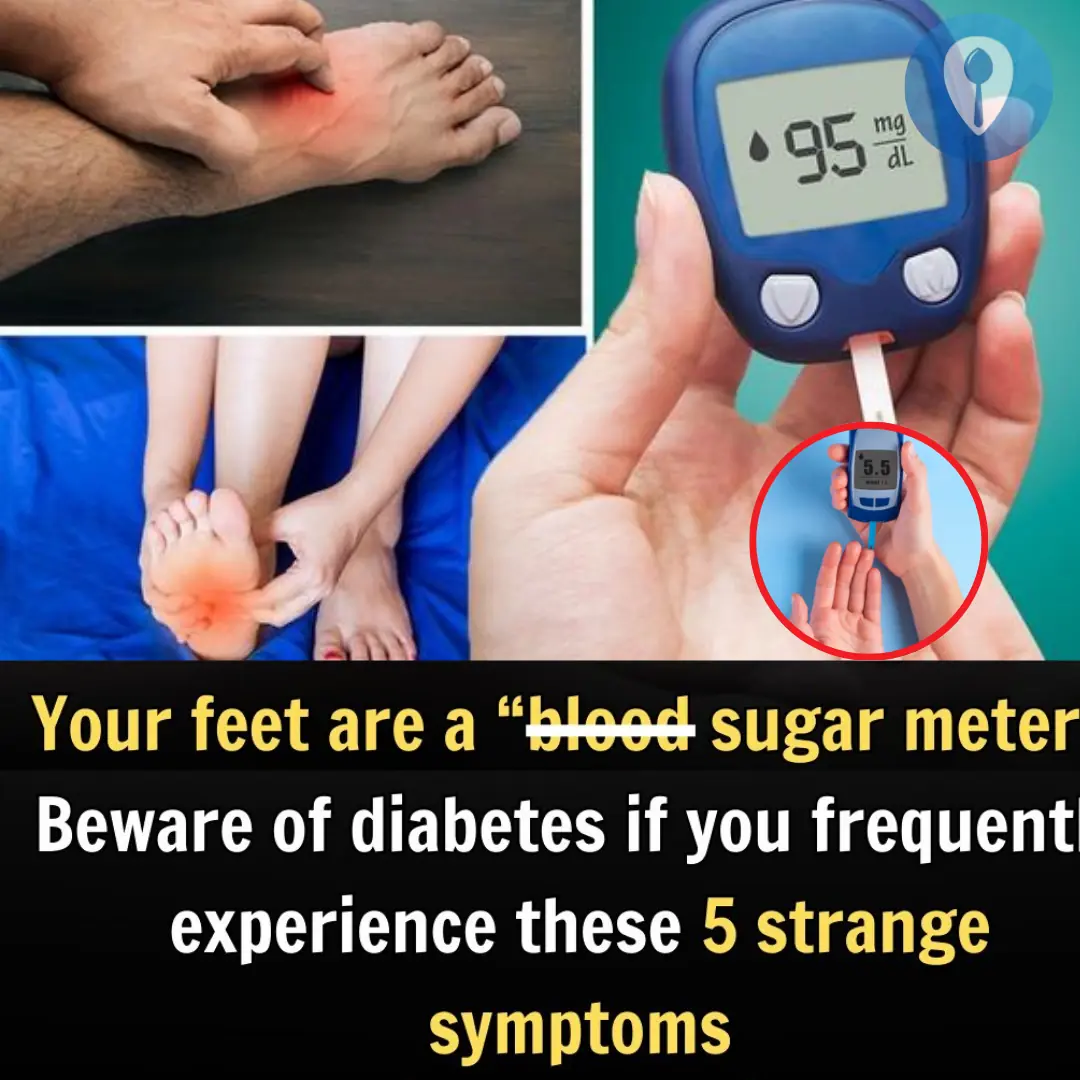
Your Feet Are a “Blood Sugar Meter” – 5 Strange Symptoms That May Signal Diabetes
Diabetes is a silent but dangerous disease that affects millions worldwide. While many people focus on blood sugar levels and diet, one of the most overlooked indicators of diabetes is found in your feet.
Your feet can reveal early warning signs of diabetes, helping you detect the condition before it worsens. If you frequently experience any of these five unusual foot symptoms, you should consult a doctor immediately.
1. Numbness or Tingling Sensation in Your Feet
A common but easily ignored sign of diabetes is numbness, tingling, or a “pins and needles” sensation in the feet.
🛑 Why Does This Happen?
- High blood sugar damages nerves (diabetic neuropathy), leading to reduced sensation.
- Many diabetics lose the ability to feel pain, heat, or injuries in their feet.
⚠️ What You Should Do:
If you frequently experience numbness or tingling, get your blood sugar levels checked immediately to prevent further nerve damage.
2. Burning or Sharp Pain in the Feet
Some people with diabetes experience burning, stabbing, or electric-shock-like pain in their feet.
🛑 Why Does This Happen?
- Nerve damage (neuropathy) can cause feet to feel burning hot, even when they are cool to the touch.
- Some diabetics also experience sharp, sudden pain that worsens at night.
⚠️ What You Should Do:
If you feel unexplained pain or burning in your feet, it may be a sign of nerve damage due to diabetes. Seek medical advice to prevent worsening symptoms.
3. Slow-Healing Sores or Wounds on Feet
If you notice that cuts, blisters, or sores on your feet take too long to heal, this could be a major red flag for diabetes.
🛑 Why Does This Happen?
- High blood sugar levels weaken the immune system, making it harder for wounds to heal.
- Poor circulation in diabetics reduces blood flow to the feet, leading to non-healing wounds or infections.
⚠️ What You Should Do:
Check your feet daily for cuts, blisters, or wounds, and if they take too long to heal, see a doctor immediately. Untreated foot wounds in diabetics can lead to severe infections and even amputation!
4. Dry, Cracked Skin on Feet
Having persistently dry, cracked, or peeling skin on your feet may be a sign of diabetes-related circulation issues.
🛑 Why Does This Happen?
- Diabetes affects the nerves that control sweat production, leading to excessive dryness.
- Cracked skin can lead to infections, as bacteria and fungi can easily enter.
⚠️ What You Should Do:
Keep your feet moisturized, but avoid applying lotion between toes (as it can lead to fungal infections). If cracks become deep or painful, seek medical help.
5. Unusual Foot Color Changes
If your feet start turning red, blue, or pale, this could indicate poor blood circulation due to diabetes.
🛑 Why Does This Happen?
- High blood sugar levels can damage blood vessels, causing reduced oxygen supply to the feet.
- Feet may turn red or dark blue due to poor circulation or infection.
⚠️ What You Should Do:
If you notice unexplained foot discoloration, consult a doctor immediately, as it could indicate severe diabetes complications.
Final Thoughts: Your Feet Can Reveal Hidden Signs of Diabetes!
Diabetes often develops silently, and many people don’t realize they have it until complications arise. By paying attention to your feet, you can detect early warning signs and take action before it’s too late.
💡 What Should You Do?
✔️ Monitor your feet daily for these five signs.
✔️ Maintain healthy blood sugar levels with a proper diet and exercise.
✔️ Get regular check-ups to prevent complications.
⚠️ If you experience even ONE of these symptoms frequently, consult a doctor immediately! Early detection can save you from serious complications.