Chapter: The Hidden Cause Behind Months of Abdominal Pain
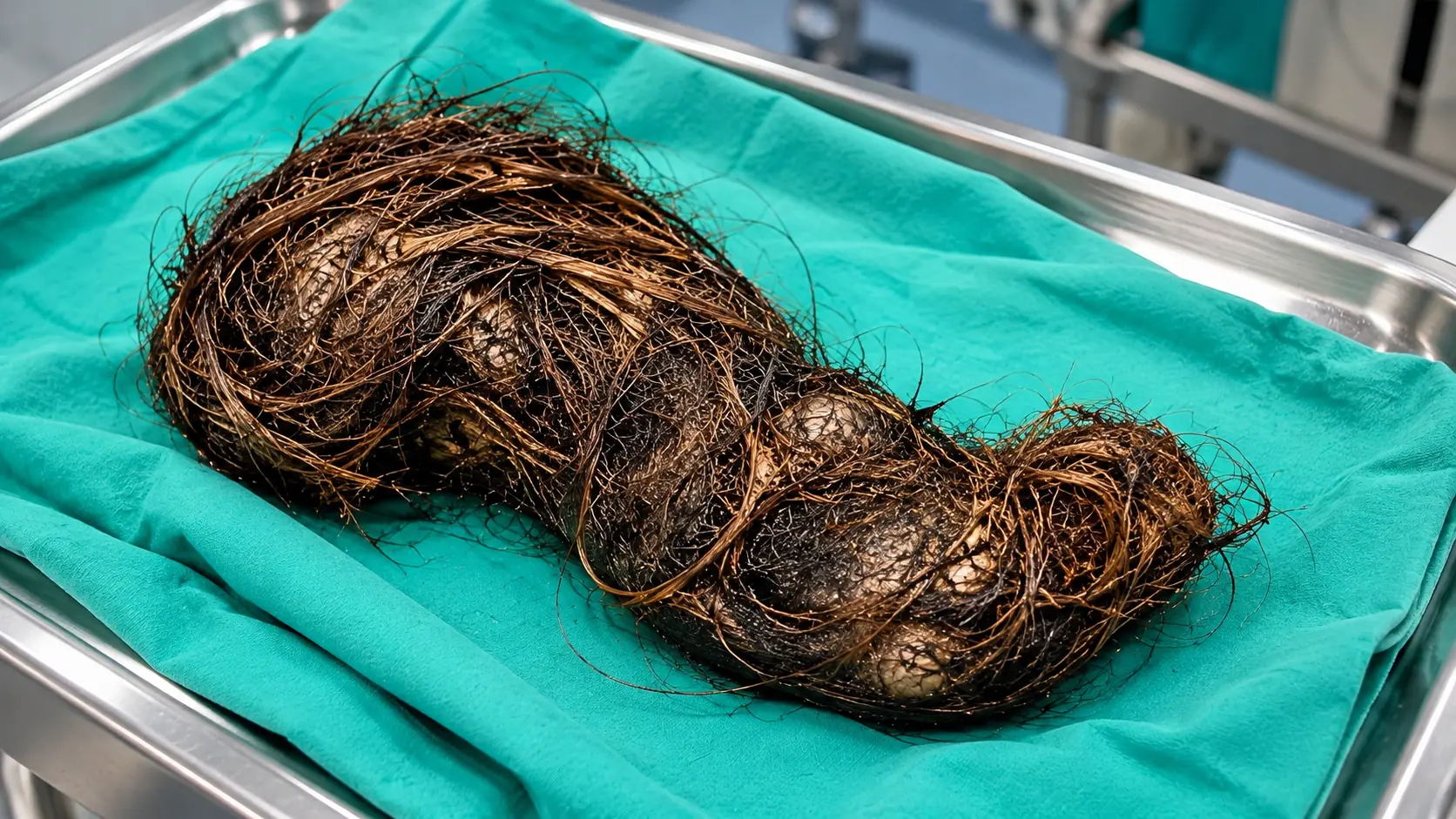
Months of abdominal discomfort can be frustrating, exhausting, and difficult to explain. A person may experience recurring pain, bloating, nausea, or a feeling of fullness without knowing what is causing the symptoms. At first, these problems may seem related to an ordinary digestive upset. When they continue, however, doctors may need to look beyond common explanations and investigate whether something is interfering with the normal movement of food through the digestive system.
One unusual possibility is a condition known as a trichobezoar, a compact mass made primarily of swallowed hair that accumulates in the stomach. The term may sound unfamiliar, but it describes a recognized medical problem. Hair is not digested in the same way as ordinary food. When it is repeatedly swallowed, it can remain in the stomach, where strands become tangled together and gradually form a dense mass. Over time, the mass may grow large enough to interfere with digestion.
A trichobezoar is one type of bezoar. A bezoar is a collection of material that accumulates in the digestive tract rather than passing through normally. Different types can contain different materials, including plant fibers or other indigestible substances. A trichobezoar specifically contains hair. The image accompanying this article resembles a tangled mass of hair-like fibers, but only medical examination and appropriate documentation could confirm what a particular specimen actually contains.
The stomach normally uses muscular contractions, digestive fluids, and coordinated movement to break down food and pass it into the small intestine. Hair behaves differently. Its structure makes it resistant to digestion, and loose strands can become trapped among one another. The stomach's movements may compact these strands instead of clearing them. If the behavior that introduces hair into the digestive system continues, the accumulation may become progressively larger.
Not every person who swallows a hair develops a bezoar. The condition is uncommon, and the risk depends on multiple factors, including repeated hair ingestion and individual circumstances. In some cases, a trichobezoar is associated with trichophagia, a behavior involving eating or swallowing hair. Trichophagia may occur alongside trichotillomania, a condition characterized by recurrent urges to pull out one's hair. However, these behaviors should not be assumed in any individual based solely on a photograph or a headline.
A person with a small bezoar may have few symptoms, while a larger one can produce persistent abdominal discomfort. Pain may be felt in the upper abdomen, particularly after eating, and some people may experience nausea, vomiting, bloating, reduced appetite, or early satiety—the feeling of becoming full after eating only a small amount. These symptoms are not unique to bezoars. Many common digestive disorders can cause similar complaints, which is why a clinical assessment is necessary.
As the mass grows, it may occupy space that would normally be available for food. It can also interfere with the stomach's ability to empty its contents effectively. Affected individuals may gradually reduce their food intake because meals trigger discomfort or fullness. In some cases, this can contribute to weight loss, nutritional deficiencies, or weakness. The impact depends on the size and location of the mass, how long it has been present, and whether complications have developed.
The difficulty is that the early symptoms may be vague. Abdominal pain can result from constipation, gastritis, reflux, food intolerance, ulcers, gallbladder disease, or many other causes. A person might try changing meals, taking over-the-counter remedies, or simply waiting for the discomfort to disappear. Although mild digestive symptoms often settle on their own, ongoing or worsening pain deserves attention rather than indefinite self-treatment.
Doctors generally approach persistent abdominal pain by taking a medical history, examining the abdomen, and deciding whether tests are needed. They may ask about the duration and location of pain, eating patterns, nausea, vomiting, bowel movements, weight changes, medication use, and relevant medical history. Questions about hair pulling or hair swallowing may be appropriate when there is a reason to suspect a trichobezoar, but they should be asked respectfully and without judgment.
Imaging or an endoscopic examination may help identify an abnormal mass in the stomach. The choice of test depends on the person's symptoms and the suspected diagnosis. In some situations, the mass is discovered only after further investigation or during a procedure performed to treat the problem. This possibility explains why an unusual cause can remain unrecognized for a period of time, but it does not mean that months of pain always indicate a hidden bezoar.
The key lesson is that prolonged abdominal pain has many potential causes. A trichobezoar is rare, but it is an important example of why persistent digestive symptoms should be evaluated carefully. A dramatic image may attract attention, yet the most useful information comes from a proper diagnosis, an understanding of the underlying behavior or medical factors, and treatment tailored to the individual.
Chapter: How a Hair Mass Can Affect the Digestive System
A trichobezoar does not necessarily cause severe symptoms immediately. Its effects depend on how much material has accumulated, where it sits, and whether it obstructs the movement of food. A mass may develop gradually, allowing the digestive system to adapt for a time. Eventually, however, its size or position may interfere with normal stomach function and make symptoms more noticeable.
One early problem can be early satiety. A person may feel full after only a few bites because the mass occupies part of the stomach. Meals that were previously comfortable may begin to produce pressure, bloating, or nausea. The person may start eating smaller portions without understanding why. If the pattern continues, reduced food intake may affect energy levels and nutritional status.
Another possible symptom is nausea, sometimes accompanied by vomiting. When stomach contents do not move onward as expected, food and fluid can remain in the stomach longer than usual. This may increase discomfort, especially after meals. Persistent vomiting can lead to dehydration and electrolyte disturbances, which may require urgent medical treatment. Vomiting that contains blood, resembles coffee grounds, or occurs with severe abdominal pain should be assessed urgently.
A larger mass can also contribute to an obstruction. The degree of blockage varies, and not every trichobezoar produces a complete obstruction. Nevertheless, obstruction can become a serious complication because it interferes with the normal passage of digestive contents. Symptoms may include worsening pain, abdominal swelling, repeated vomiting, and an inability to tolerate food or fluids. These signs should not be managed at home without medical assessment.
In some cases, the pressure and irritation associated with a large bezoar may damage the stomach lining. Ulceration or bleeding can occur, although these complications are not inevitable. A person may develop anemia if bleeding is prolonged, or experience increasing weakness if nutrition has been compromised. Rarely, severe complications such as perforation of the digestive tract can occur. These outcomes are serious and require prompt specialist care.