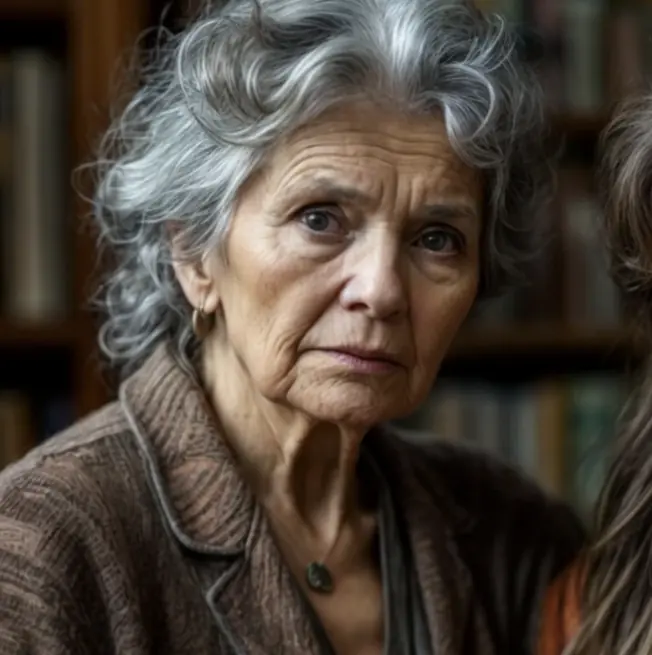
From the day Elena married into the family, she tried her best to be respectful, kind, and helpful. She believed that entering her husband’s home was like entering a new world—a world she wanted to fit into gracefully. But her mother-in-law, Vera, never welcomed her. The older woman carried bitterness like perfume, strong and lingering in every word. She criticized Elena’s cooking, questioned her choices, and often referred to her as “the girl” instead of using her name.
At first, Elena endured it patiently. She believed that kindness would eventually soften hearts. Each morning, she woke early to clean the house before work. She prepared dinner every evening. She saved money quietly to help with bills. She asked for nothing in return. She hoped her efforts would prove her worth.
But resentment grew like vines around her heart.
Her husband, Ivan, was a quiet man. He rarely defended her, choosing silence over confrontation. “She’s just old-fashioned,” he would say. “Ignore her.” But ignoring cruelty doesn’t erase it—it only allows it to grow.
One afternoon, after a long day at work, Elena returned home to find her mother-in-law gossiping loudly in the living room with two neighbors. They sat sipping tea, their words floating through the air like cold wind.
“She doesn’t contribute anything,” Vera said. “She just lives here and eats like a freeloader. If it wasn’t for my son, she’d be on the street.”
Elena froze at the doorway. The neighbors looked uncomfortable, but no one spoke up. She walked silently to her room, her heart pounding. Tears pushed at her eyes, but she refused to cry in front of them. She closed the door and sat on the bed, shaking from the humiliation. The word freeloader echoed in her head. She had spent years trying to belong—and was still treated like an intruder.
That night, she confronted her husband. He listened quietly. When she said she couldn’t bear it anymore, he sighed and replied, “I understand, but it’s just her way. Try not to take it personally.” She felt something break inside her. If even her husband didn’t see her pain—who would?
Days passed with heavy silence. Elena spoke less. Smiled less. She still cooked and cleaned—but hope had left her heart. She began to think about life outside this house. A life where she could breathe freely. Where her name wasn’t forgotten. Where respect wasn’t something she had to earn over and over again.
One evening, her mother-in-law’s anger exploded again. Elena had misplaced a receipt. A simple mistake. But Vera turned it into an insult riot.
“You’re nothing but a freeloader!” she screamed. “You don’t belong here. You never did!”
That word. Again. This time, it lit a fire.
Elena stood calmly. She didn’t shout back. She didn’t cry. Instead, she walked to her room and opened the drawer under the bed. Inside was a folder containing the apartment documents. Few knew this—months ago, when Vera wanted to sell the apartment, she asked Elena to help organize all the papers. Elena had kept them safe, intending to return them. But now… things were different.
She packed a small suitcase. Took the documents. And left the house quietly—without anger, without tears.
She found a temporary place to stay with a friend named Marina. The next morning, she went to a lawyer’s office. She explained everything: the marriage, the insults, the papers. And then came the revelation—the apartment, according to the documents, was actually registered under Elena and Ivan’s joint names. Vera had signed it over years ago to avoid taxes, not realizing the legal consequences.
Suddenly, everything shifted.
Elena still loved her husband—but she could no longer live in a home built on disrespect. The lawyer suggested a separation agreement. Ivan visited her days later—confused, panicked. He begged her to return. She told him softly, “I begged for respect. You gave me silence.” Those words made him cry.
Then he said something surprising: “I’ll move out too. We’ll live somewhere new—just us.” For the first time in years, he stood up for her. But her heart needed more time to heal.
Meanwhile, Vera realized the mistake she had made. She lost not only control—but the apartment itself. She tried to contact Elena, but her calls went unanswered.
Weeks passed. Elena rented a small but peaceful apartment under her own name. She decorated it slowly. A plant on the windowsill. A table for two. Books she finally had time to read. For the first time in years, the silence in her home felt peaceful—not painful.
One day, Ivan knocked on her door. He held flowers. But most importantly—he held sincerity in his eyes. They spoke honestly for hours. He apologized—not just with words but with understanding. He admitted his fear of conflict had cost them their happiness.
They didn’t rush. They didn’t make promises. But they began anew—gently, slowly, respectfully. Both cautious, both hopeful.
Months later, Elena visited her old street. She saw Vera standing by the window—older somehow, lonelier too. Their eyes met. Vera opened her mouth to speak—but Elena simply nodded politely and walked on. Not with bitterness—but with closure.
And that night, as Elena lit a candle in her quiet apartment, she finally understood something: leaving was not the act of giving up—it was the act of reclaiming her dignity.
She was never a freeloader. She had always been someone who gave love freely. Now, she had finally found a place where love could return to her, too.
And this time—no one would dare call her anything less than worthy.