Finding a snake in your yard can be unsettling, especially if you have children, pets, or frequently spend time outdoors. It's natural to look for simple ways to make your property less attractive to snakes.
You may have heard that certain strong smells can "repel" snakes. Some scents are commonly used in homemade deterrent recipes, but it's important to understand that no household scent is guaranteed to keep snakes away. Scientific evidence for many popular snake-repellent scents is limited, and effectiveness can vary by species, environment, weather, and how the product is used.
In most cases, the best long-term strategy is not simply making your yard smell unpleasant. It is removing the things that attract snakes in the first place, such as rodents, dense vegetation, standing water, and hiding places.
Still, if you're looking for household scents that may make certain areas less appealing to snakes, here are 10 commonly discussed options and how to use them responsibly.
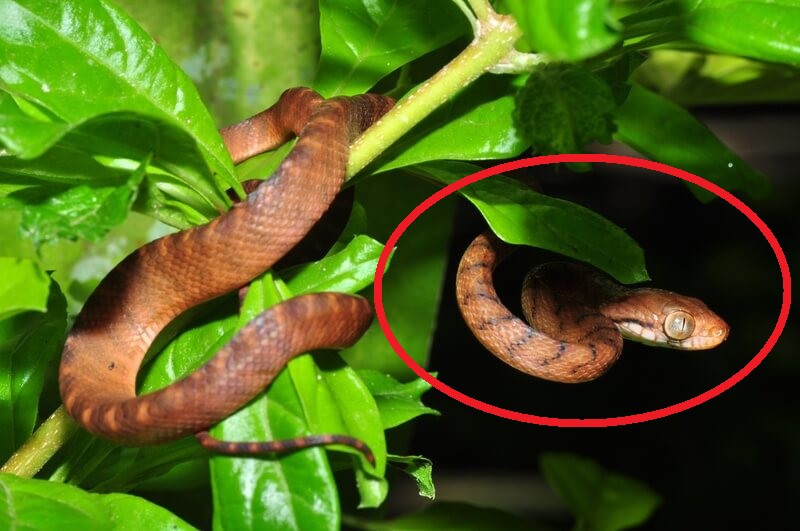
Why Do Snakes Enter Yards?
Before talking about scents, it helps to understand why snakes visit residential properties.
Snakes don't usually enter yards because they want to interact with people. They're typically looking for one or more basic resources:
-
Food
-
Water
-
Shelter
-
Suitable temperatures
-
Places to hide
-
Areas where they can hunt
A yard with mice, rats, frogs, insects, thick vegetation, wood piles, or piles of debris can become attractive habitat.
This means that habitat management is generally more reliable than trying to overwhelm a snake's sense of smell.
If your yard provides food and shelter, a scented product may not make much difference.
1. Peppermint
Peppermint has a powerful aroma caused by compounds such as menthol and menthone.
It's frequently mentioned in homemade pest-deterrent recipes because many people find the smell intense.
Some homeowners place peppermint-scented materials around areas where they don't want pests.
How people use it
You can use a commercially prepared peppermint-based product according to its label or place a small amount of a suitable scent source near areas you want to make less attractive.
Avoid spraying concentrated essential oils directly onto plants or around pets without checking safety information first.
Important note
Peppermint should be considered a possible deterrent, not a proven snake barrier.
2. Cinnamon
Cinnamon has a strong, distinctive aroma and is commonly included in DIY pest-control mixtures.
Its scent comes largely from compounds such as cinnamaldehyde.
Some commercial pest products use strong botanical odors to discourage animals from entering particular areas.
A practical approach
Rather than scattering large quantities of cinnamon throughout your yard, use commercially formulated products according to their instructions.
Rain and outdoor exposure can quickly reduce the strength of any scent.
3. Clove
Cloves have an intense aroma due largely to eugenol, a naturally occurring compound.
Because the smell is strong, cloves are sometimes included in homemade pest-deterrent mixtures.
If you want to experiment with clove-based scents, use them around specific areas rather than trying to cover the entire yard.
Again, effectiveness against snakes isn't guaranteed.
4. Garlic
Garlic contains sulfur-containing compounds responsible for its characteristic odor.
Strong garlic smells are often recommended online as a natural way to discourage snakes and other unwanted animals.
You can use garlic as part of a garden-management strategy, but don't assume that placing garlic around the property creates an invisible barrier.
A better approach
If you're growing garlic in your garden, enjoy it as a useful crop rather than relying on it as your primary snake-control method.
For a persistent snake problem, focus on removing hiding places and food sources.
5. Onion
Onions, like garlic, contain sulfur-containing compounds that create their characteristic smell.
Some homemade pest-repellent recipes use onion or onion-based mixtures because of their strong odor.
However, there is limited evidence that simply placing onions around a yard will reliably prevent snakes from entering.
Outdoor smells also disappear quickly due to:
-
Rain
-
Sunlight
-
Wind
-
Soil
-
Microbial activity
If you're using an odor-based deterrent, it may need frequent replacement, and results can be inconsistent.
6. Vinegar
White vinegar has a strong acidic smell and is frequently suggested as a household pest deterrent.
However, vinegar isn't a proven snake-repellent solution.
If you use vinegar for other household purposes, remember that it should be handled carefully and should not be mixed with incompatible cleaning chemicals.
Important garden warning
Don't assume that spraying concentrated vinegar throughout your yard is harmless.
Acetic acid can damage plants and soil organisms when used improperly.
If you're trying to protect a garden, avoid indiscriminate spraying.
7. Citrus Scents
Lemon, orange, and other citrus scents are popular in many household pest-control recipes.
The essential oils found in citrus peels contain compounds that create strong aromas.
You can use citrus peels around appropriate outdoor areas as a low-cost experiment, but they shouldn't be treated as a guaranteed snake barrier.
They also break down relatively quickly outdoors.
If you're using citrus peels, replace them when they become moldy or decomposed.
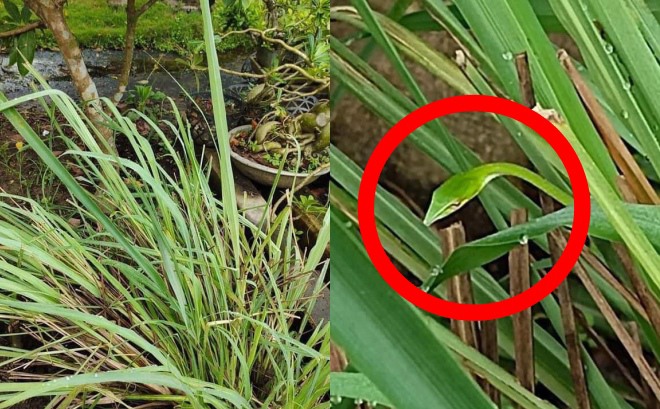
8. Lemongrass
Lemongrass has a strong citrus-like aroma and contains aromatic compounds such as citral.
It is commonly grown as an ornamental or culinary plant and is sometimes promoted online as a snake-repelling plant.
There is not strong evidence that simply growing lemongrass will reliably prevent snakes from entering a yard.
Still, it can be a useful landscaping plant if it grows well in your climate.
Think of it as part of a pleasant garden rather than a guaranteed snake-control device.
9. Eucalyptus
Eucalyptus has a strong aromatic scent largely associated with compounds such as eucalyptol.
Eucalyptus-based products are sometimes marketed for pest deterrence.
If you're considering eucalyptus essential oil, remember that concentrated essential oils can be harmful to pets and people if misused.
Don't spray concentrated oils directly on animals, food surfaces, or areas where children or pets can easily contact them.
Always follow the product's safety instructions.
10. Ammonia-Like Odors
Ammonia is sometimes recommended online as a snake deterrent because of its strong smell.
However, this is one method that deserves particular caution.
Ammonia is not a harmless household fragrance.
Its fumes can irritate the eyes, nose, throat, and respiratory system.
It should never be used casually around pets, children, or enclosed spaces.
Most importantly:
Never mix ammonia with bleach.
That combination can produce dangerous gases.
Because of the safety concerns, ammonia is not a method I'd recommend as a casual DIY snake-control solution.
Do These Scents Actually Repel Snakes?
This is the most important question.
The internet is full of claims that snakes "hate" certain smells.
But the scientific evidence is much less straightforward.
Snakes have a highly developed chemical-sensing system. They use their tongues to collect chemical particles and transfer them to the Jacobson's organ, also called the vomeronasal organ.
This allows them to detect chemical information in their environment.
However, detecting a strong smell doesn't necessarily mean a snake will turn around and leave.
A hungry snake looking for prey may tolerate an unpleasant odor if the area provides food or shelter.
That's why repellent scents should not be considered a guaranteed solution.
The Bigger Problem: Your Yard May Be Providing Food
If you repeatedly see snakes around your home, ask yourself:
Why are they here?
Snakes often follow their food.
Depending on the species, that food may include:
-
Mice
-
Rats
-
Frogs
-
Lizards
-
Insects
-
Small birds
-
Eggs
If your yard has a significant rodent population, eliminating the rodents may be more effective than trying to make the entire property smell unpleasant.
How to Make Your Yard Less Attractive to Snakes
This is where the biggest improvements can often come from.
1. Control Rodents
Store pet food securely.
Keep garbage containers closed.
Clean up spilled birdseed.
Seal gaps around buildings.
Reduce places where rodents can nest.
A property with fewer rodents may provide less food for predatory snakes.
2. Remove Hiding Places
Snakes like sheltered areas where they can hide and regulate their temperature.
Remove or organize:
-
Wood piles
-
Stacks of lumber
-
Loose boards
-
Garden debris
-
Rock piles
-
Unused containers
-
Thick piles of leaves
Keep firewood elevated and away from the house when practical.
3. Keep Grass and Vegetation Managed
Tall grass and dense vegetation can provide cover for both snakes and their prey.
Regularly maintain:
-
Lawns
-
Garden edges
-
Shrubs
-
Overgrown areas
You don't need to turn your property into a perfectly bare landscape.
The goal is simply to reduce excessive hiding places near areas where people spend time.
4. Remove Standing Water
Water can attract frogs, insects, and other animals that may become prey for snakes.
Check for:
-
Leaking outdoor faucets
-
Buckets
-
Old containers
-
Unused pools
-
Poorly draining areas
-
Water collecting under equipment
If you have a pond, understand that completely removing water may not be practical. Instead, focus on managing vegetation and nearby hiding areas.
5. Seal Gaps Around Your Home
A snake doesn't need a large opening to enter a structure.
Inspect areas around:
-
Doors
-
Windows
-
Pipes
-
Vents
-
Foundations
-
Garages
-
Crawl spaces
Use appropriate materials to seal gaps.
Pay particular attention to spaces near the ground.
6. Keep Doors Closed
This sounds obvious, but garage doors and exterior doors can provide easy access.
Don't leave garage doors open unnecessarily, especially overnight.
Check weather stripping around doors and replace damaged seals.
7. Consider Physical Barriers
If snakes are a persistent problem, physical exclusion can be much more reliable than scent-based methods.
Snake-proof fencing may be appropriate around certain areas.
Effective barriers typically require careful installation, including attention to:
-
Mesh size
-
Fence height
-
Buried edges
-
Gates
-
Gaps
-
Vegetation touching the barrier
The exact design should depend on the snake species you're dealing with.
Are Mothballs a Good Snake Repellent?
You may have heard that mothballs can keep snakes away.
This is a common internet recommendation, but it's a bad idea.
Mothballs contain pesticides designed for specific uses, such as controlling clothes moths in appropriate enclosed settings.
They are not a safe general-purpose snake repellent.
Scattering mothballs around your yard can expose:
-
Children
-
Pets
-
Wildlife
-
Soil
-
Water
to pesticide chemicals.
Don't use mothballs outdoors as a DIY snake-control method.
What About Essential Oils?
Essential oils are highly concentrated substances.
Peppermint, cinnamon, clove, and eucalyptus oils may have strong odors, but "natural" does not mean harmless.
Some essential oils can be toxic to pets, particularly cats and certain small animals.
Potential risks include:
-
Skin irritation
-
Respiratory irritation
-
Poisoning if swallowed
-
Eye irritation
If you have pets or children, read the product label carefully and avoid applying concentrated oils where they can come into contact with them.
What Should You Do If You See a Snake?
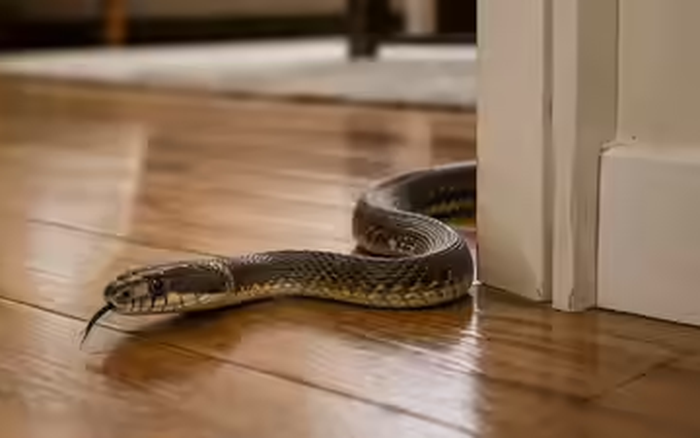
The safest approach is usually to keep your distance.
Don't:
-
Try to grab it
-
Kick it
-
Corner it
-
Hit it with a stick
-
Attempt to identify it by getting close
Even a snake that appears harmless can bite if threatened.
Keep children and pets away from the area.
If the snake is inside your home or in a location where people cannot safely avoid it, contact a qualified local wildlife professional or animal-control service.
What If You Don't Know Whether the Snake Is Venomous?
Don't take unnecessary risks trying to identify it from close range.
Snake species vary significantly by region.
A safe rule is:
If you cannot confidently identify the snake from a safe distance, treat it as potentially dangerous.
Do not attempt to capture it for identification.
A photograph taken from a safe distance may be useful for a qualified local expert, provided you can take it without approaching the snake.
What If Someone Is Bitten?
A suspected snake bite should be treated as a medical emergency, particularly if the species is unknown.
Move away from the snake and seek emergency medical care.
Do not:
-
Cut the wound
-
Suck out venom
-
Apply a tourniquet
-
Apply ice directly
-
Try to capture the snake
-
Consume alcohol as a "treatment"
If it can be done safely, remember what the snake looked like from a distance. But don't risk another bite trying to identify or capture it.
A Better Strategy Than Relying on Scents
If your goal is to make your property less attractive to snakes, think about the 3 things snakes need most:
Food
Reduce rodents and other potential prey.
Shelter
Remove excessive debris and hiding places.
Access
Seal gaps and consider physical barriers where appropriate.
This approach addresses the reason snakes are coming to your property rather than simply attempting to mask the environment with strong smells.
A Simple Yard Checklist
Walk around your property and look for:
☐ Rodent activity
☐ Open garbage containers
☐ Pet food left outside
☐ Birdseed scattered on the ground
☐ Wood piles
☐ Rock piles
☐ Dense vegetation
☐ Tall grass
☐ Standing water
☐ Gaps under doors
☐ Open crawl spaces
☐ Damaged foundation seals
☐ Outdoor clutter
Fixing these issues can make your property less attractive to snakes and the animals they prey upon.
The Bottom Line
There are many household scents commonly promoted as snake deterrents, including peppermint, cinnamon, clove, garlic, onion, vinegar, citrus, lemongrass, and eucalyptus.
However, the evidence that these scents reliably repel snakes is limited.
They should not be treated as a guaranteed barrier.
If you want to reduce snake encounters, the more dependable strategy is to make your property less attractive by controlling rodents, removing hiding places, managing vegetation, eliminating standing water, and sealing openings around your home.
And be especially careful with homemade mixtures and concentrated chemicals. Never use mothballs as an outdoor snake repellent, and never mix bleach with ammonia or vinegar.
Final Thoughts
A strong smell may seem like an easy solution when you're worried about snakes, but preventing access and reducing available food and shelter is usually a smarter long-term approach.
Use household scents only as a supplementary measure if you choose to experiment with them, and always consider the safety of children, pets, plants, and wildlife.
Most importantly, if you encounter a snake, don't try to handle it yourself.
Give it space, keep people and pets away, and contact an appropriate local wildlife professional when necessary.
A snake-free yard isn't about finding one magical scent—it's about making your property less attractive and less accessible in the first place.