Diabetes can affect many parts of the body, but the feet often show the earliest warning signs. Since high blood sugar impacts circulation and nerves, foot problems can develop over time. Recognizing these symptoms of diabetes early can help prevent serious complications. Here are eight signs to watch for.
Advertisement1. Burning or Sharp Pain
 Source: Shutterstock
Some people with diabetes feel sharp or burning pain in their feet, even when resting. This happens when damaged nerves send incorrect pain signals. The discomfort may come and go or worsen at night. If simple touches or light pressure feel painful, nerve damage could be advancing. Managing blood sugar levels can help slow its progression.
2. Cold Feet Despite Warm Weather
 Source: Shutterstock
Poor circulation can make your feet feel cold, even when the rest of your body is warm. Diabetes can narrow blood vessels, reducing blood flow to the lower extremities. While occasional cold feet are normal, persistent chilliness may indicate circulation issues. Wearing warm socks and moving regularly can help improve blood flow.
3. Numbness or Tingling
 Source: Shutterstock
A constant tingling or loss of feeling in your feet may be a sign of nerve damage. Diabetes can cause peripheral neuropathy, which reduces sensation over time. If left untreated, numbness can make it harder to notice cuts or injuries, increasing the risk of infection. If you frequently experience this sensation, check your feet daily for unnoticed wounds.
4. Frequent Foot Cramps
 Source: Shutterstock
Painful cramps in the feet or lower legs may be linked to poor circulation. Muscles need oxygen-rich blood to function properly. When circulation is weak, feet and legs may cramp more often, especially at night. Stretching and gentle movement can help, but persistent cramps may signal an underlying issue that needs medical attention.
5. Slow-Healing Wounds or Sores
 Source: Shutterstock
A small cut that takes weeks to heal is a red flag symptom of diabetes. High blood sugar slows the body’s ability to repair itself, making infections more likely. Untreated wounds or sores can develop into ulcers. These open sores form due to poor circulation and slow healing. If left untreated, ulcers can lead to severe infections. Regular foot exams and proper wound care can help prevent complications.
6. Changes in Skin Color
 Source: Shutterstock
Dark patches, redness, or a bluish tint in your feet can indicate circulation issues or skin infections. Poor blood flow deprives the skin of oxygen, leading to discoloration. If you notice unusual changes in your foot color, it’s important to see a doctor. Early treatment can prevent further complications.
7. Dry or Cracked Skin
 Source: Shutterstock
Diabetes can reduce the body’s ability to retain moisture, leading to dry, cracked skin on the feet. This can cause itching, peeling, or deep cracks that allow bacteria to enter. Keeping feet moisturized helps prevent infection, but avoid applying lotion between the toes, as excess moisture can encourage fungal growth.
8. Swelling in the Feet or Ankles
 Source: Shutterstock
Swollen feet and ankles may be a sign of fluid retention or poor circulation. Diabetes can weaken blood vessels, making it harder for the body to move fluids efficiently. Mild swelling can improve with elevation and movement, but sudden or severe swelling requires medical attention and could be a symptom of diabetes.
9. Fungal Infections
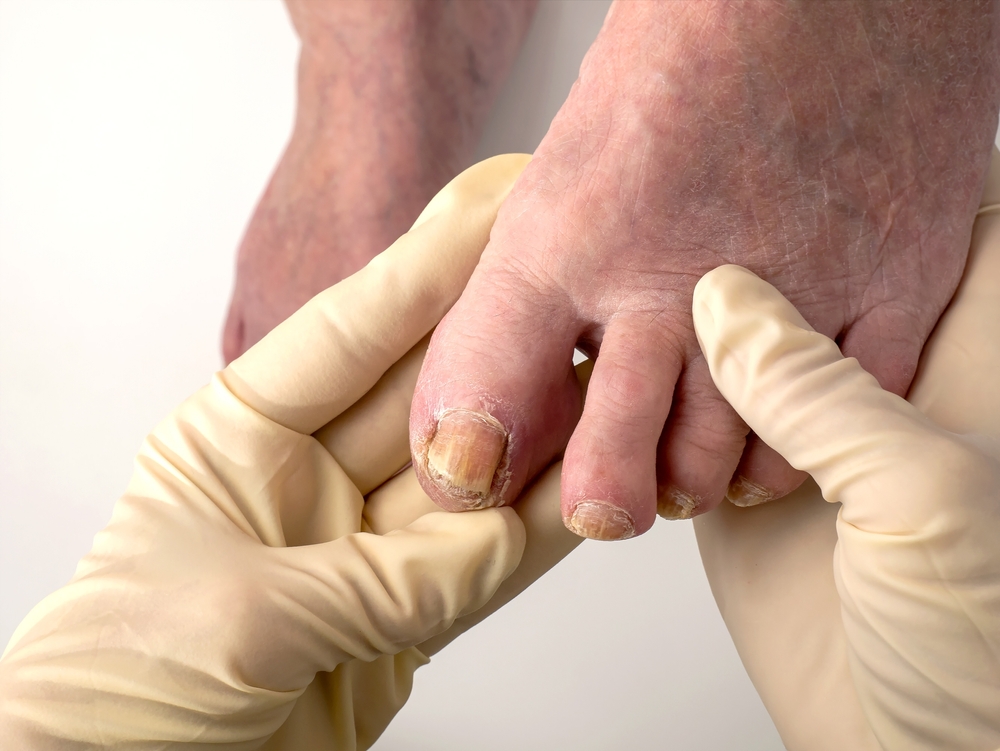 Source: Shutterstock
People with diabetes are more prone to fungal infections, especially in the toenails. Yellow, thickened, or brittle nails can indicate an infection. Fungal infections can be stubborn, requiring prescription treatment or antifungal creams. Keeping feet clean and dry reduces the risk.
10. Foot Deformities
 Source: Shutterstock
Long-term nerve damage can lead to changes in foot shape. Some people with diabetes develop hammertoes or claw toes. These deformities can make walking painful and increase the risk of pressure sores. Proper footwear and regular foot exams can help prevent worsening conditions.
Tips for Protecting Your Feet
 Source: Shutterstock
Taking care of your feet can prevent serious problems. Follow these tips:
- Inspect your feet daily for cuts, blisters, or swelling.
- Keep feet clean and dry, especially between the toes.
- Moisturize to prevent dryness, but avoid lotion between the toes.
- Wear comfortable, well-fitted shoes to reduce pressure points.
- Trim toenails straight across to prevent ingrown nails.
- Control blood sugar levels to protect circulation and nerves.
- See a podiatrist for regular foot exams.
When to See a Doctor
 Source: Shutterstock
Ignoring these symptoms can lead to severe foot problems, including infections and ulcers. If you notice any of these signs, schedule a check-up. Managing blood sugar and practicing daily foot care can help prevent complications. Keeping your feet healthy starts with awareness and early action. Recognizing symptoms of diabetes in your feet can help you take control of your health before serious issues develop.