How to Tell If a Brown Avocado Is Still Safe to Eat: The Signs You Should Never Ignore
You cut open an avocado expecting smooth, creamy green flesh. Instead, you find dark streaks, brown patches, or strange-looking strings running through the middle. For a moment, you wonder whether the fruit has gone bad. Should you throw it away—or is it still perfectly good to eat?
It is a familiar kitchen dilemma, especially when avocados are expensive and seem to go from firm to overripe almost overnight. The surprising truth is that brown avocado flesh is not automatically spoiled. Some discoloration is simply a natural reaction to air, while other changes may point to bruising, overripeness, or decay.
The photograph accompanying this article shows an avocado with extensive dark internal streaks and uneven, discolored flesh. That appearance deserves a closer look, but color alone cannot establish whether the fruit is safe. The texture, smell, moisture, and presence of mold all matter.
In this guide, we will look at what causes an avocado to turn brown inside, how to distinguish ordinary discoloration from signs of spoilage, and when it is sensible to discard the fruit. We will also explain how to choose, store, and cut avocados so that fewer end up wasted.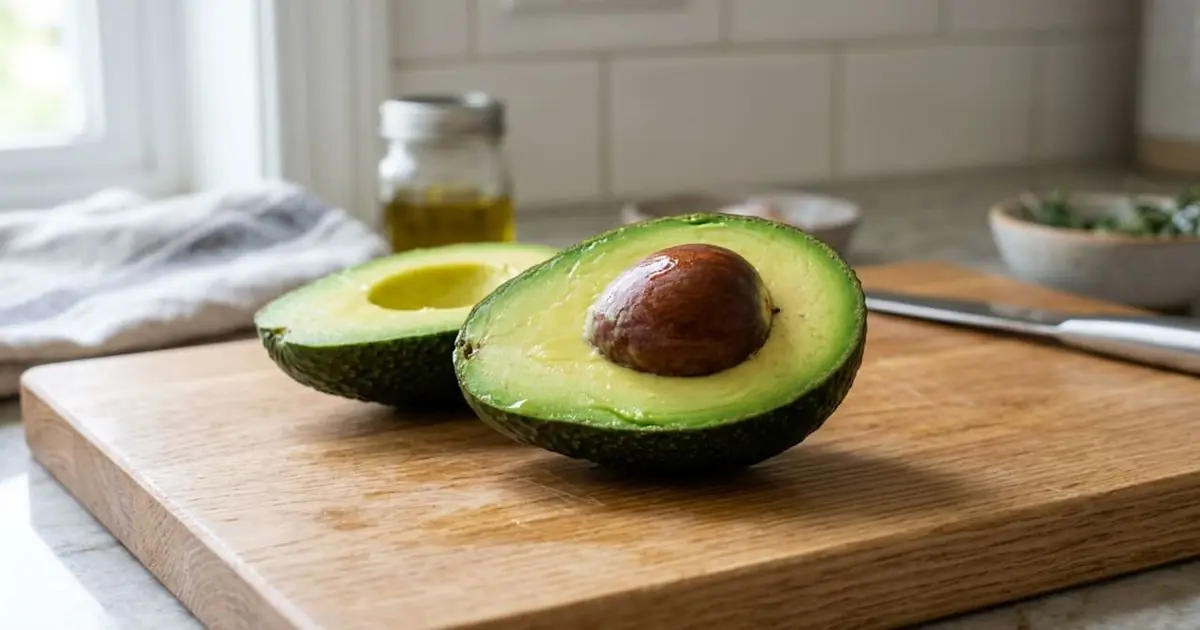
1. Start With the Texture: The Gentle Squeeze Test
One of the most useful ways to judge an avocado is to feel how firm it is. However, there is a right way to do this. Pressing hard with your fingertips can bruise the delicate flesh beneath the skin, creating dark marks that may only become obvious after the fruit is cut open.
Instead, place the avocado in the palm of your hand and gently close your fingers around it. Apply light, even pressure rather than pressing one small spot.
-
Rock hard: The avocado is probably unripe. It needs more time at room temperature before it becomes pleasant to eat.
-
Firm with a little give: It may be approaching ripeness. Check it again the following day.
-
Slightly soft under gentle pressure: This is usually the ideal stage for slicing, spreading, or adding to a salad.
-
Very soft but still holding its shape: It may be fully ripe and suitable for mashing, guacamole, or a smoothie.
-
Mushy, collapsing, or wet in several areas: It may be overripe or beginning to spoil. Cut it open and check the flesh, smell, and texture before deciding.
A little softness does not automatically mean that an avocado has gone bad. Ripe avocados naturally become softer as their flesh changes. The important distinction is between a fruit that is soft because it is ripe and one that has become watery, slimy, or unpleasant because it is deteriorating.
The test should also be gentle. Repeatedly squeezing an avocado at the grocery store can damage it and make it harder for the next person to judge its condition. If you have already bought it, check it once a day as it ripens rather than pressing it over and over.
2. Do Not Rely on Skin Color Alone
Many shoppers assume that a dark avocado is ripe and a green one is not. That can be a useful clue for some varieties, but it is not a universal rule.
Hass avocados often become darker as they ripen, changing from green to deep green, purplish, or nearly black. Other varieties can remain green even when the flesh is ready to eat. Reed avocados, for example, are known for retaining their green skin when ripe.
This is why judging an avocado by color alone can lead to disappointment. A green avocado may be perfectly ripe, while a dark one may be bruised, overripe, or damaged.
Look at the skin together with firmness and the condition of the fruit around the stem. Avoid fruit with large sunken areas, leaking liquid, extensive soft patches, or visible mold.
A small surface mark is not necessarily a reason to reject an avocado. The skin can have natural blemishes, scratches, or variations in color. What matters is whether the fruit feels sound and whether there are signs of deeper damage.
The avocado in the supplied photograph has been cut open, so the outside color cannot tell us much about its condition. The dark lines inside are more important. They appear to run through the flesh in a branching pattern, which can be consistent with internal vascular browning. This is a quality defect that can occur during handling or storage, but a photograph alone cannot establish its cause or determine food safety.
3. Understand What Brown Avocado Flesh Actually Means
Brown flesh is the reason many people throw away avocados that might still be usable. Yet browning can happen for several different reasons, and those causes should not be treated as identical.
Ordinary enzymatic browning
When an avocado is cut, its inner flesh is exposed to oxygen in the air. Enzymes in the fruit react with naturally occurring compounds, producing brown pigments. This process is known as enzymatic browning.
It is similar to what happens when a cut apple or banana darkens after being left on a plate. The color change can make the food look less appealing, but it does not automatically mean that the food has spoiled.
If the avocado was fresh when cut and the brown color developed on the exposed surface, the discoloration is often simply oxidation. The flesh underneath may remain creamy and pleasant.
A thin brown layer on an otherwise normal avocado can usually be scraped away if you prefer the greener portion. The remaining flesh should still be checked for an unpleasant odor, mold, or an unusual texture.
Bruising inside the fruit
An avocado can be bruised before it reaches your kitchen. It may have been dropped, squeezed too firmly, packed under heavy produce, or handled roughly during transport.
Bruising can produce brown, gray, or dark patches beneath the skin. These areas may be concentrated in one section rather than spread evenly across the fruit.
The damaged portion may taste bitter or have a softer texture than the surrounding flesh. If the discoloration is limited and the rest of the avocado looks and smells normal, you can remove the affected section and inspect what remains.
However, extensive bruising can make the fruit unpleasant to eat and may be accompanied by other signs of deterioration. When the flesh is broadly damaged, wet, or smells wrong, discarding it is the safer and more sensible choice.
Internal vascular browning
The supplied image is particularly interesting because the dark marks appear as long, branching lines rather than a simple brown layer on the surface.
Avocado flesh contains vascular bundles—tiny transport tissues that carry water and nutrients through the fruit as it develops. When these structures become discolored, they can appear as brown or dark strands running through the flesh.
This condition is often called vascular browning. It is recognized as an internal quality defect in avocado handling and produce guidance. It can be associated with problems in storage or handling, including unsuitable temperature conditions and extended time in the supply chain.
The strands may look alarming, especially when they are dark and widespread. But their appearance alone does not prove that the avocado is contaminated or unsafe. It does, however, indicate that the fruit may not have the quality expected of a fresh, creamy avocado.
If the flesh around the strands is otherwise firm, has a normal smell, and shows no mold or signs of decay, the issue may be primarily one of quality. If the fruit also has a sour odor, sliminess, extensive mushiness, or visible mold, do not try to rescue it.