Problems such as kidney stones, urinary tract obstruction, kidney infections, or certain structural conditions can cause pain in the flank area.
However, chronic kidney disease itself often causes no pain, particularly in its early stages.
This is an important distinction. Many people assume that healthy kidneys should never cause discomfort or that kidney disease must always produce back pain.
Neither assumption is correct.
Most ordinary lower back pain is related to muscles, joints, spinal structures, or nerves rather than the kidneys.
Pain associated with fever, chills, painful urination, nausea, or blood in the urine should be assessed promptly because a kidney infection or stone may be responsible.
Severe flank pain, especially with fever or difficulty passing urine, requires urgent medical attention.
21. Changes in Urine Color
Urine color can change for several reasons, including hydration, food, medication, and medical conditions.
Normally, urine ranges from pale yellow to darker yellow depending partly on concentration.
However, certain changes may deserve attention.
Red or pink urine can indicate blood, although foods such as beetroot and some medications can also affect color.
Brown or tea-colored urine may occur with blood, liver conditions, muscle breakdown, or severe dehydration.
Cloudy urine may be associated with infection, crystals, or other urinary conditions.
Kidney inflammation can sometimes cause blood and protein to enter the urine, changing its appearance.
Nevertheless, color alone cannot establish a diagnosis.
If urine repeatedly appears red, brown, or unusually cloudy without an obvious explanation, contact a healthcare professional for testing.
22. Unusual Weakness or Reduced Physical Endurance
Some people with kidney disease notice that everyday activities become increasingly difficult.
Walking up stairs, carrying groceries, doing household chores, or exercising may require more effort than before.
This can happen for several reasons.
Anemia may reduce oxygen delivery to muscles. Fluid and electrolyte disturbances can affect physical performance. Poor appetite and inflammation may contribute to muscle loss.
In advanced disease, the accumulation of waste products can also produce a general feeling of weakness.
A person may initially assume that they are simply becoming less fit or getting older.
However, a noticeable and persistent decline in physical endurance deserves attention, particularly when it occurs without a clear explanation.
A healthcare professional may evaluate blood counts, kidney function, cardiovascular health, nutrition, and other possible causes.
23. Bone and Joint Discomfort
The kidneys play an important role in maintaining healthy bones.
They help regulate calcium and phosphorus levels and activate vitamin D into a form that supports calcium absorption and normal bone metabolism.
When kidney function declines, these processes can become disrupted.
In advanced chronic kidney disease, some people develop a condition known as chronic kidney disease-mineral and bone disorder (CKD-MBD).
This can involve abnormal levels of calcium, phosphorus, parathyroid hormone, and vitamin D, potentially affecting bone strength and structure.
Some individuals experience bone pain, muscle discomfort, or an increased risk of fractures.
However, joint pain is not a specific sign of kidney disease.
Osteoarthritis, rheumatoid arthritis, gout, injuries, and other conditions are much more common explanations for many types of joint discomfort.
Persistent bone or joint pain, particularly in someone with known kidney disease, should be evaluated rather than treated with supplements or pain medication without medical guidance.
Why Kidney Disease Is Often Missed Until It Becomes Advanced
One of the biggest challenges with chronic kidney disease is that the early stages often produce no noticeable symptoms.
The kidneys have considerable functional reserve. Even when some filtering capacity has been lost, the remaining kidney tissue may continue performing enough work to maintain relatively normal daily functioning.
As a result, a person can feel healthy while kidney damage is developing.
This is why waiting for symptoms is not a reliable strategy for detecting kidney disease.
Two laboratory tests are particularly important.
1. Estimated glomerular filtration rate (eGFR)
The eGFR is calculated using blood creatinine levels along with factors such as age and sex, depending on the equation used.
It provides an estimate of how effectively the kidneys are filtering blood.
A lower eGFR may indicate reduced kidney function.
Chronic kidney disease is generally defined by abnormalities of kidney structure or function that persist for at least three months and have implications for health.
An eGFR below 60 mL/min/1.73 m² that persists for at least three months is one criterion for CKD.
However, a single abnormal result does not automatically establish chronic kidney disease. Acute illness, dehydration, medications, and other factors can influence results.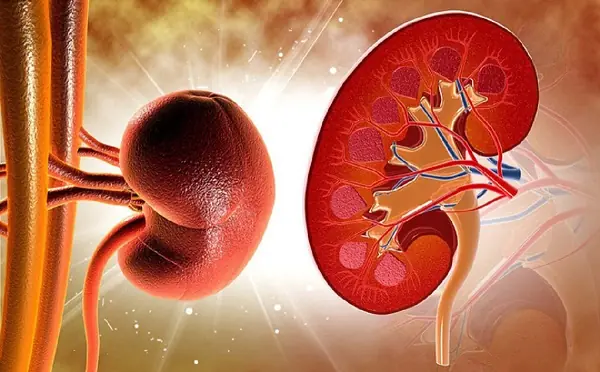
2. Urine albumin-to-creatinine ratio (uACR)
This urine test measures the amount of albumin, a type of protein, relative to creatinine in the urine.
Healthy kidneys generally keep most albumin in the bloodstream.
When the kidney's filtering barrier becomes damaged, albumin may leak into the urine.
A uACR of 30 mg/g or higher is generally considered abnormal and may indicate kidney damage, although results need to be interpreted in context and often repeated.
Importantly, some people have kidney damage and an abnormal uACR even when their eGFR remains relatively normal.
Using both tests provides a more complete assessment than relying on either one alone.
Who Is at Higher Risk of Kidney Disease?
Although kidney disease can affect anyone, certain conditions increase the likelihood of developing it.
People with diabetes
Diabetes is one of the leading causes of chronic kidney disease.
Persistently elevated blood glucose can damage the small blood vessels and filtering structures inside the kidneys.
Over time, this may lead to albumin leakage and reduced kidney function.
People with diabetes should follow recommended schedules for kidney screening, even when they feel completely healthy.
People with high blood pressure
Long-term uncontrolled hypertension can damage kidney blood vessels.
The kidneys may gradually lose their ability to filter blood effectively, which can further increase blood pressure.
Regular monitoring and appropriate treatment are important for protecting kidney function.
People with a family history of kidney disease
Some kidney conditions have a genetic component.
For example, polycystic kidney disease can run in families and may cause progressive damage as fluid-filled cysts develop in the kidneys.
A close family history of kidney failure or inherited kidney disease should be discussed with a healthcare professional.