That is useful information, but it does not establish the condition of the plumbing inside the house.
A buyer should investigate the supply pipes, drainage lines, fixtures, water heater, and visible plumbing connections.
Older pipes may show corrosion, leaks, restricted flow, or deterioration.
Some problems can be identified during a standard inspection, while others may require additional testing.
Water pressure should be checked at different fixtures.
The buyer should also determine whether drains empty properly and whether there are signs of recurring blockages.
A water heater should be inspected for its age, condition, installation, and safety features.
If replacement is necessary, the owner should select equipment appropriate for the property's plumbing and household needs.
The wastewater system also deserves attention.
The available listing details identify public water but do not provide enough information to assume that every aspect of wastewater disposal is fully established.
The buyer should verify whether the property is connected to a public sewer system or uses another arrangement.
If a private septic system is involved, its location, condition, capacity, and maintenance history should be investigated.
This is especially important if the buyer hopes to add another bathroom or increase the number of plumbing fixtures.
A renovation can become unexpectedly expensive if the existing drainage system cannot support the proposed changes.
The water and wastewater arrangements should therefore be understood before any major interior work begins.
Heating, Cooling, and Indoor Comfort Matter in Arkansas
A home may have attractive brickwork, a spacious yard, and a traditional fireplace, but those features cannot replace a reliable heating and cooling system.
Star City is in southeastern Arkansas, where summer conditions can be hot and humid.
For everyday comfort, a properly functioning cooling system is particularly important.
Buyers should determine what heating and cooling equipment is present and whether it is operational.
The listing does not provide enough detail to assume that a modern air-conditioning system is included or in good working condition.
If equipment is present, a qualified HVAC technician can assess its age, condition, efficiency, and suitability for the house.
The inspection should also consider ductwork, insulation, ventilation, and moisture control.
An older house may have gaps around windows and doors, inadequate insulation, or poorly sealed areas that make temperature control more difficult.
Improving these issues could reduce energy waste and make the home more comfortable.
However, energy-efficiency improvements should be planned according to the actual condition of the building.
Installing new heating and cooling equipment before addressing major air leaks or moisture problems may not produce the expected results.
The order of work matters.
A good renovation plan considers the entire building rather than treating each room or system as an isolated project.
The Health and Safety Warning Is the Detail Buyers Should Never Ignore
Perhaps the most important part of the listing is not the asking price or the description of the land.
It is the warning concerning the property's condition.
The listing states that the house may present health or safety risks. It also requires all parties to sign a hold-harmless agreement before entry and says that the property can only be shown by appointment.
Zillow+1
This is a significant detail.
It does not identify a specific hazard, and it would be inaccurate to claim that the house definitely contains mold, asbestos, dangerous wiring, or structural damage.
However, the warning clearly indicates that the property should not be treated like an ordinary move-in-ready home.
Prospective buyers should follow the agent's instructions and avoid entering areas that have not been cleared for access.
They should not attempt to investigate unstable structures or potentially hazardous materials without appropriate professional assistance.
An authorized inspection can help identify the actual problems.
Depending on the findings, the buyer may need assessments from a structural engineer, electrician, plumber, roofing contractor, environmental specialist, or other qualified professional.
The most important thing is to understand why the property has been given this warning.
A low price should never encourage someone to ignore a safety notice.
For buyers with limited renovation experience, this may be the most important reason to seek independent advice before making an offer.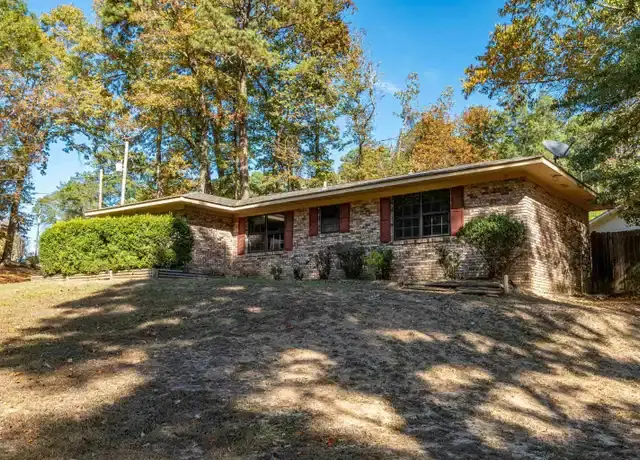
Could the Property Contain Lead-Based Paint or Asbestos?
Because the house was built in 1970, certain older-building materials deserve consideration.
Lead-based paint was widely used in American residential properties before federal restrictions took effect in 1978.
Asbestos-containing materials were also used in various construction products during earlier decades.
The presence of an older house does not automatically mean that either material is present.
However, buyers should be aware of the possibility.
Lead-based paint may be present beneath newer layers of paint, particularly around windows, doors, trim, and other older painted surfaces.
If disturbed during renovation, lead-containing paint can create hazardous dust.
Asbestos may be found in certain insulation products, flooring materials, ceiling finishes, or other building components.
Again, the actual materials must be assessed rather than assumed.
If there is reason to suspect either hazard, the buyer should arrange an appropriate professional evaluation before sanding, cutting, drilling, or removing materials.
This is especially important if the property will eventually be occupied by children or other people who could be more vulnerable to exposure.
A renovation budget should include the possibility of professional testing and specialized removal if necessary.
Ignoring these issues may create both health risks and additional financial problems.
What Would a Realistic Renovation Process Look Like?
If professional inspections establish that the house can be restored safely, the next step is developing a renovation plan.
The most effective approach would be to divide the work into stages.
The first stage should focus on determining the full scope of the project.
This means identifying structural problems, safety hazards, damaged building materials, and essential systems that require replacement.
The buyer should request estimates from qualified contractors rather than relying on general assumptions.
The second stage should focus on protecting the building.
Roof leaks, drainage problems, damaged windows, and moisture intrusion should be addressed before interior finishes are installed.
The third stage should involve essential utilities.
Electrical, plumbing, heating, cooling, and ventilation systems should be brought to an appropriate standard.
Only after these stages should the owner concentrate on the kitchen, bathroom, flooring, paint, and other visible improvements.
A possible renovation schedule could look like this:
|
Renovation stage |
Main priority |
|---|---|
|
Initial assessment |
Inspections, testing, written estimates |
|
Structural work |
Foundation, roof, framing, drainage |
|
Safety improvements |
Electrical hazards and environmental concerns |
|
Essential utilities |
Plumbing, water, heating, cooling |
|
Interior restoration |
Kitchen, bathroom, flooring, walls |
|
Exterior improvements |
Brickwork, carport, windows, landscaping |
|
Final preparation |
Cleaning, painting, fixtures, furnishings |
The schedule may change depending on the property's actual condition.
Some repairs may need to happen simultaneously, while others cannot begin until earlier work has been completed.
For example, installing new flooring before resolving a moisture problem could mean paying for the same work twice.
Likewise, repainting ceilings before repairing a leaking roof would be an unnecessary expense.
The best approach is to complete essential work in the correct order.
How Much Could the Entire Project Cost?
This is the question that should determine whether the property is genuinely affordable.
A $35,000 asking price may sound attractive, but the buyer needs to calculate the full cost of acquiring and restoring the house.
The following example is hypothetical and should not be treated as a contractor estimate for this particular property.
Imagine that a buyer purchases the house for $35,000.
After inspections, the buyer discovers that several systems need attention.
Roof repairs, electrical improvements, plumbing work, heating and cooling updates, and interior restoration could add tens of thousands of dollars.
If the total renovation budget reaches another $30,000, the combined purchase and renovation cost becomes $65,000 before closing expenses and other ownership costs.
If the renovation requires $50,000, the combined figure becomes $85,000.
If major structural or environmental problems are discovered, the final amount could be higher still.
The important point is that the original asking price represents only one part of the financial commitment.
A buyer should also account for property taxes, insurance, utility connections, permits, contractor costs, temporary accommodation, and unexpected repairs.