Others may become frustrated because they can no longer do things independently.
These emotional responses deserve patience and understanding.
Social Withdrawal Near the End of Life
In some people receiving end-of-life care, social interaction may naturally decrease as energy levels decline.
They may prefer fewer visitors, shorter conversations, and more time resting.
This does not necessarily mean they no longer care about their family.
It may simply reflect changing physical needs.
Families can support them by respecting their preferences while continuing to offer companionship.
A quiet visit, holding a hand, listening to familiar music, or sitting together without demanding conversation can be meaningful.
Chapter 7: Other Physical Changes That May Occur in the Final Weeks or Days
The five changes discussed above may develop over a prolonged period, but some signs are more commonly associated with the final weeks or days of life.
It is important not to confuse these later changes with a reliable prediction that someone will die within a year.
The final phase of life varies significantly depending on the underlying illness.
When a person is very close to death, several changes may become noticeable.
Changes in Breathing
Breathing patterns may become irregular.
There may be periods of faster breathing followed by slower breathing or brief pauses.
Some people develop a pattern known as Cheyne-Stokes respiration, characterized by cycles of gradually increasing and decreasing breathing depth, sometimes followed by pauses.
These changes can occur during the dying process, although irregular breathing may also have other medical causes.
New or severe breathing difficulties should be assessed urgently unless the person is already receiving an established end-of-life care plan that addresses these symptoms.
Reduced Consciousness
A person may become increasingly sleepy and spend more time unconscious or only partially responsive.
They may no longer be able to participate in conversations.
In the final stages of life, some people become less aware of their surroundings.
However, sudden reduced consciousness can also indicate an emergency, including stroke, infection, low blood sugar, or medication toxicity.
Families should follow the medical guidance provided by the treating team.
Changes in Circulation
As circulation changes near death, the hands and feet may become cooler.
The skin may appear pale, bluish, or mottled, particularly around the extremities.
Blood pressure may fall, and the pulse may become weaker.
These changes can occur as the body gradually loses its ability to maintain normal circulation.
However, cold or discolored extremities can also result from other medical conditions.
Difficulty Swallowing
A person nearing the end of life may have increasing difficulty swallowing food, liquids, or medication.
This can occur because of neurological decline, severe weakness, reduced consciousness, or other advanced illness.
Caregivers should not force food or liquids when swallowing is unsafe.
A healthcare professional can advise on appropriate comfort measures, mouth care, and safe ways to offer fluids when possible.
Noisy Breathing and Respiratory Secretions
Some people develop noisy breathing because saliva or mucus accumulates in the throat and upper airways when they become too weak to clear it effectively.
This is sometimes called the death rattle.
The sound can be distressing for family members.
However, it does not necessarily mean that the person is experiencing pain or suffering.
Care teams can advise on positioning and other measures to improve comfort.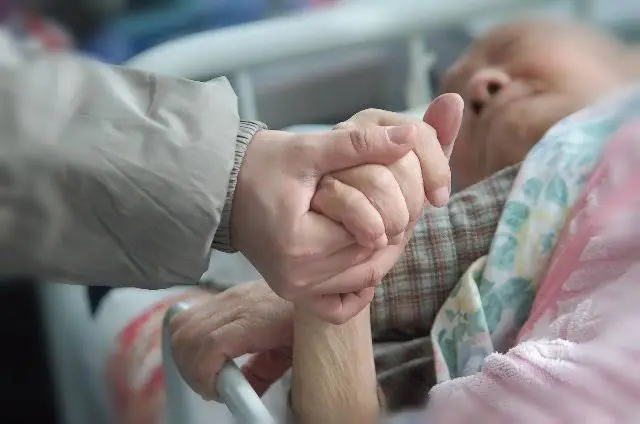
Final Thoughts: Recognizing Changes Can Help Families Provide Better Care
The final stages of life can involve changes in energy, appetite, physical strength, memory, communication, and social interaction.
For families, noticing these developments can be emotionally challenging.
The most important thing is to recognize that these signs do not provide a reliable prediction of death within one year.
Instead, they are reasons to pay attention, seek appropriate medical advice, and understand what kind of support an older person may need.
If an older loved one becomes increasingly tired, loses weight without explanation, struggles to walk, develops new confusion, or withdraws from everyday activities, arrange a medical assessment.
Sudden or severe changes require urgent attention.
When an advanced illness is confirmed, palliative care and thoughtful planning can help protect comfort, dignity, and quality of life.
Growing older does not mean losing the right to be heard, respected, and cared for.
Sometimes the most meaningful thing a family can offer is not another treatment or another instruction, but patience, presence, and the reassurance that their loved one does not have to face the difficult journey alone.