A buyer would want to understand the boundaries, access points, drainage patterns, and any restrictions affecting future changes. The listing identifies the parcel as 2.6 acres, but the exact usable area and placement of outbuildings should be confirmed through property records and a site visit.
The appeal of acreage is not simply having more grass.
It is having the opportunity to shape the outdoor environment around the home.
For people who value privacy, gardening, and outdoor living, that can be a significant advantage.
The Original Water Tower and Summer Kitchen
Two of the most unusual details mentioned in the listing are the original water tower and the summer kitchen.
These features suggest that the property once operated with a broader collection of domestic structures and systems.
A water tower on an older property is especially interesting because it raises questions about how water was stored, distributed, and used. Before modern municipal systems became common in every community, households and farms often relied on different arrangements for obtaining and storing water.
The tower may have served a practical role in the property's earlier operation. Its exact original function and current condition would need to be confirmed, but its presence adds an unusual historical element.
For a future owner, it could be a visual landmark and a reminder of the property's earlier infrastructure.
However, an old water tower should not automatically be treated as a functioning water source. Its structure, tank, pipes, foundations, and any associated systems would require professional assessment before any use could be considered.
The summer kitchen is equally evocative.
It points to a time when household work was organized around seasonal conditions and practical needs. Cooking during hot weather could make the main house uncomfortable, so a separate building could help keep heat and certain activities away from the principal living spaces.
Depending on its condition and layout, the summer kitchen might be preserved as a historic outbuilding, adapted for storage, or used for a hobby space.
Any proposed conversion would need to respect the building's age and comply with applicable safety requirements.
Together, the water tower and summer kitchen give the property a sense of completeness. They suggest that the grounds once supported a more complex way of living than the main residence alone could reveal.
A Home That Changes With the Seasons
One of the most attractive things about a property surrounded by mature trees is that it never looks quite the same throughout the year.
The supplied photographs show the house in different seasonal conditions. In one, the lawn is green and the trees are full of leaves. In another, fallen leaves and patches of snow cover the ground.
That contrast helps people imagine how the property might feel throughout the year.
Spring could bring fresh growth, flowers, and longer afternoons on the porch. Summer would make the grounds lush and shaded, creating outdoor spaces for relaxation. Autumn could transform the trees into a display of changing colors, while the house's red brick would remain a strong visual presence. Winter would reveal the structure of the trees and bring a quieter atmosphere to the grounds.
The changing seasons also affect maintenance.
Leaves may need to be cleared from gutters and paths. Snow and ice can make steps and walkways hazardous. Heavy rain may reveal drainage problems, while summer heat can expose weaknesses in ventilation and cooling systems.
A historic property requires attention throughout the year.
But for someone who enjoys living with the landscape, that seasonal variation can be part of the pleasure.
The house is not simply a building placed on a lot. Its setting contributes to its character.
What the Price Means—and What Buyers Should Consider
The advertised price shown in the supplied material is $259,900. For a property offering approximately 4,400 square feet on 2.6 acres, that figure is likely to attract attention from buyers who are accustomed to seeing much smaller homes at comparable prices in other markets.
But the price of a historic home should never be judged by square footage alone.
A large older property can have expenses that are not immediately obvious in photographs. Roof repairs, masonry work, foundation maintenance, plumbing updates, electrical improvements, heating and cooling, and restoration of original features can all affect the true cost of ownership.
The listing information also identifies three bedrooms and one full bathroom. That arrangement may work well for some buyers, but others may find the bathroom count limiting. Adding another bathroom could require significant planning, especially if the existing plumbing system and floor plan were designed for a different era.
The heating and cooling arrangements deserve particular attention. A large house with several floors and high ceilings may be more expensive to heat and cool than a compact modern home. Buyers should understand the existing systems, their age, their efficiency, and whether they provide consistent comfort throughout the building.
The listing information identifies baseboard heating and window-unit cooling in the property details available through real estate records. Those systems should be evaluated carefully, especially given the size of the house. The cost of upgrading them could be significant, depending on the building's layout and insulation.
There are also questions about the condition of the fireplaces and chimneys. Seven fireplaces are an extraordinary architectural feature, but maintaining multiple chimneys can be costly. A qualified professional should inspect them before a buyer assumes they can be used.
The outbuildings deserve the same attention.
The property information refers to a barn and sheds, in addition to the original water tower and summer kitchen. These structures may provide valuable storage and character, but their roofs, foundations, framing, and utilities should be inspected separately.
A buyer should also review property boundaries, drainage, septic arrangements, water supply, insurance availability, and any applicable restrictions.
The listing identifies public water and a septic system. That combination is not unusual in many communities, but a septic system should be inspected to determine its condition and whether it is suitable for the intended household.
The point is not that the property necessarily has serious problems. The available photographs and listing details do not establish that. The point is that an 1860 house deserves a thorough inspection before anyone makes a financial commitment.
Its age is part of its appeal, but age also means that maintenance history matters.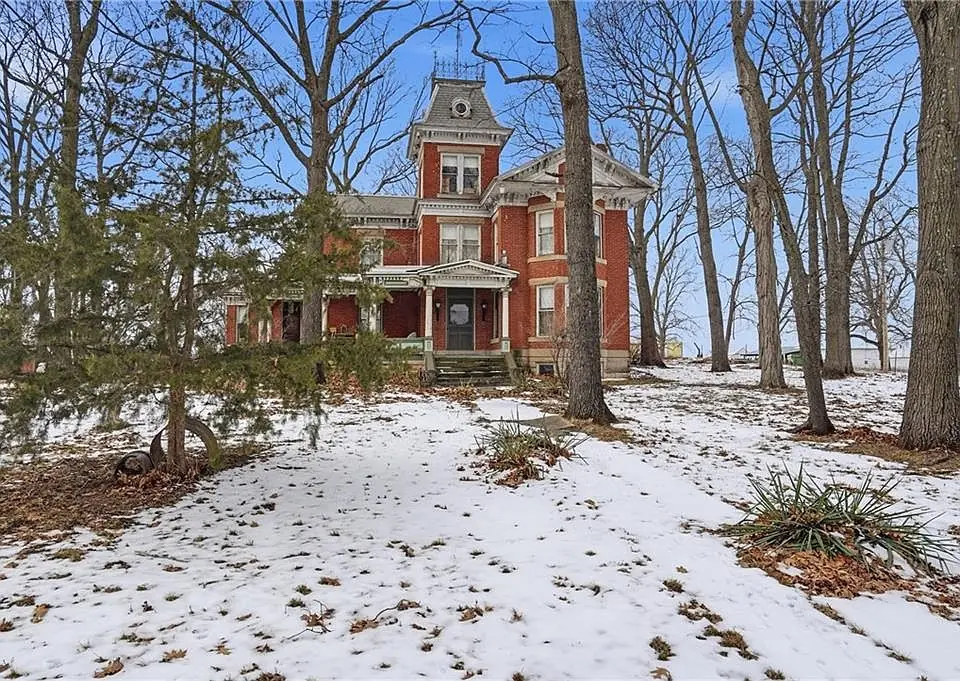
The Difference Between Buying a House and Becoming Its Caretaker
Some buyers look at a home primarily as a place to live. Others see a historic property as something they would like to preserve for the future.
This Missouri residence may appeal particularly strongly to the second group.
Owning a house built in 1860 means accepting a relationship with the past. Its original details cannot always be replaced easily, and some repairs may require specialists who understand older construction.
A modern house can often be renovated by replacing standard materials with readily available alternatives. In a historic home, replacing a window, removing a mantel, or changing a staircase can affect the building's character.
That does not mean every old feature must remain untouched.
Some updates are necessary for safety and comfort. Electrical wiring may need replacement. Plumbing may require modernization. Roofs and foundations need maintenance. Kitchens and bathrooms may need improvements to support contemporary living.
The challenge is deciding which changes are appropriate and how to make them without damaging valuable original features.
A thoughtful owner might begin with a detailed record of the house.
Photographs, measurements, notes about original materials, and records of previous repairs can help guide future work. If a decorative feature must be removed temporarily for repair, documentation can make it easier to restore it correctly.