The most important lesson is that repeated symptoms deserve investigation.
Treating each infection separately without examining possible underlying factors may leave the real problem undiscovered.
2. What Happens to Blood Sugar While You Sleep?
Nighttime glucose levels do not necessarily remain constant.
Even when you are sleeping and have not eaten for several hours, your body continues using energy.
Your liver releases glucose to help maintain the energy supply required by your brain and other organs.
Hormones also influence this process.
In the early morning, hormones such as cortisol and growth hormone can signal the liver to release additional glucose.
For people with diabetes, this may contribute to the dawn phenomenon.
The dawn phenomenon describes an increase in blood glucose during the early morning hours, commonly around 4 a.m. to 8 a.m.
Some people therefore wake up with higher glucose readings even though they have not eaten during the night.
Another possibility is that medication or insulin does not provide sufficient coverage throughout the entire night.
In some cases, nighttime hypoglycemia can also occur.
This is why a single morning glucose reading may not reveal the entire story.
A healthcare professional may recommend checking glucose at different times, reviewing medication schedules, or using continuous glucose monitoring to identify patterns.
Understanding those patterns is much more useful than guessing what happened while sleeping.
3. Eight Practical Ways to Prevent Blood Sugar Spikes Without Cutting Carbs
One of the biggest misconceptions about diabetes management is that carbohydrates must disappear from the diet.
That is not necessarily true.
Carbohydrates are found in many nutritious foods, including fruit, beans, lentils, oats, whole grains, milk, potatoes, and other vegetables.
They provide energy, fiber, vitamins, and minerals.
The challenge is learning how different carbohydrate sources affect blood glucose and how to include them in balanced meals.
The American Diabetes Association emphasizes individualized nutrition rather than a single eating pattern that works for everyone.
Here are eight practical strategies that can help make glucose levels more predictable without completely eliminating carbohydrate-containing foods.
Tip 1: Combine Carbohydrates With Protein and Fiber
One of the simplest changes is to stop eating carbohydrate-rich foods entirely on their own.
Consider two different breakfasts.
The first consists of sweetened cereal and a glass of fruit juice.
The second includes oatmeal, plain Greek yogurt, a small serving of berries, and a few nuts.
Both contain carbohydrates, but the second meal provides a more balanced combination of nutrients.
Protein and fiber can slow digestion and help reduce how quickly glucose enters the bloodstream.
Examples of useful combinations include:
-
Whole-grain toast with eggs.
-
Oatmeal with nuts and plain yogurt.
-
Brown rice with grilled fish and vegetables.
-
Beans with vegetables and lean chicken.
-
An apple with peanut butter.
-
Whole-grain crackers with cottage cheese.
The goal is not to avoid carbohydrates. It is to build meals in which carbohydrates are accompanied by other nutritious foods.
This approach can also make meals more satisfying.
People who feel full for longer may find it easier to avoid frequent grazing on sugary snacks.
An important detail is that individual glucose responses vary. A meal that works well for one person may produce a different response in someone else.
If you monitor your glucose, observing your readings after meals can help you understand which combinations work best.
Tip 2: Choose High-Fiber Carbohydrates More Often
Not all carbohydrates behave the same way in the body.
Highly refined foods, such as sugary breakfast cereals, white bread, and sweetened drinks, can raise blood glucose relatively quickly.
Foods containing more fiber are generally digested more slowly.
Fiber is found naturally in vegetables, fruits, legumes, nuts, seeds, and whole grains.
It also supports digestive health and can help people feel satisfied after meals.
Instead of removing carbohydrates, consider making gradual substitutions.
For example:
-
Choose oats instead of heavily sweetened breakfast cereal.
-
Try brown rice or a mixture of brown and white rice.
-
Choose whole-grain bread instead of refined white bread more often.
-
Include lentils, chickpeas, or beans in meals.
-
Eat whole fruit instead of drinking fruit juice.
-
Add vegetables to pasta, rice, or noodle dishes.
These changes do not require completely changing the way you eat.
You can begin with one substitution and gradually build a routine.
It is also important to read food labels. Products advertised as multigrain or healthy are not necessarily high in fiber.
Look at the ingredient list and nutritional information rather than relying only on packaging claims.
Whole grains and legumes can be particularly useful because they provide carbohydrates alongside fiber and other nutrients.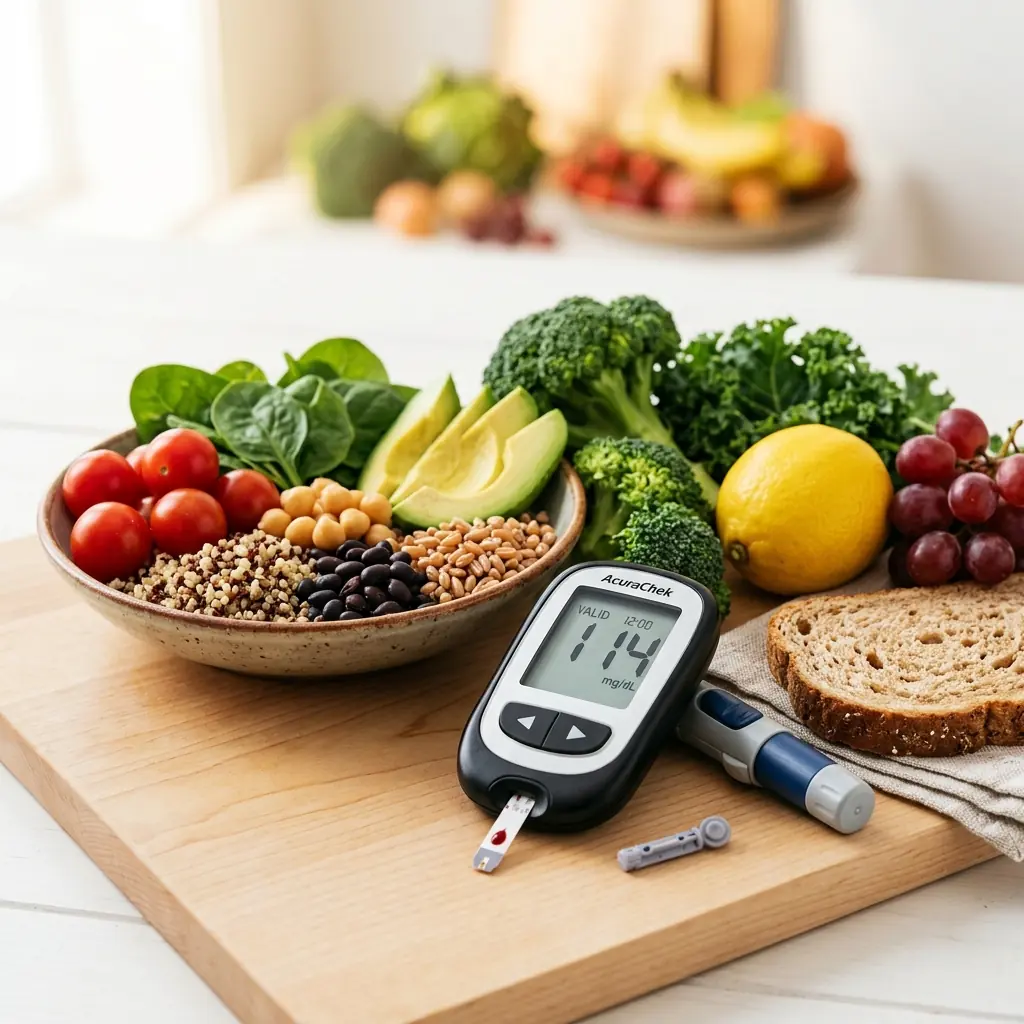
Tip 3: Use the Balanced Plate Method
Portion sizes matter, even when the foods themselves are nutritious.
A large serving of rice, bread, pasta, or potatoes can raise blood glucose substantially, especially when eaten without other foods.
The balanced plate method offers a straightforward way to organize meals.
Imagine dividing a standard dinner plate into three sections:
Half the plate: Non-starchy vegetables
Examples include:
-
Broccoli.
-
Spinach.
-
Cabbage.
-
Cucumber.
-
Tomatoes.
-
Cauliflower.
-
Green beans.
-
Lettuce.
One-quarter of the plate: Protein
Examples include:
-
Fish.
-
Chicken.
-
Eggs.
-
Tofu.
-
Lean meat.
-
Unsweetened yogurt.
One-quarter of the plate: Carbohydrates
Examples include:
-
Brown rice.
-
Whole-grain pasta.
-
Beans.
-
Lentils.
-
Corn.
-
Potatoes.
-
Sweet potatoes.
This method does not require counting every bite or eliminating traditional meals.
It simply encourages a better balance between food groups.
For someone accustomed to eating a large bowl of rice with very few vegetables, even a modest adjustment can make meals more balanced.
The method is a starting point rather than a universal prescription. People with different medication schedules, nutritional requirements, or medical conditions may need individualized portions.
Tip 4: Eat Whole Fruit Instead of Drinking Fruit Juice
Fruit is frequently misunderstood in discussions about diabetes.
Some people avoid fruit completely because it contains natural sugar.
But whole fruit also provides fiber, water, vitamins, minerals, and other beneficial plant compounds.
The problem often arises when fruit is turned into juice.