King Charles Made a Sad Announcement About Prince William: The Emotional Story Behind the Royal Family's Headlines
A heartbreaking royal headline has sparked questions about King Charles and Prince William, but what is really happening behind the palace walls?
Chapter 1: A Headline That Immediately Caught the World's Attention
The words were impossible to ignore. A photograph of King Charles III, his eyes closed and his face appearing deeply emotional, began circulating alongside a picture of a mother embracing her young child. Above the images appeared a dramatic headline claiming that the King had made a sad announcement about his eldest son, Prince William.
For royal watchers, the combination was enough to raise immediate questions. Had something happened to the future king? Was the Prince of Wales facing an unexpected personal challenge? Had Charles finally spoken about a difficult family matter that had remained private for years?
Within seconds, readers could find themselves imagining an extraordinary development inside Buckingham Palace. Some might assume that an important announcement had been made, while others could wonder whether the relationship between father and son had entered a difficult period.
Yet there is a significant difference between a headline that creates concern and an event that has actually been confirmed.
The image and accompanying text do not provide an authenticated royal statement, a precise explanation of what supposedly happened, or a reliable account of the King's alleged announcement. In fact, the screenshot itself acknowledges that the claim could not be verified through credible evidence. It also warns that similar sensational royal stories have previously circulated without a reliable factual foundation.
That detail should not be overlooked.
The British Royal Family attracts enormous attention, and stories involving King Charles and Prince William are particularly likely to generate emotional reactions. Their positions are closely connected to the future of the monarchy, and their relationship represents a transition between two generations that have experienced very different periods of British history.
But the absence of confirmation does not make the underlying subject unimportant. The relationship between Charles and William is genuinely significant, shaped by childhood memories, family challenges, public expectations, and the responsibility of preparing for the future of the Crown.
To understand why a headline like this can attract so much attention, it is worth examining the story behind the two men rather than accepting an unexplained announcement at face value.
King Charles was born on November 14, 1948, as the eldest child of Queen Elizabeth II and Prince Philip. From a young age, he was expected to inherit the throne. His childhood and adulthood were shaped by the knowledge that his personal decisions would eventually become matters of national interest.
Prince William was born on June 21, 1982, into a very different media environment. His parents, Charles and Diana, were among the most photographed people in the world. His birth was celebrated internationally, and his childhood became a subject of enormous public fascination.
Although William was born into privilege, his life was never entirely ordinary. Every important family occasion could become international news. Even routine activities attracted photographers, while private family difficulties were frequently discussed in newspapers.
The relationship between Charles and William therefore developed under circumstances that few families could understand.
For the public, they were always more than a father and son. Charles represented the continuation of the monarchy, while William represented its future. Their lives were connected by a line of succession that would eventually place William in the same position his father occupies today.
This connection became even more important after September 8, 2022, when Queen Elizabeth II died and Charles became King.
In his first address as monarch, Charles spoke about his mother, his responsibilities, and the future of the Royal Family. He also announced that William would become the Prince of Wales, the title Charles had held for more than 64 years.
It was an emotional moment of royal transition, but it was not the mysterious sad announcement described in the circulating headline.
For William, the change marked a new chapter. He was no longer simply the Duke of Cambridge. He had become the heir to the throne and the principal figure expected to support his father in preparing the monarchy for the future.
The responsibilities were considerable. William would have to balance his duties as a senior royal with his role as a husband and father. He would also have to develop his own approach to public service while respecting the traditions that had shaped the institution for generations.
Charles, meanwhile, faced the challenge of becoming a monarch while watching his eldest son prepare for a future that would eventually require him to assume the same enormous responsibility.
This is the real emotional background behind the headline.
It is a story about family, succession, time, and the difficult balance between private relationships and public duty. It is also a story that deserves more than an unsupported suggestion that something tragic has happened.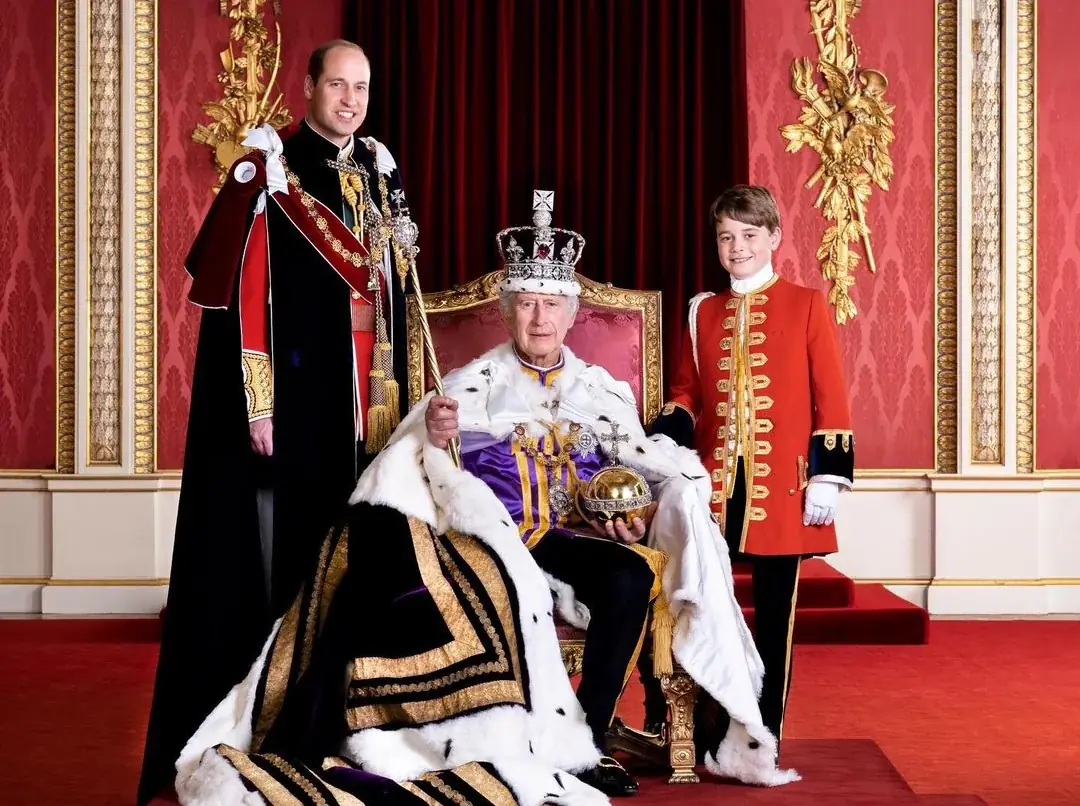
The Childhood That Shaped Prince William
Prince William's early years were closely associated with his parents' public image.
Charles and Diana married in 1981, and their wedding attracted a worldwide audience. When William arrived the following year, he became the first child of the future King and Princess of Wales.
For a period, the young family appeared to represent a modern royal household. William and his younger brother, Prince Harry, were photographed during holidays, school activities, and family occasions.
However, the marriage of their parents became increasingly difficult.
Charles and Diana separated in 1992 and divorced in 1996. Their personal difficulties were widely reported, often in considerable detail. The attention surrounding the breakdown of the marriage meant that William and Harry experienced a family situation that was constantly discussed in public.
For a child, the separation of parents can be difficult under any circumstances. For William, there was an additional burden: the knowledge that millions of strangers were forming opinions about his family.
The most painful event came in August 1997.
Diana died in a car crash in Paris at the age of 36. William was 15 years old, while Harry was 12. The news shocked people around the world and led to an extraordinary public outpouring of grief.
For the brothers, however, the loss was deeply personal.
They had lost their mother, not simply a famous royal figure. They were young people suddenly facing a future without someone who had played a central role in their lives.
Charles had to help his sons navigate that painful period while managing the attention surrounding the Royal Family.
It would be wrong to claim that an outsider can know every private conversation that took place between father and sons during those days. Their personal experiences belong to them. But the event remains an important part of the history that connects Charles and William.
As the years passed, William gradually moved from childhood into adulthood. He attended Eton College and later studied at the University of St Andrews in Scotland.
There, he met Catherine Middleton, who would eventually become his wife and the Princess of Wales.
Their relationship developed over several years, and they married at Westminster Abbey on April 29, 2011. The wedding was watched by millions of people and became one of the most memorable royal occasions of the modern era.
William and Catherine later welcomed three children: Prince George, Princess Charlotte, and Prince Louis.
For Charles, their arrival represented a new generation of the family. He became a grandfather, while William began experiencing the responsibilities of parenthood himself.
That change is important when considering the relationship between the two men.
William is no longer simply the young prince who grew up under the shadow of his parents' difficulties. He is now a father raising children who will also grow up in the public eye.
The experiences of his childhood may influence how he approaches family life, privacy, and the responsibilities of royal service. However, it is important to distinguish reasonable observations from assumptions about his private thoughts.
What can be said with confidence is that William's position has changed dramatically over the years. He has moved from being a child protected by the institution to becoming one of its most important representatives.
And that brings the story back to Charles.
The King is now watching his eldest son prepare for a responsibility that he himself spent decades anticipating. Their relationship therefore carries a unique mixture of affection, experience, expectation, and institutional duty.
Why the Future of the Monarchy Depends on Both Men
The British monarchy is built around continuity.