But relative timestamps can become misleading when content is copied or reposted.
A post may be shared again long after its original publication. The wording may remain unchanged even when the information is no longer new.
A trustworthy report should provide an identifiable publication date and explain what happened.
Readers should also consider whether the article identifies its source.
If the headline claims that King Charles made a statement, where is the statement?
If it says Prince William is facing a major development, what exactly is that development?
If it suggests that the palace has confirmed something, where can the confirmation be found?
These are simple questions, but they help separate meaningful reporting from speculation.
Why Photographs Can Make an Unverified Story Feel Real
The human brain often responds to photographs before processing written information.
A photograph of a visibly emotional person can immediately influence how a reader interprets the surrounding words.
The image of King Charles in the screenshot is an example.
His closed eyes and facial expression create an impression of sadness. When placed next to a picture of a mother and child, the two images suggest a story about family emotion.
Yet the images do not establish that the events are connected.
Even a genuine photograph can be used in a misleading way if it is taken from another occasion.
For example, a picture from a memorial service might be reused to illustrate an unrelated family story. A photograph from an official engagement might be presented as though it were taken during a private announcement.
Without the original context, the viewer cannot know what the expression means.
This is why reputable publications provide captions and identify the circumstances in which photographs were taken.
A picture should support a report, not replace the evidence needed to establish the report's central claim.
The Responsibility of Readers in the Age of Viral News
Readers also have an important role in determining how online information spreads.
Sharing a story takes only a few seconds. Correcting misinformation can take much longer.
Before sharing a dramatic royal headline, readers can check three things.
First, they can look for an official statement or an identifiable source.
Second, they can check whether established news organisations are independently reporting the same event.
Third, they can compare the headline with the actual contents of the article.
If the headline promises an extraordinary announcement but the article does not identify what was announced, caution is necessary.
This approach does not require specialist knowledge of the British monarchy.
It simply requires readers to distinguish between what a publication claims and what it demonstrates.
Chapter 6: What the Future May Hold for King Charles and Prince William
The future of the British monarchy will depend on many factors, including public confidence, constitutional traditions, the work of the Royal Family, and the ability of future generations to adapt.
King Charles is now responsible for leading the institution after the exceptionally long reign of Queen Elizabeth II.
His position is historically significant because he inherited the Crown after decades of preparation and at a time when the monarchy faces changing public expectations.
William's future is equally important.
As the Prince of Wales, he represents the next generation. His work today gives him experience and helps establish the public identity he may eventually carry into his reign.
The relationship between them will continue to attract interest because the future King is learning from the current King.
Their shared responsibilities also mean that the public will continue seeing them at important ceremonies, charitable events, and official occasions.
These appearances can provide genuine insight into the work of the monarchy, although they should not be treated as a complete picture of private family relationships.
The public may never know every detail of their conversations, and that is not necessarily a problem.
Royal figures have responsibilities to the public, but they also retain a right to personal privacy.
A healthy balance between transparency and privacy is important for any modern institution.
The Legacy Charles Is Building
Charles spent much of his adult life preparing for the responsibilities of the Crown.
Before becoming King, he was known for his interest in environmental protection, architecture, traditional communities, education, and charitable work.
Some of those interests were controversial at different times, while others helped establish his reputation as a public figure with a broad range of concerns.
His long experience as Prince of Wales gave him opportunities to build relationships with organisations and communities throughout the United Kingdom and the Commonwealth.
Now that he is King, his responsibilities are different.
He must represent the institution as a constitutional monarch while continuing to support causes that are compatible with his position.
The transition from heir to sovereign is a significant personal and institutional change.
It also means that the relationship with William has entered a new phase.
For many years, Charles was the next King and William was the next generation waiting behind him.
Now Charles occupies the throne, while William has become the immediate heir.
This is a historic change in the family structure.
The experience of the King may help guide his son, but the future monarch will eventually have to make decisions in his own name.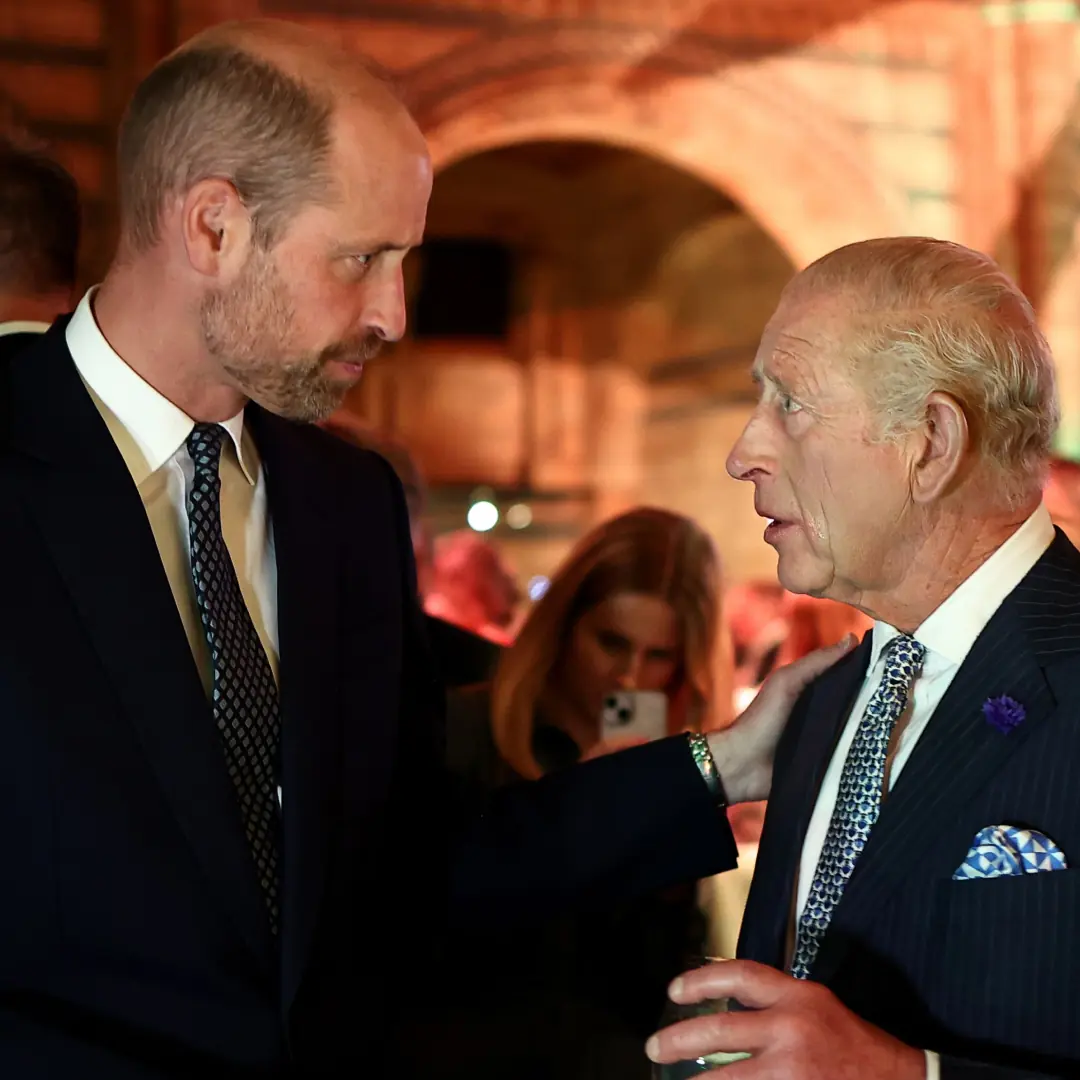
The Responsibilities William Will Inherit
When William eventually becomes King, he will inherit more than a title.
He will inherit constitutional responsibilities, ceremonial duties, public expectations, and the historical legacy of the monarchy.
He will also inherit the responsibility of maintaining continuity while responding to the challenges of a new generation.
The world he may lead the monarchy into could be very different from the world Charles entered when he became King.
Technology will continue to change communication. Environmental concerns will remain important. Public institutions will face new expectations about transparency and accountability.
William's experience as Prince of Wales will be an important part of preparing for those challenges.
His charitable work, family responsibilities, and public engagements are already shaping his approach to royal service.
But the future remains uncertain in the ordinary sense that no one can predict every development that will occur over the coming years.
That uncertainty should not be confused with evidence of a crisis.
A dramatic headline may suggest that a major announcement has changed William's future, but the supplied screenshot does not establish such an event.
It is more useful to focus on the developments that are actually known.
A Father, a Son, and a Changing Institution
Perhaps the most interesting aspect of the relationship between Charles and William is that it reflects a familiar family experience on an extraordinary scale.
A parent spends years preparing a child for adulthood. Eventually, the child develops an independent identity and begins making decisions of his own.
The relationship changes, but the connection remains.
In the Royal Family, that process takes place alongside the transfer of institutional responsibility.
Charles has spent decades preparing for the Crown. William is now preparing for the same position, while raising a family of his own.
The King has experienced the challenges of being an heir. His son is now experiencing those challenges from a different generation.
Both men must find ways to balance personal relationships with public duty.
That is a much more meaningful story than an unexplained headline suggesting that a sad announcement has suddenly transformed their lives.
For readers who saw the original image, the most important point is that the supposed announcement remains unverified.
There is no authenticated statement in the supplied material explaining what King Charles supposedly said about Prince William.
The emotional photograph does not provide that missing information, and the image of the mother and child does not establish a connection to the Royal Family.
Until reliable evidence is available, the claim should not be presented as confirmed news.
The story that can be told with confidence is one of two generations preparing for the future of an institution that has shaped British history for centuries.
King Charles has reached the position for which he spent most of his life preparing. Prince William is now carrying the responsibilities of an heir while building his own family and public identity.
Their relationship will continue to evolve as the monarchy changes.
And while the world may remain curious about what happens behind palace doors, the most important developments deserve to be reported accurately.
Sometimes the most revealing royal story is not the one promised by a dramatic headline, but the real history behind the people whose lives have been connected by family, duty, and the future of the Crown.